

How to write your company one-liner
Get your description in order by following the example of Stride Funding, Aviatrix Systems and ROYBI. How does the one-liner fit into an integrated messaging framework? That’s in here, too.

Stride Funding offers a textbook example of how to write a description.
One line wonder
When did you last update your one-line company description?
Perhaps you nailed it from the get go? I'm guessing not.
Every week as I research the funding updates from Crunchbase, I see first-hand how companies are positioning and messaging. Most try too hard or wind-bag the exercise, thus missing an opportunity to help customers, investors and media quickly understand your company.
Let's use this week's Funding Update as a lesson in how to write a one-line description that can be the foundation of your integrated messaging framework. That may sound complicated —"integrated messaging framework"—but it's really just a simple, structured approach to how you tell your story consistently across marketing channels.
Your one-liner anchors your messaging. It's what you say at networking events when someone asks, "What do you do?" It's the text you put into your About Us box on Twitter, Instagram, Facebook, Crunchbase, etc.
After that, your one-liner sets up add-on messaging such as home page copy, and supports value propositions. I'll show you an outstanding example below from Stride Funding.
Components of a one-line description
A great one-liner conveys the following info:
Company name
Service or product offering
Target audience
Don't get fancy with this. Be direct and explain what you do, for whom.
Best one-liners
Here are three of the best examples from women-led companies who raised money this week:


Decent one-liners
Here are a few examples that are so close. One or two tweaks and they'll be 👌:

Snaps to Kira Biotech for brevity, but for whom? Which markets or patients?
Here's another biotech that needs to clarify the audience:

Hells, Tmunity could be focused on the same patient populations as Kira.
Here's another concise description:

"Animal lovers" is a nice touch. Upon digging further I learned they use ethically sourced ingredients. Add "ethically sourced" before "pet food" and this becomes a stellar description.
Bad one-liners
Most of these are bad because they're unclear or too long. I cringe when I see the ... to the right of the descriptions. That means there's more copy. There shouldn't be more copy. Your description should fit within the limits.
This one is trying too hard, or they forgot to revisit their Crunchbase description after setting up a profile:

Integris does data-privacy compliance automation—an essential service for enterprises who have to comply with strict data-reporting policies. They're close in their description but would be better served by keyword loading with "data protection" and "privacy."
Here's another missed opportunity:

WTF? I have no idea what they do other than retail, and they just raised $6 million dollars. I dug deeper to learn RUTI is developing a proprietary CRM and facial/body recognition technology with an affluent female fashionista GTM strategy.
Another one that makes me go 🤔:

Yeesh, turns out they make hair-care solutions for African American women, sending a box of personalized ingredients each month for customers to mix up at home. That's cool. JUST SAY THAT!!!!!
Finally another miss from a brand that's otherwise crushing their market launch thanks to a collaboration with Chrissy Teigen:

Again with the ...
They could say, "from the team that brought you the corn test." Not really, but they should use their Twitter description and call it done: Burst is a Sonic Toothbrush and oral care subscription-only service delivered direct to consumers at a fraction of the cost of big name brands.
Key takeaway
Revisit your description. Now. Make it consistent across channels. Include your Crunchbase profile, if you're raising.
BTW, your personal brand description can take this approach, too. 😘
I leave you with Stride Funding as a stellar example of how to do it best.

Stride Funding’s Crunchbase description clearly states what they offer and for whom (student loans implies the audience).

The Twitter description slightly tweaks the language but all of the necessary components are included.
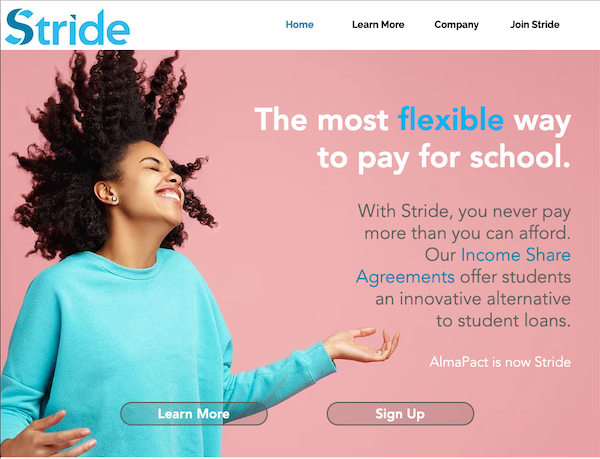
Stride's home page sticks to the core messaging and expands the story. Bravo Tess Michaels and team!

How to avoid small talk
Five questions to ensure you never make small talk again. A link to excellent insurance for small businesses. And $212 million raised with funds coming from the Dept. of Labor to support women affected by the opioid crises.
Art by Chelsea Ryoko Wong.
The talk of influence
To succeed in business, you need influence. You need to know meaningful things about the people you're trying to convert. I don't mean that in a sinister way. (Unless you're Nancy Pelosi, in which case, Madam Speaker, you go where you need to go to take care of this situation.)
I mean that you need to build the kind of trust that leads to a sale, be it a new customer, investor, employee, mentor, co-founder, etc. We are nothing without sales.
Dr. Robert Cialdini wrote a book on Influence, which details the six scientific shortcuts to gaining it. (Here's an excellent video that illustrates key takeaways from the book.) One of the shortcuts to influence is likability. We like people (and companies) who are similar to us, who pay us compliments, and who cooperate with us toward mutual goals.
I encountered a powerful new tool for finding commonalities that lead to likability at a recent women's group meeting in my city. The facilitators introduced a structured group conversation technique that was like intergenerational speed-dating.
Here are the guidelines:
Divide attendees into two groups, those above the age of 45 and those below 45
Give everyone a handout with five questions (see below)
Seat the 45+ women around the room with an empty chair and enough space to hold a conversation
The younger women rotate, finding an empty chair next to an older women
Once seated, the younger woman picks one question from the handout to ask the older woman, who has 2 minutes to answer (timed by a facilitator)
After answering, the older woman asks the younger woman a question of her choosing from the handout; she also has has 2 minutes to answer
Continue until each younger woman has talked with every older woman
Time permitting, have the older group huddle and take turns answering the questions while the younger groups listens
I know, 45 is not old. Alas, we need to divide the group.
Here are the five questions:
What strongly held opinion have you changed or reversed?
What was the genesis of your greatest turning point in life?
What's your secret for gearing up for a dreaded task?
From personal experience, I would counsel that to achieve your dreams you should NEVER _______.
I'm know I'm right about _______.
There were about 20 women in attendance, many of whom are elected officials and powerful executives. This format leveled the power dynamic and facilitated conversation between every woman in the room. The depth of the revelations were astounding, spanning politics, childbirth, addiction, infidelity, grief, parents and parenting, insecurity, and self-doubt. I revealed parts of my life experience that I typically reserve for close friends. I didn't feel vulnerable. In fact, I felt celebrated since I landed in the "older" group.
I dare you to light up your next customer convo or coffee chat by asking one of those five questions.
"You know, I'm tired of the usual small talk. You seem like a successful person. Would you mind sharing the genesis of your greatest turning point in life?"
Or, "Hi, I've seen you at these events before. You must be building a business. I'm curious to know, what is your secret for gearing up for a dreaded task?"
Or, "Can I cut the chase with you? I really want to know how you'd answer a fill-in-the-blank question. You ready? I'm know I'm right about _______. Go."
Give them space to think before they answer. Embrace the silence.
Importantly, don't let them off the hook if they forget to ask you to answer the same question. Simply say, "I'd like to share my answer, too."
Tell me, does deeper questioning create more influence? I'd love to hear what you think. Send me your questions and stories.
Boring but important: insurance
Polina Marinova of Fortune's Term Sheet newsletter has been tracking the venture capital pouring into insurance. She's gone so far as to call insurance the sexiest category in tech.
Next Insurance of Palo Alto, Calif. just raised $250 million in Series C funding at a $1 billion valuation. Next is not female founded or led, but I'm bringing them to your attention for two reasons.
You should have general liability business insurance to protect against if a customer or client sues you for bodily injury, medical payments, advertising harm or property damage. Next makes it easy, fast and affordable to get a policy.
If you're a B2B brand, you could emulate what Next is doing with their brand marketing.
Their website clearly lays out their value propositions, is well designed and employs video and customer spotlights as relatable storytelling. (Damn, Robert Pauley.)
Pricing and reviews are upfront and clear.
There's a touch of humor drizzled throughout the content.
They haven't overspent on branding as they scaled.
Weekly Funding: 28 women, $212 million raised
Read the details of VC funding here.
In the newsletter, I also shared this positive update:
The U.S. Department of Labor announced their RESTORE grants, which award nearly $2.5 million in funding to organizations in five states to help women affected by the opioid crisis to re-enter the workforce. The 2019 recipients are:
Helen Ross McNabb Center, Tennessee ($499,999)
Public Health Management Corporation, Pennsylvania ($499,730)
The Research Foundation for SUNY – University at Buffalo, New York ($500,000)
Total Action Against Poverty in the Roanoke Valley, Virginia ($500,000)
Urban Workforce Advantage, New Jersey ($500,000)
Business Models for Startups
Fresh from vacation come two key takeaways: think epically big and don’t waste time re-inventing your business model. Here are 16 proven business models that will live up to your vision.

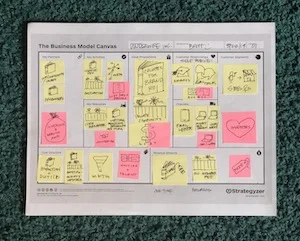
Early version of a Business Model Canvas for Underwire
Money Making
I spent a considerable part of Q2 obsessing over how to make money with Underwire.
The Business Model Canvas above is my first iteration. I shared it with advisors and confidants. I simplified it to two revenue streams. I set goals and made plans.
Then I went on vacation. I didn't think at all about models. Instead, I thought about scale. I visited eastern Europe and witnessed the ruins of the Holocaust and its impact on the cultures and landscapes of Berlin, Warsaw, Krakow, Prague, Nuremberg, Munich and Berchtesgaden. The scale of Hitler's vision was utterly astounding and sickening. He went as big as inhumanely possible.
Then I experienced the scale of Hell's Canyon, North America's deepest river gorge, and the Oregon coast at Bandon. These are epic landscapes that prove who's in charge. Not us. There are much bigger forces at work. Mother Nature being one of them, and oh baby is she ever going to work us over in the years ahead.
Out of this vacation came key takeaway no. 1: Men think big.
Women do, too, but we all know that the money goes to help men realize their big vision way more than it does to women. We have got to create more space for women to realize epic, blow-new-markets-wide-open visions.
Key takeaway no. 2: There are proven ways to make money. We don't need to get tricky with our business models.
I came to this second takeaway last week at lunch with Dave Parker, who kicked my ass with the insight that there are only 16 startup revenue models. Your idea for a company may be unique and huge but how you make money isn't.
Dave created a 22-page Slideshare deck that eloquently outlines the purpose of a business model with examples of the 16 options. Each option has use-cases, key metrics and succinct challenges and notes based on Dave's extensive career as an entrepreneur and investor.
BTW, Dave is one of the good guys working to support female founders as an investor and advisor. I see him around Seattle at the female-focused events, and he developed a program called the 6 Month Startup: From Ideation to Revenue. The fourth Seattle cohort begins this Fall, and he's taking the program to cities around the world.
If you've got your model nailed, brava for putting in the work and finding product-market fit. Run with that. However, I suspect many of us have anxiety about our models. Use Dave's examples to think about how you might pivot or add another model to your mix to diversify your income streams.
One other practical tool is the Business Model Canvas from Strategyzer. I love how it requires you to simplify and visualize your model by looking at how you'll create, deliver and capture value to your customers. Download a blank canvas here.
I'm trained in the Strategyzer methodology. I'm happy to coach you through scenarios if you want to buy a couple hours of my time. Shoot me an email.

Namaste, Bitches!
I'll be talking about this yoga retreat until it’s booked because I believe it in that much. For bendy-flexy types, it’s the trifecta—yoga, supportive women and incredible food. With a cherry of a space on top.
Last January, 13 amazing women gathered for one day. We had a VC, a couple of seed stage startup founders, many bootstrappers and a CEO of an established company expanding into new markets. You get a full day with the highest caliber women. There is no other networking like this in the Seattle area.
Underwire Yoga Retreat
Sunday, Oct. 20, 2019
8:30 am - 5 pm
How to Be a Good Client
Rachel Lazar from Lazar Marketing Consulting offers 5 ways to get the most from your flexible workforce and not suck at being a client.

Illustration by Petra Eriksson.
This is a guest post by Rachel Lazar, a seasoned consultant and marketing expert who's worked with hundreds of clients. For a complementary article, read A Scope of Work Template to CYA with Vendors.
Get the Most from Your Flexible Workforce & Not Suck at Clienting
As the workforce continues to evolve and move towards greater flexibility for both employees and companies’ needs, it’s imperative to focus on how best to maximize this new team of workers. No doubt, you will hire contractors and outside vendors at various points in the lifecycle of your business.
Being a pleaser and a workhorse myself, it’s taken time, and many engagements with clients as an outside vendor, to gain clarity into what is truly important in the client-consultant relationship.
Like anything in life or business, it’s ultimately about finding the right people. Whether they be in-house or contract, the right people will care deeply about growing your business. Their business is your business. As such, people who are committed to and engaged in their work want to be all in—informed, working from complete context, collaborating with your team members, and ultimately, confident that they are doing good work.
As all consultants can attest, there are both incredibly wonderful and incredibly challenging clients. Interestingly, it’s rarely the actual work that determines how an engagement will go. The best clients take the time to bring contractors truly into the fold, an endeavor that often takes way more time than you think it will. Putting in this effort to educate on the business, the market, internal team dynamics, and the challenges and objectives, complements your contractors' expertise and allows them to do their best work for you.
On the flip side, the clients who lob bits of information across the fence, or don’t communicate well or provide timely insights and updates, make it more challenging to ensure contractors can focus on the most impactful efforts. Speaking from experience, when you have a team of seasoned marketers who go deep into each marketing channel to drive new customers and revenue, we don’t need a lot of hand holding but it’s always surprising when we learn that we haven’t been given the full picture.
Nine years into my consulting practice, we are working with our favorite client ever. Yes, I know we’re not supposed to pick favorites, but we do. With this client, we are truly embedded with the team, including being invited to their holiday party and team offsites. We have visibility into all aspects of the business, and with that perspective we can provide support in a number of areas, and ultimately, to help them scale their marketing and revenue significantly.
The gist is that the more you treat your flexible work-force similar to how you treat internal full-time employees, the more effective and efficient your contractors will be. As the lines blur between these two types of staff, this will only become increasingly more important.
Good Client Cheat Sheet
Acknowledge that you can’t do it all yourself
This is the biggest hurdle to being a good client. If you’re gripping the reins, it’s likely for financial or control reasons. Remember, you hire outside expertise to push your business and brand goals forward in ways that you cannot do alone or with the resources you currently have in-house.
To get your control-freak self over this hurdle, you must distance yourself from the assignment emotionally. It’s business. Prioritize the skill sets you need to hire for, establish a reasonable budget, write a specific and actionable scope of work, and commit to the project (more on that below).
If hiring for marketing, recognize that there is no longer one marketer that can do everything well. Both performance and brand marketing require niche expertise if you want them done well.
Understand that the performance marketing landscape is especially nuanced. Bring in expertise for the channels that will most impact your business, from PPC/searc to social media to email marketing.
Really let contractors/vendors do their job
Establish clear expectations. This includes defining a single key objective, project KPIs, a budget, and timeframe for success. Consider writing a project plan or creative brief to document all of these requirements.
Set regular check-ins that map to the project timeline and deliverables.
Don’t micromanage contractors. You are paying them well to do their job. They will move mountains for you if you demonstrate trust early.
Be a true leader. With a clear scope of work you can confidently assume they’ll do their job, so get out of their way.
Provide full disclosure, especially when times are tough
Be 100% open about the state of your business. If you’re holding back information, it likely goes back to control issues. Over-communicate, especially when the working relationship is new.
Your contractors are part of your team, so connect them with all of the necessary internal and external stakeholders necessary to move the work forward. Too much visibility is preferred to not enough.
Communicate early and often if changes occur that impact the contractors’ scope of work.
Pay invoices on time
This is a small but mighty touchpoint in your contractor relationship, especially if the talent is early in their career and establishing a business. They depend on your payment to meet their payroll.
Paying on time, and early if you can, goes a long way to create trust and loyalty. This is an unspoken gesture that says you’re looking out for them and value their work. Tracking down late payments distracts from the work and drags down contractor morale.
Give referrals generously
At the end of a project engagement, show that you appreciate your contractors by writing a LinkedIn review and sharing out your work in social channels. They will do the same.
Talk up your contractors in your business networks. Referring them to other good clients is the third best thing you can do to make them love you (after trusting them to do their jobs and paying your bills on time).
Rachel Lazar is the Principal of Lazar Marketing Consulting. Her team provides full-service marketing strategy and execution, as well as management for Google Adwords, PPC and SEO. Rachel also co-founded Impact West Seattle, a local women’s giving group, and advises startups.

A Scope of Work Template to CYA with Vendors
A tool for startup founders inspired by Underwire’s own mother, Mary Beth Stromberg, and an update from Nancie Weston, CEO of Raiin.

The beautiful madre of the mother of Underwire in 1971 (left) and 2017 (right).
Scope of Work
Happy Mother’s Day, Mary Beth Stromberg!
MB is my original boss lady role model.
One of the best pieces of advice she gave me is this—
“Don’t get yourself into a situation you can’t get out of. “
At the time of the imparting, I was in college and I think she meant a situation with a guy. As in, don’t drink too much at a party and pass out and have something horrible happened to you. Or don't get into some rando handsome guy's car just because he's got a broken arm (she came of age in the Ted Bundy years).
Practical advice that's served me well. So practical that it also applies to business.
A few weeks back I shared a conversation with Nancie Weston about her Kickstarter campaign for the Raiin water pitcher.
Nancie launched her campaign on Earth day. It was going well, a bit slower than anticipated, but chugging along with pledges.
And then her team that supported her launch — the college-age team that said they’d do the work for free because they wanted to build their portfolio — they did something cruel that I have not heard of in my 25+ year career.
Nancie’s "team" extorted her. A few days into the campaign, they demanded—by text message—to be paid an exorbitant amount or they would yank Nancie’s content from the Kickstarter.
Nancie didn’t have a signed agreement with the team stating the project terms or deliverables. Feeling that she had no other recourse, she closed the Kickstarter.
You can imagine how she feels.
When we have vendors or contractors do work for our companies, even when they do a trade or gratis engagement, you need to lock down the terms, process and deliverables in writing. To make that easy, I’m giving you access to the Underwire template for a Scope of Work.

Click through the see the full SOW template. Or click here.
This is a standard SOW that's been reviewed by an attorney for use with creative services firms. You can adapt the language to your specific project.
Nancie told me that, "Even with a contract they could have asked for more. It’s all about greed and what they thought they were worth rather than standing by their word. I won’t do 'free' again. If I had been able to afford an agency they would have stood by their word to protect their reputation."
That team has some serious karma heading its way.

On the topic of setting fire to that which doesn't serve us....
Applications now open for Ready Set Raise
Female Founders Alliance opened applications for their second cohort of the Ready Set Raise accelerator. This is a national six-week startup accelerator, consciously created by and for women and non-binary founders. Finally.
Here is what's conscious about Ready Set Raise:
FFA's cut is all non-dilutive. They do not take participant equity but request an option to participate in future rounds of fundraising.
The program is six weeks and structured for family flexibility; the first and last week are immersive in Seattle, the four weeks in between are remote.
Childcare is provided for participants during the immersion weeks in Seattle.
Investors invited to the demo day showcase are vetted and have demonstrated track records of investing in women and non-binary founders.
Program details, applications and info about last year's cohort on the Female Founders Alliance website.

The inaugural cohort of the Ready Set Raise accelerator. A powerful sight.

Psychic Sidekicks
From lepidolite to black tourmaline, here’s your boss guide to the psychic secret weapons of the business world. You’re welcome!
This article was curated by Lady Stardust, Underwire’s patron saint of Earthly delights.
Good riddance, mercury in retrograde. 🖕
Today’s the day we turn to Earth's atomic particles for business guidance. The Universe will step in if you let it.
Here are Lady Stardust’s secret weapons for the startup grind….
Communicating

When you need to tap into your most badass self—you know the one, that chin up, shoulders back hot shit with the confidence to sell in anything—Lapis Lazuli is your linchpin. It taps into your self expression without compromise, calms the butterflies in your stomach and harnesses the power of the throat chakra so you speak with clarity and authenticity.

All your direct reports want a piece of you today and it’s only 9:00 a.m. Tuck a piece of Kyanite in your bra and get to it. Kyanite bridges communication between people and allows ideas to flow. It keeps you grounded and allows your energies to vibrate on a higher frequency so you can be present for your team.
Concentrating

Concentration and productivity are the keys to the queendom. Hematite keeps you on track and brings strength to your beliefs. It also wards off those negative energies so you can tackle that presentation, dive into those financials, and keep ticking off the to-do list.

Need more fire in the belly? Malachite breaks those habitual patterns—the social-media distractions, that 10:00 a.m. snack break, the procrastination of the monthly KPI report. This green beauty accentuates the vibrational equivalent of luck, keeping your mind on track and the heart engaged in finding new ways through the daily muck.
Manifesting

No doubt, we need a lot of help. Pro tip: your manifestation cheat sheet always starts with Smoky Quartz. Use it in conjunction with…

Pyrite in your pocket attracts the big money and helps you set up your superpower shield to keep the money leaks to a minimum.

You need that strategic partnership to lift your business to the next level. Spirit Quartz puts you in the center of the collaboration nation and lets you pick the highest and best relationship to suit your needs.

You know your business soulmate is out there. That person who just “gets” your vision, who adds to it, making it bigger, better, stronger. Apophylite helps you harness your joy, gets the universe to bless it, and brings you your person.

You need customers and social media interns and sponsors and spreadsheet wizards—damn, you need bodies! Argonite is the stone of community. By letting you find your shine, it helps light the way for the right people to find you.

Your product hit the market and the timing was spot on. The peoples are clamoring for more. Keep the abundance flowing and the competition at bay. Citrine is your inner sunshine and solar-plexus friend. Trust your gut.
Celebrating
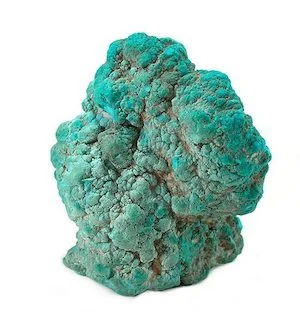
Pop that cork! When you hit those quarterly revenue goals early, you take the team out to make some noise. Turquoise amplifies the satisfaction of a job well done. After all, it’s the stone of extroverts and influence, making you the most fun person at celebratory happy hour.

Funded your Kickstarter? Check. Lined up manufacturing? Check. Pregnant? Whoops. And...check!!! Congratulations! Emerald keeps your heart open and magnifies your joy so you can bask in that pregnancy glow.
Sleeping

Maybe it was that after-dinner espresso but more likely it’s the endless to-do list that wakes you at 3:00 a.m. A girl has got to get her sleep. So under that silk pillowcase (true fact, your hair will look great in the morning) slip a piece of Danburite. It’s a shiny glossy chisel that will chip away at the anxiety that is keeping you up and bring a sense of peace so you can get the sleep you need. It’s also great for migraines.

A wand of Selenite to keep you vertically aligned and help you get your serenity back when you need it. It’s also great at keeping a safe and peaceful home environment.
Doubting
Trauma happens. Sadness is part of life. Suffering is human. Big feelings are deep teachers. We know these lessons. That said, when your runway is ending next month and last month your entire family had the flu, you need a bit of soothing. This duo offers first aid...

Rose Quartz is a classic healer and amplifier of goodness. It works broadly to cover all the bases —heart, mind, body, environment. Place an orb in your home or office to attract some of that universal river of love and help heal your tired heart. Slip a point in your pocket and unpack your feelings of fear and guilt. In the immortal words of Queer Eye, Jonathan Van Ness, “Self-care is non-negotiable.”

Glittery and pink purple, Lepidolite works to relieve emotional suffering so you can feel what you need to feel and come out the other side intact. For the rock nerds and the geologists: lepidolite is a form of mica, and is the most abundant lithium-bearing mineral on earth. Why is this interesting? Because lithium is used in some mood stabilizing drugs. This one you may want to make into jewelry and wear 24/7.
What the F’ing?!?
When the psychic vampires arrive, you need tools to get your positive energy flowing. You may not make payroll, but you will have the strength to communicate why, and the way forward. Bring in these heavyweights.

Fluorite for working through thorny, complex issues and stirring creativity to bring a higher state of mental achievement. Kick that instability to the curb. With fluorite in your purse you're open to net new information.

Your spouse threatens to leave if you spend one more weekend working. Get out the Black Tourmaline. A force field protector and negative energy releaser, it is the best grounding agent in town. Everyone needs this.

Call the shaman. Five employees left last quarter. Labradorite has got your back. The stone of mystics and the North (once thought to be the frozen light of aurora borealis), a seer stone that amplifies focus, allowing clear outlines to emerge and you to find the best path forward. Bonus, Labradorite is a powerful protector and a stone of adventure. Running a successful business is nothing if not an adventure.
Lady Stardust Minerals is the side hustle for Erica Goldsmith, a brand consultant and business strategy guide for creatives. Need a rock? Want a consult? DM her through Insta.

Michele Mehl: The Master of Startup Content Strategy
Michele Mehl, CEO and Founder of Excy, talks steady growth and instructs in how to use content strategy to sell, engage and get over yourself.

Michele Mehl, Founder and CEO of Excy
Ms. Mehl on...
Why she walked away from raising a million dollar seed round to focus on an intentional, steady growth trajectory
How to out-scrappy the competition and be more real with video—which led to nearly all Excy sales
Where to push content, and the tools to do it, to increase traffic, sales and brand loyalty
What 3 things help most for early-stage startup survival
Underwire: First off, tell us about Excy.
Michele Mehl: Excy is a multi-tasking portable exercise bike for anywhere cardio, strength training, and full body physical therapy cycling. We turn typical sedentary moments like watching TV, conference calls, reading a book, kid’s sport sidelines, and even time in bed, into opportunities to exercise.
Our customers tend to be active Baby Boomers and busy office workers with age-related injuries, disabilities, and health conditions, but also the rehab professionals who serve them.
Since the system folds for easy storage and transport and only weighs 14 pounds, it’s always ready when you are, wherever you go.
We also have a mobile coaching application with content for motivation, including videos from physical therapists.
Your videos are crazy inspiring, we’ll get to those later. Let’s start with what first attracted me to your story — the shift you made last year to an intentional growth strategy. You absolutely intend to grow a billion-dollar company, but it’s going to be on your terms. Go there. Please ;-)
For over 20 years, I have worked with or for venture-funded technology startups. I have seen the demands of raising capital. I’ve experienced the pace required to build a billion-dollar brand.
I’ve also been there as a friend and as a consultant in supporting entrepreneurs on their journeys to go from “obscurity to ubiquity,” a phrase used by Maveron founder Dan Levitan, who I had the privilege to learn from while running my previous company, Buzz Builders.
I have lived my entire life and career with a “go big or go home” mentality. There’s no doubt in my mind that we are sitting on a billion-dollar idea at Excy, but I have learned over my career that there is a lot more money out there than there are great entrepreneurs and big ideas.
So, I first set out to hit certain milestones to prove that our strategy would reasonably work in building a radically inclusive fitness brand that focused on including millions of people neglected and marginalized by the traditional fitness industry. Also, I wanted to prove to myself that I could be a good CEO of a hardware/software company. I felt like I had to prove it to myself first because I’ve never asked anyone for money in my life and I take it very seriously.
We initially spent 100% of our time building a minimum viable product, and then a promising product. We then designed our Kickstarter campaign to be intentionally small and learned everything we could about the people buying our product.
I worked full-time to fund the bootstrapping of the business, even bartering marketing services along the way to help Excy grow to reach certain milestones.
In September 2017, I went full-time on Excy. Once again, I was focused on hitting milestones with an intentional growth strategy but seeing if I could make it go faster by being all in, which would help make us a more attractive outside capital investment.
For the first three months, I had small panic attacks because I’ve always had a consistent paycheck. It absolutely freaked me out. All self-induced stress vs. coming from my husband, but I felt irresponsible, until it started working.
By February 2018, I felt really good about the milestones and started the process to raise a million dollar seed round to put us on a path for rapid investment and growth. It took me all of March and April to fully prepare.
So much work goes into preparing to raise money, from creating your forecasts, to your narrative, to your deck, to securing meetings, to travel, to follow up and more. It is more than a full-time job.
During this process, our sales volume went down because I didn’t hire someone to backfill me while I focused on the full-time job of raising money.
The impact of life (and death)
About seven meetings into the fundraising process, my brother Ronnie passed away unexpectedly. I took time off to attend the funeral and to do some self-reflecting and decided that 200 meetings with customers and prospects would help our business more than spending time raising money.
So, I spent the summer focused on meeting with customers and prospects and working with Mike Rector, our co-founder, to build our next product.
Getting Stanford Health Care as a customer was one happy result of this decision, as was the filing of our second patent for our new XCR 300 product. Sales started rebounding slowly.
From another angle, when my brother passed away, I had just turned 45. My former business partner sat me down and reminded me that in five short years, I would be 50 and my son would be 18. She challenged me to look at what I was trying to accomplish from a new lens; one that I would be tremendously proud of when I turn 50 and send my son off to college.
I sat down and jotted down responses to Who, What, Where, Why, and How. This has been my go-to methodology for creating corporate communications strategies for almost 25 years. This helped bring clarity in recognizing the power and limitations of time.
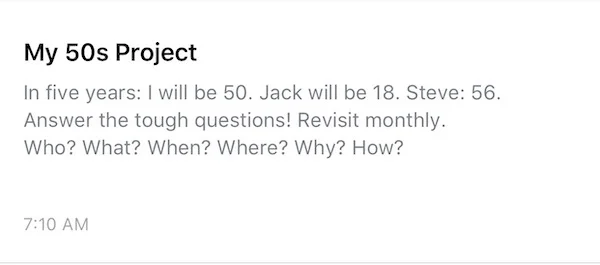
A note from Michele’s “50s Project” file.
After all that, what changed during this experience was that I no longer felt the self-imposed pressure to “go big or go home,” or that securing venture capital and growing a billion-dollar brand is the definition of success.
Don’t get me wrong, I have all intentions of building Excy into an amazing company and household brand, but I now find myself looking closely at brands like Tuft & Needle, MVMT and entrepreneurs like Rand Fishkin for an alternative blueprint for building a fast-growing company without VC.
You made a mindset shift to prioritize how you spend your time, especially with your family. You can still build a great company, but it requires you to re-think prioritization.
Shifting your mindset to time helps you understand what is realistically possible. To me, building a VC-scale business is a consistent commitment to 70+ hours a week to deliver the expected hyper growth (not including travel). I consistently put 70-hour workweeks in the first 10+ years of my career.
Now, I focus on what is possible with a 45 to 50-hour workweek, with the occasional need to go higher and to travel. There are a lot of people with super powers and a lot of support systems in place who can pull this off (a spouse who doesn’t work, grandparents, nanny, third-party services, etc.). My dad recently retired (my mom still works) and he helps out when I travel, but they don’t live close enough for spontaneous help.
At first, I felt like a failure for admitting that I just can’t do it and be the mom, wife, daughter, sister, friend, mentor, and even neighbor, that I want to be. I still fail at these things (typically many of them at the same time), which those who are close to me would tell you because I’m slammed, but I’m highly aware and working on it.
Also, I’m starting to plan on hiring the right team and getting the right investors who are on the same wavelength in establishing a realistic growth trajectory of our business.
What tradeoffs has this shift required of you?
It requires execution and not getting out in front of your skis. It also requires eliminating things that are not moving the business forward.
The smartest decision we’ve made so far is focusing on hardware first and nailing the design and usability. I was in a position to bootstrap the company through this point by working, using savings, sales, and good old sweat equity.
The second best decision was working hard to understand our customers' motives and barriers so that we can also design content that inspires for incremental behavior change. That brings results without asking for complete behavior modification.
Lastly, having a realistic growth trajectory and being very intentional in our growth requires a sustainable and creative marketing budget, realistic customer acquisition costs, and reinvesting the profits in the business to grow faster.
To determine marketing spend, I use revenue and profit-growth expectations to determine how much to spend. Business 101 stuff.
I’m a planner. I had a 5-year plan out of college. And then a 10-year plan. I’m ridiculously structured, sometimes to a fault, but there’s always a master plan. Getting caught up in the idea that building a VC-scale company was the definition of success was a total distraction from our intentional growth strategy.
We can continue to fund with revenue and profits but consider fueling with a smaller strategic investment. Cash is king after all, and while there is always a cost of bringing in outside money. The costs are different (also stressful) for alternative paths to VC. I am weighing those now.
You have a deep background in marketing and PR. How did you approach the marketing for Excy without the size of budget you were used to working with?
From the beginning I knew we could not compete with large consumer tech fitness marketing budgets and big, infomercial activity. Also, if I look at what traditional exercise companies do, it’s not fresh. It’s not new content to give people ideas and motivation.
So, my strategy has been to out scrappy them with content marketing that includes social, video, live streaming, and sharing customer testimonials.
I can compete on just going faster with authentic content, which means there’s no pressure to do things perfect. My customer base doesn’t feel perfect. I’m sure as hell not perfect. There is a craving for real people.
It was really hard for me to do video. I sat on it for a year. My entire career has been behind the scenes, so putting myself out there was very challenging.
When we did our Kickstarter, we had a great product with a well-built mobile app, but the future is in the content and being able to support and motivate people and make them feel a part of something. We started with six professional videos. I bartered, and in exchange I gave them PR services. Those early videos continue to be our most popular. Look at "Arm Candy," our most popular to date.

Excy’s most popular video. Watch it here.
Content strategy
So that six-video package launched your video empire. You are a video-producing machine, you must have over 100 videos, and you’re doing live streams. Talk about authentic—you are the brand and peddling-proof of the impact of your product. Video is the cornerstone of your strategy. What fueled that strategy?
My strategy with video is multi-faceted. First, I want to inspire our customer base to understand the power of what they bought and to put it to work. We didn’t build this device to be another dust collecting piece of exercise equipment. I feel like me rolling out of bed at 6:00 a.m. with no make-up or busting out a random workout outside on the go on demonstrates what’s possible.
Second, I want to extend our SEO footprint to increase traffic and decrease our customer acquisition costs. Google Search is our number one driver of traffic and sales. I put all our live videos to work on Facebook, YouTube and then push snippets to our website, email list, Twitter and Instagram.
Finally, with our paid professional videos, I want to showcase third-party credibility, teach customers how to properly use our device, and also capture that we are a professional company.
We put a very small amount of money into boosting Facebook Live videos on occasion for a decent ROI. I then do everything I can across all our channels to extend the longtail value of all the live content.
We haven’t paid for any YouTube subscribers or views and we’re well over 100,000 views organically. I do Facebook Live, YouTube Live and we capture the streams to our website. We use the top-level domain .LIVE (www.excy.live) to create a branded experience around our live content and to make it easy for our fans and customers to see what we are up to and to dive in to our vast library of content. We also make all the content easily discoverable in our mobile apps.

Excy’s Live page.
A lot of our customers are not on Facebook so we have to reach them where they are, including when they search the Web with a very specific exercise problem that we can help with. With video, they can easily determine if they can see themselves using our device.
Content production
What equipment do you use?
I have two iPhone 8 Plus smartphones, plus an iPad. I have a couple of tripod stands and use cases from Iographer to hold the phones. We recently started using Switcher Studio as our streaming platform to help brand our live streaming experience.
One of the challenges is that people don’t know we have a mobile-coaching app. Switcher Studio allows me to dual-screen and I can feature the mobile coaching app in action as my coach through all my workouts.
I do monthly challenges that customers can follow along with. Or I’m somewhere and I just go for it and pull out the Excy.
I love the video of you in New York across the bay from the Statue of Liberty. I felt like I was there with you, pals strolling the promenade. Oh hey girl, let’s get in some upper arm work while we marvel at this glorious representation of America at its most industrious. Does it come easy for you to do these videos?
At first, I was shy and embarrassed. Not because I was using Excy, but because of the setup with a tripod and talking to the camera as people were walking by. I’d find a quiet place. Now I don’t care. Well, maybe a little with looking like I am talking to myself, but now I just wave at people and answer their questions while on camera.
In my personal life, I have no problems riding Excy anywhere, including the sideline of my kid’s sports functions. Or in the airport. Wherever. I did have one man recently take a video of my using Excy on the sideline and he sent it to his wife. Her first reaction was “Great, an in-shape woman getting more in shape.” It can be hard to constantly remind people of my story and how I live with an injury, so this is why we also place a lot of emphasis on sharing customer stories.
Prior to Excy, maybe I took three selfies in my whole life. I was the mom who was never in the picture. I’d crop my head out. There was always something wrong with my body that I wasn’t happy with. I was that person. I’m not a photogenic person. When I have my photo taken it’s a struggle. It’s uncomfortable for me.
But now I’m more in touch with myself. My son will have more pictures of us because I give fewer fucks.
By the way, the Excy videos are also my workout. Those challenge videos are my real workouts. Or I workout while watching TV. I do weekend warrior stuff (skiing, biking), but I do Excy for 20 minutes, five to six days a week. And I go hard.
How have the videos contributed to sales?
I think the strategy led to nearly all our sales, including securing a relationship with Stanford Health Care. It also helps minimize returns. We’ve only had five returns. People understand how to use our system. As I mentioned earlier, it’s also helped with our SEO footprint.
I will say, I can’t watch the videos. It’s too hard for me.

Michele in action.
Well, please know that your videos are incredibly inspiring. They make me want to buy an Excy and get me some abs like yours. Damn, you can plank AND ride that freaking thing at the same time. I wanna see you Excying, in a plank, while Jeff Bezos meditates on your back. Ommmm...
I love Amazon and Jeff Bezos, but lately, I just keep envisioning him naked with all this dick pic stuff, so you just freaked me out.
I consistently hear from our customers that these live videos inspire them, so it’s why I keep doing them. I’ll be 46 next month. I’m working harder than ever and I’m close to being in the best shape of my life by mostly exercising and multi-tasking when I would otherwise be sedentary.
My next goal is to leverage video even more to drive engagement and extend our footprint since fewer people are paying attention to social media.
Sounds expensive. I know you’re thrifty and crafty with your spend. How is all this possible?
We recently kicked off a new effort called HealthYeah by Excy. It’s a risk to introduce another brand, but we are using it to build out more expert content in a very authentic way (everything is live). The goal is to inspire people, but also drive email signups, engagement, and a great SEO footprint. We are three interviews into it and I am beyond happy, so I booked us out through June.
We will continue to pay our professional videographer to capture video, but also barter for videos, too. For example, I don’t pay our physical therapists to do videos. They do it because they believe in what we are doing, so I give them an Excy for their clinic to work with patients. We will also continue to do live workouts, less than before, but still keep building the library.
Bartering and trade—that’s such a startup theme. You have to get really good at asking for help. Since video is so important to your marketing and product experience, talk about how you integrate it into the app.
The mobile piece is interesting. All videos are integrated into the mobile coaching app under our “more” tab. “Live” takes people to live workouts and training. “Videos” takes people to physical therapy instructions. “Learn the exercises” takes them to setup and tutorials. That helps the customers have a good experience within the mobile app and since everything is also multi-channel, we use the same content to create an SEO footprint.
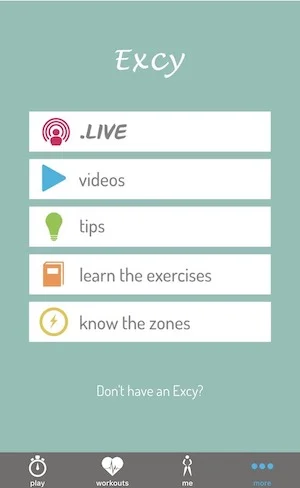
The Excy app.
When you’re an ecommerce company that’s both mobile and hardware, it’s a lot of products to manage. Social is a product, too. We are absolutely a content company.
From the beginning I wanted the hardware right. Then deliver the content. Over time it will be specific to injury and disease. There is a subscription model to be had in the mobile app. Peloton is spending tons of money doing this. They’ve closed almost $1 billion in funding. With my growth strategy, we will partner on the subscription front for the backend but drive the content ourselves with customers and experts.
Steady focus on sales, plow more into content marketing as you have the revenue—but you are profitable now, right?
We ebb and flow depending where we are in the inventory process. When we place an inventory order, which we just did, we’re not profitable until we start selling. Also, since I’m not paying myself, I technically don’t think you can consider yourself profitable until you’re paying yourself a salary. But we’ve made money every month since we launched. That’s hard to do.
There have been temptations to add sensors, or speed up my vision for the mobile app. We have to stay focused. It’s always tempting to do more. Our customers aren’t demanding it. Since I’m bootstrapping, I have time to listen to my customers.
Direct-to-consumer as a startup
Any lessons from your travels in direct-to-consumer land?
If I look at Peloton taking close to a billion dollars, or Mirror taking in $40 million-plus, it can be very easy to be demotivated knowing that D2C is extremely expensive. We are choosing to swim in blue waters ignored by the shark invested fitness market.
We’ve been able to work with health systems and physical therapists rather than celebrities. Another part of our strategy has been to build authentic relationships with opinion leaders who are our customers and have high credibility. That gives our core audience a level of confidence.
My photographer managed to talk me into one photo with a sports bra while planking. I prefer to just capture real life moments where fitness is possible without the production of perfection. It’s a very different strategy than other exercise companies.
I also don’t want Excy to be a fad. There is a tsunami of age-related issues. Exercise is a giant component of that. We can make a contribution to the long-term care of baby boomers and people battling diseases, including many preventable diseases. Now we have the device in place. We have a second product. We have two patents. We will change the nature of how people will take care of themselves.
If I had taken on money our mobile app strategy would’ve been different. We would’ve had to have subscription-based content already before I knew the customer.
Growth trajectory
Final question, who or what has impacted your trajectory the most?
Wanting to be there for my son as he pursues his own dreams and not wanting to miss it. My husband has a very demanding job and travels a lot. It’s hard for both parents to burn the candle from both ends, especially without extended family nearby readily available to help. In close coordination with my husband and my co-founder, we have crafted a realistic growth trajectory that allows my husband and I to raise a busy teenager.
Startup survival tips
Michele’s advice:
Be willing to get outside your comfort zone. Prior to starting Excy, I spent my career behind the scenes. Now, I am doing live training sessions. It’s so awkward, but it helps our business.
Avoid the peaks and valleys. The peaks are high and the valleys are low and lonely. The best way to avoid this is purposeful activity that drives the business. When you find yourself being inactive, do something, anything productive to keep motivated. Even better if it’s time on high-yielding sales efforts.
Don’t get caught only doing the things you are good at. This goes back to the first one of getting outside your comfort zone. Example, I am a better marketer than I am a sales person. But marketing alone doesn’t move the needle. You have to focus and do the things you aren’t as good at too. Or, hire people to help.

Richa Prasad: How to grow fast without VC funding
Richa Prasad, CEO and Co-Founder of Coach Viva on the strategic mindset shift that can help you drive profitability without venture capital.

Richa Prasad, CEO and Co-founder of Coach Viva, details how to shift your business model from growth to profitability and seven steps to grow fast without VC funding.
Editor’s Note:
This is not fast, snackable content. This is control-your-own-damn-destiny content.
Underwire is honored to feature the writing of Richa Prasad. A former AI engineer at Microsoft, Richa co-founded Coach Viva with Lucy Liang. This article details Richa's journey through early stage customer acquisition for her AI Health SaaS startup. The strategy and formula she details will work for most companies—digital products, ecommerce, professional services, etc.
With women-led businesses getting less than 3% of venture funding, no one is coming to save us. If you're serious about building a viable business, study this article and apply the lessons to your marketing mix.
I come from a deep product background. Electrical engineering. Computer science. Internship at Philips Semiconductors before they shut down. At Motorola before they got bought by Google. A full-time gig at Microsoft working first on Visual Studio and then Cortana.
I read widely about all aspects of tech. I dogeared the entire Lean Startup series and books of similar ilk that you’d find on top of Product Hunt Books. I subscribed to Y Combinator and the whole Silicon Valley advice engine, and at some point I began to believe that I understood what are all the pieces of running a business in breadth, even if not in depth.
I left Microsoft to fill a gap I see in the personal health and fitness market where coaches cost exorbitant amounts of money and yet aren’t available at the very moments when people need them the most - moments of failure like when you’re shame spiraling from eating far too much, moments of indecision when you’re standing in line to order your food and don’t know what’ll keep you perfectly on-track, and moments of exhaustion when the journey feels far too hard and you want to give up.
A year into running my company, Coach Viva, my cofounder Lucy and I ran into what we all grapple with - growth. Our word-of-mouth was solid but it was nowhere close to a viral coefficient of 1, the threshold beyond which you can be assured that your product will grow fast on referrals alone; no other marketing channels needed. We tried ads, partnerships with other businesses in the health niche, a tool to attract leads, a pilot with Amazon Benefits, an in-product feature to promote referrals, and much more, but still we struggled with getting a steady stream of incoming customers.
It was in the midst of Summer 2018 while I read, watched and listened to marketing advice from literally anyone who makes their entire living online when I stumbled upon this whole world of entrepreneurs creating 8+ figure businesses without VC funding. They said things that made me realize there is a whole other way of doing things outside of what Silicon Valley talks about.
This story is my distillation of what I have learned with emphasis on the parts that completely changed how I think about building a business.
I am very early in implementing what I’ve learned so you aren’t going to find a “it works for me, let me show you how it’ll work for you” story. My goal isn’t to give you proof. My intention is simply to expose you to a different way of building a business than what gets airtime in tech circles, and leave it to you to decide if it’s for you.
Part I: To fund or not to fund
When I tell someone I am a founder, their first question is, “What does your business do?” followed immediately by, “How much funding do you have?” Not a surprising question given that I see one month old tech companies circling funding events.
I have to admit funding is one piece where what made sense to me versus what I saw happen around me felt disconnected. Not so much in “Why one needs funding” but more in “When one needs funding.”
Lucy and I felt we were in a niche where at our early stage, VC money didn’t seem like a necessity to finding product/market fit or fighting off competitors. We also weren’t sure if we were ready to commit to growing at the crazy pace VCs expect. And lastly but most importantly, the process of getting funded seemed like a huge distraction from what we needed to focus on most - building traction.
This brought up the question of how do we grow fast enough that we don’t run out of our meager, bootstrapped runway?
As you may or may not know, SaaS businesses are notoriously slow going for the first 3-4 years. This is especially true for a B2C SaaS model like ours where each sale is in 2-3 figures, not the 4+ figures each B2B sale brings in. Add to this that we’re selling weight loss coaching where churn is naturally high due to customers’ life priority changes and meeting the goal they signed up for.
Searching for answers to these existential questions far and wide, I came across Russell Brunson, who grew his company ClickFunnels from 0 to 360M in 4 years without any VC funding. I started digging into how he did it and that’s when I learned what I’m about to share.
Part II: The foundation of profitability vs. fast growth
There are 3 foundational blocks to understand about his success. The first two blocks describe the business and mental sandbox you’ll be playing in should you choose to follow his approach. Use them to judge if this is the right path for you. The last block lays down the strategy to follow if you decide on this path.
Business sandbox: Constraints you agree to build your business within.
Mental sandbox: Silicon Valley mindsets you agree to discard.
Your strategy to growing fast without VC funding.
Business sandbox
Firstly, let’s talk about which businesses aren’t a fit for this path. If your company is in a commodity-like industry that doesn’t inherently have enough differentiation on day 1, then what I’m about to share won’t work for you.
Social networks and ride-hailing services are two examples of businesses that don’t fit this model. These types of businesses rely on lots of cash to grow fast and monopolize a market before their competitors, and that monopoly becomes their lifeline. They need VC funding to accomplish this.
Compare this to a service like Coach Viva where there is inherent differentiation in coaching services. You pay Tony Robbins a whole lot more than a life coach off Yelp even though they both provide the same service. In contrast, Lyft and Uber are largely interchangeable and rely on coverage and price wars to attract and keep customers.
Second, your focus is to build a profitable business, not a high valuation business. You can always decide later that reaching escape velocity has become critical to your business and you need to attract VCs, but when you’re in midst of pursuing the strategy I describe in foundational block #3, you’re primarily tracking profits, not pure growth.
For what it’s worth, if you choose to not pursue the VC path ever, it doesn’t mean you won’t have massive impact on the world. Perhaps the most famous example of such a person in the Silicon Valley bubble is Gary Vaynerchuk. He's funded many startups including Facebook, Twitter and Venmo to name a few, but his own company, Vayner Media, has never taken any VC money.
Lastly, non-VC backed companies grow fast - ClickFunnels and Vayner Media for example - but they aren’t going to grow as crazily fast as VC-backed companies because they don’t receive overnight millions of dollars to burn. Comparing the two is like comparing a natural bodybuilder to a steroid-fueled one.

Natural / Non-VC vs. Steroid / VC
Mental sandbox
All the mindset shifts I am about to list hinge upon the change in business model focus: profitability, not pure growth. If you’re going after pure growth, Silicon Valley advice is the perfect advice for you. However, if you’re following this fast bootstrapped path, then you will need to make the following mindset shifts.
The first mindset you’ll need to shift is your attachment to the narrow scope of the problem you’re trying to solve. Instead, try to serve your market in whatever way possible.
Let me explain.
When I first started Coach Viva, I was attached to making real-time weight loss coaching affordable for the masses. This is exactly the type of focused problem that startups get funded for.
But let’s be honest:
Not everyone who is trying to lose weight needs coaching.
This sort of business naturally has high churn because the point of coaching someone is to help them become independent.
If I poke my head up and look around beyond solving coaching, I see a whole slew of customers who'd pay for kick-ass DIY weight loss tools and courses. Bonus: I will become profitable, thereby extending my bootstrapped runway, far more quickly if I try to serve my market in whatever way possible like building the aforementioned tools and courses, and thus disconnecting my business’ success from sales of my coaching service alone.
This brings me to the second mindset you’ll need to shift: sell (almost) everything. Most VC-backed businesses are set up to revolve around one main paid solution with different pricing tiers while everything else gets distributed for free.
Now I’m not saying charge for content marketing. You need to have free relationship-building stuff out there, but don’t only charge for your main solution. For example, at Coach Viva, we sell courses and we’ll sell DIY tools soon, even though our “main” product is coaching.
I touched upon the third mindset briefly just now but to call it out explicitly, don’t marry yourself to selling only software. This is a product-person mindset trap. Sell whatever type of solution your audience needs. In our case it’s also courses and physical workbooks. You're seriously under-serving your market if you are married to only selling software.
And the last mindset you need to shift is thinking your product is not your offer. Those are two very different things, and to build your offer, the different solutions I’ve been talking about for you to create for your market play a critical role.
Here’s an example: let’s say my product is a cup. If I try to sell my cup on Amazon, I’m in a price race to the bottom. Now let’s say I decide that this cup is for folks drinking coffee who are busy and are fueling themselves throughout the day. Now I can create an offer that includes my cup + meditation practice tracks + a thermos + coffee recipes for energy, and price this offer whatever I want as no one else has my exact offer.
Ta-da! I’ve broken out of price wars and created a brand around my product in one fell swoop.
PART III: The strategy for growth - your prospect’s journey
If you are 100% comfortable with both the business and mental sandboxes you’ll be playing in, then welcome to the last foundational block - the strategy to nail for growing fast without VC funding.
Your strategy can be broken down into the 7 steps in your prospect’s journey.

Source: DotCom Secrets Book
For each step, I am going to lay down the principles you need to think through for your own business. The distillation from principles to tactics to experiments is your domain, as it’s subject to the needs of your business and wide open to your creativity in how you implement them.
Let’s dive into each step.
Step 1: Traffic Temperature
First, there is Hot traffic - these are the people who are actively exploring your direct competitors’ solutions. For example, if you’re selling Mud Run tickets, these are the people who’ve already done mud runs before or are looking for mud run events right now. They are the easiest people to sell to as they already believe in your worldview of “mud runs are awesome and important”. When you target these people, you’re ‘collecting’ customers.
Next, there is Warm traffic - these are runners who need convincing as to why mud runs are awesome. There is education you need to provide to bring them over to your worldview.
Last, there is Cold traffic - these are people who have never ran a race. They aren’t certain if running is something they’ll commit to, and mud runs are far from their sphere of understanding. When you target these people, you’re ‘creating’ customers. Converting these people into your customers is really hard.
As you can already guess, you want to first exhaust Hot traffic. Too often we start going after Cold traffic because we want to “change the world.” No. Go after the easiest niche you can think of.
In fact, divide your niche into sub-niches, and target the Hot traffic in each sub-niche. For example, for Coach Viva, the people exploring Noom and Weight Watchers are Hot traffic. We should go after them as they already believe in our worldview of “You need awesome coaching/accountability to make weight loss stick.” Once we exhaust that sub-niche, we could go after the Personal Trainer sub-niche. And so on.
For each sub-niche, you could in parallel go after Warm traffic. This happens through partnerships with shoulder sub-niche businesses, that is, businesses that target the same customers as you but sell something that’s not in competition with you. For example, athleisure shops are a shoulder sub-niche business for Coach Viva.
And lastly, Cold Traffic is where you’re literally trying to create a market - not collect people anymore. You’re telling people they have a problem and should want your solution. This is where building a public presence through blogging, YouTube, podcasts, books and social media is important since you won’t see returns on these investments for years due to two reasons: (a) organic channels like these rely on compounding effect which means time is essential for them to grow, and (b) the prospects who come through these channels require the longest education time into adopting your worldview.
Step 2: Pre-Frame Bridge
The Pre-Frame Bridge is the education you need to provide to your incoming prospects so they can shift into your worldview and be open to your offer. A Hot traffic person requires a shorter pre-frame bridge than a Warm person, who in turns needs a shorter bridge than a Cold person.
For example, Coach Viva gets Hot traffic from weight loss Facebook Groups where our existing clients refer us to members in the group who asked for a good coach to try. These members tend to click the “start free trial now” button on our landing page with the highest frequency.

A typical landing page
It’s a different story for Warm traffic from our Yelp page. Since Yelp is about in-person businesses, the prospects are in the frame of mind of wanting an in-person trainer. We need to first break that frame and persuade them into a new frame that tells them they can be just as successful with an online coach. So, the first page they see needs to be devoted to this reframing education. It can't be the typical landing page with a "start free trial now" button.
Finally, when Coach Viva gets Cold traffic from Google, the prospects mostly want to learn more about us. We need to first understand what they are looking for, do we have anything that helps them, and build trust by sharing our stories and knowledge before that landing page with the “start free trial now” button can be shown.

Coach Viva About Us: share stories to start building trust
The point I am trying to make is to think of your website like a salesperson, not a brochure. A salesperson speaks in context to where their prospect is at. She doesn't just hand over a 50 page brochure and sit back and wait for the prospect to decide.
Steps 3, 4 & 5: Frontend of your Value Ladder
Now that your prospects have gone through your pre-frame bridge and understand your worldview better, you are ready to make offers. The order in which you make your offers is important, and is collectively called the Frontend of your Value Ladder.
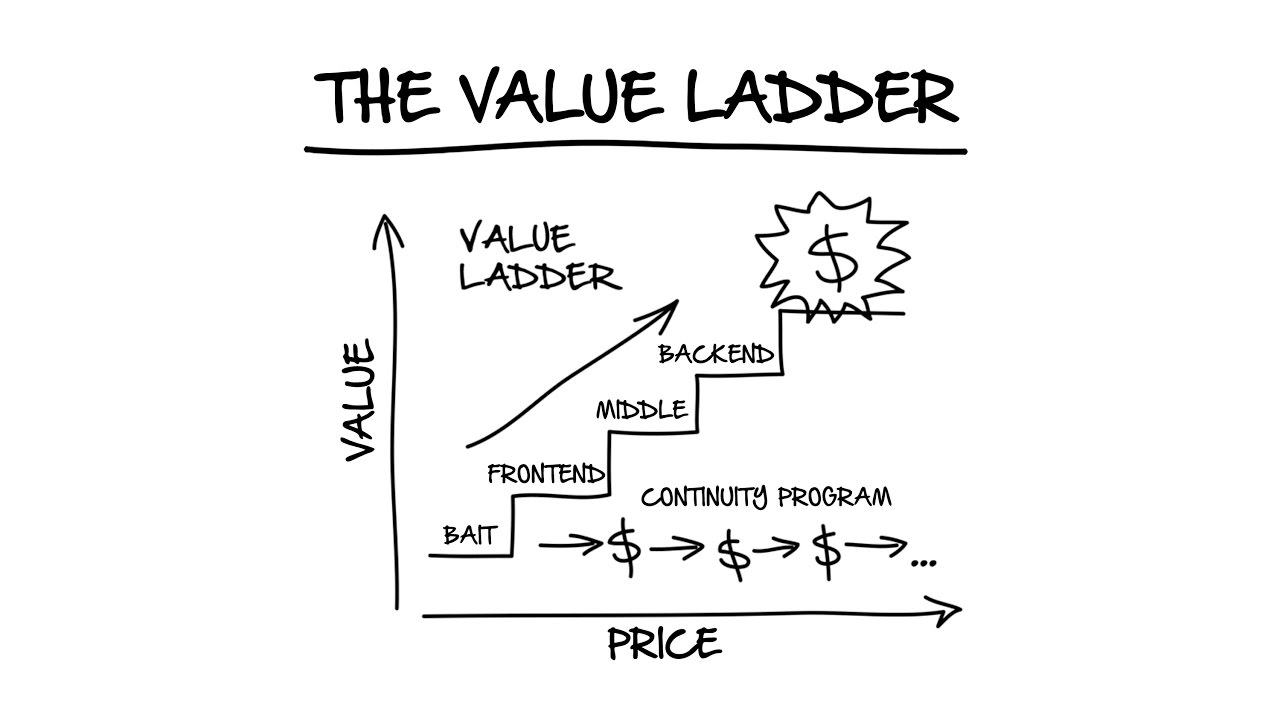
Source: DotCom Secrets Book
The first step in your Value Ladder is the Bait, as in the thing that causes them to pause and click on the link to your website. For example, our Yelp page reviews are a bait. If you do ads, those are baits. A bait is your content appearing on other platforms, hooking your prospects in by being intriguing, and then reeling them onto your website.

Bait to hook people and then reel them into Coach Viva’s Frontend
Once they are reeled onto your website, they proceed through the pre-frame bridge and then to the second step in your Value Ladder, called your Frontend. This is collectively Steps 3, 4 and 5 of the 7 steps, which happen in the same session, so you catch all the people who’re ready to buy.
3. Offer your prospect something of high-value (example: an e-guide on how to break weight loss plateaus) in exchange for their email / some way to connect with them without algorithms you don’t control getting in the way. The goal is to, at worst, have a way to continue building a relationship with them, and then point them to step 4 again if they didn’t buy the first time around.
4. Offer your prospect something of high value for cheap that builds upon your offer in Step 3 (example: a comprehensive book on how to DIY fitness for $5). The goal is to test the waters to see if this prospect is already bought into your worldview and ready to buy right now.
5. Offer your prospect something that's more expensive and makes your offer in step 4 faster, better, stronger (example: a personalized nutrition and exercise plan for $50 so they don’t have to spend time translating the book to actions in their life). You’re targeting buyers in heat - for example, I was one when I went to Amazon to buy one book to learn design, and ended up buying 3 design books because they all looked so helpful.
You can collapse steps 3 and 4 into one step (example: by selling a physical product that’s free as long as prospect covers shipping cost) or skip step 5 altogether at the beginning. Step 4 could also be someone else’s product with whom you split revenue.
There is a lot of flexibility in how you implement these steps as long as you satisfy the two goals of the Frontend:
A. Create offers that make your CAC = < Revenue from your Frontend.
B. Your Frontend converts your prospects’ beliefs into your worldview.
Let’s dive into A first as that’s the lynchpin of how you can grow fast without VC funding.
For the sake of easy CAC calculation, let’s say you’re using ads as the bait to drive traffic to your Frontend. We’ll assume that the ads are costing you $1.40 per click, which means it costs you $1,400 to drive 1000 prospects to your Frontend.
Now let’s say 38% of the prospects gave you their email in Step 3, which means you got 380 subscribers. Next, either when you showed Step 4 after Step 3 or through your relationship building sequence of communications leading them back to Step 4, 9% of subscribers bought your $37 product. Your total sale is $37 x 34 = $1258.
After that, let’s say 7% of your buyers also purchase your $197 offer in Step 5, which brings your total sale to $1,258 + (3 x $197) = $1,849. This equates to $1.85 earnings/click which is greater than your cost of $1.40/click. You have a winning campaign where you’re making a profit!
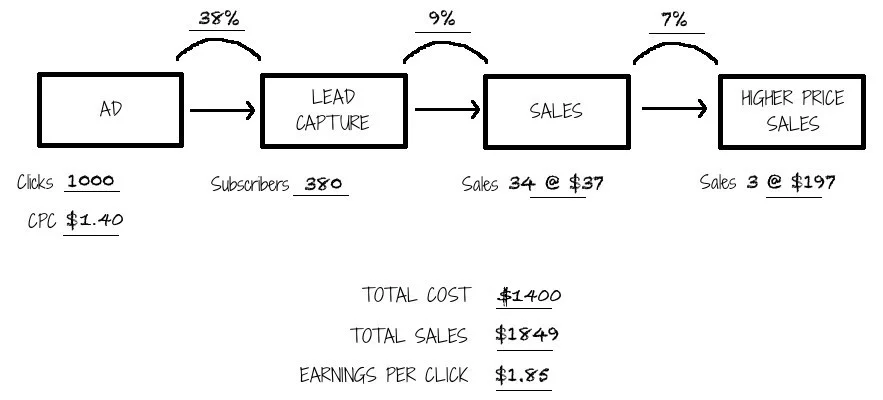
Source: Fill Your Funnel Secrets Book
Let me repeat the two important points from this example:
If you were only selling your first offer of $37, you’d be making a loss ($1.26 earning/click vs. $1.40 cost/click). It is the sequence of offers building on each other which helps you beat your ad costs. If you’ve read any negotiation book, you know that once you get the first Yes, it’s far easier to get subsequent Yes’ on bigger and bigger asks.
You’re getting paid to acquire customers. You can literally outspend anyone to get customers. You see now how you can grow fast without VC money?
Now let’s talk about goal B (your Frontend converts your prospects’ beliefs into your worldview) which compounds your growth and profits created by goal A.
The actual offers you make in your Frontend must make your customers your huge fans. This means two things:
They cannot believe how much value you delivered for how little you charged them.
The value you gave educates them thoroughly into believing your worldview.
That last bullet is especially important when we get to Step 6, where you multiply your Frontend profits while having $0 CAC.
Step 6: Age & Ascend the Relationship
At the end of your Frontend, you have a customer, that is, someone who has already bought from you and helped you acquire other customers at profit.
At this point you pause on the sales and nurture your relationship with them by sending them high-value emails / whatever direct communication channel you choose to deliver them entertainment + value. You tell them stories about yourself, share what you’ve learned, what you’re doing, your failures and successes, and essentially get them to know you better.
Once you feel they’ve been nurtured well, you now ascend them to the Middle of your Value Ladder. This is the natural next thing they need in order to make use of your Frontend.
For example, Coach Viva’s Frontend are courses which teach people the science and DIY methods of how to lose weight. A natural next thing they need are the tools which make implementing said methods easy and quick.
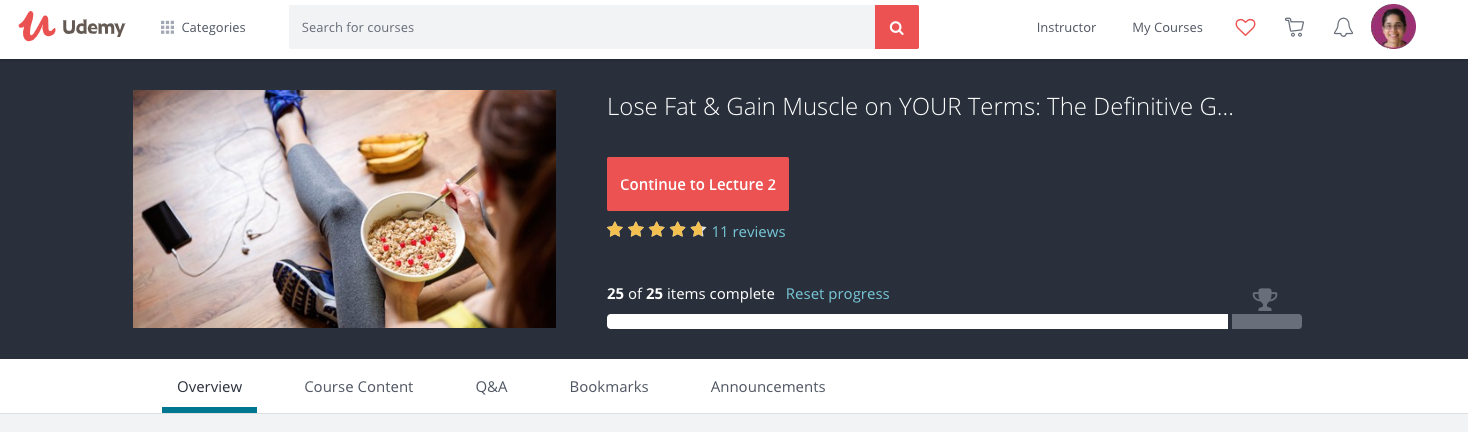
Frontend course of Coach Viva
If your Frontend did a good job of converting their beliefs into your worldview, these customers will be primed for your Middle Value Ladder, and guess what, selling it to them costs you $0! It’s pure profit from here on out as you age and ascend your customers up your Value Ladder.
Your Middle Value Ladder could be one offer or many. For example, at Coach Viva, our tools are our first Middle offer while coaching is our second Middle offer.

Frontend course nudges students to review what they learned by taking a quiz hosted by Coach Viva, which then seamlessly leads into offering the Coaching Middle offer
At least one of your Middle offers must have a continuity revenue model, that is, be a recurring source of revenue. For Coach Viva, we plan to have both Coaching and Tools have a continuity revenue model.
Also, remember the mindset shifts we talked about: this could be not just software, but a membership site or information product subscriptions like magazines.
Step 7: Change the Selling Environment
Throughout Step 6 you’re nurturing your audience with email / other communication methods, and at some point those who bought your Middle offer(s) will be ready for your Backend offer. This is generally a high-ticket offer in the 4+ figure range, which is why you need to change the selling environment into a phone call or some such 1:1 communication to make the sale.
Just like there can be multiple Middle offers, there can also be multiple Backend offers. These are generally offers where you are "physically present,” like a consultation or retreat or mastermind. In fact, as you gain fans, you could start putting together virtual or in-person Backend offers, and see who bites. You don't have to wait until your Frontend and Middle is profitable before experimenting with this.
Last note
It's okay for prospects to jump directly into Middle or Backend if they are ready. Not everyone needs to go through the Bait to Backend in sequence.
However, it’s interesting to note that both Russell Brunson on his podcast and Rand Fishkin of Moz in his book have remarked how the customers who go through the education journey from Bait to Backend tend to be on average the highest LTV customers.
Where we are at with Coach VIva
We are still in the process of figuring out our Frontend that meets the two A and B goals mentioned above as well as setting up our public presence, that is, the Cold traffic sources.
One of our frustrations with 2018 was we set goals that aren't directly in our control, like revenue or customers.
In 2019, we have set a goal to do 100 needle moving experiments (50 by me, 50 by Lucy). All must be “skateboards” in Spotify MVP language, and they must target whatever happens to be our bottleneck in the 7 step customer journey at the time of the experiment. As a byproduct of this consistency, we hope to see the out-of-our-direct-control goals move in the right direction.


A gift for you
When we first started, ironically despite being a health business, both Lucy and I stopped exercising, sleeping or eating right.
In the past 6 months, we have reversed a lot of our slips as they were causing noticeable drops in our energy levels and mind clarity.
We know that you, like us, are super busy running your business, and don’t always have time to do the prep work (meal planning, workout program creation, building systems for self-accountability) that’s required to upkeep your health and fitness.
That’s why we’ve created a short quiz that asks you 3 quick questions to first understand, then offer the kind of help you need most right now to make keeping your health and fitness up easier.
That’s it from me for now. I hope this has gotten your brain whirling with possibilities. I’d love to hear your thoughts! You can reach me here.