
New data on VC bias
Our report on the continued white-male bias in investing, with new data on the likelihood of female and Black founders to build companies that benefit society.

Art by Britt Stromberg.
How race and sex impact venture funding.
Are women more likely to create companies that benefit society?
That was one of the questions that led me to start tracking female founder fundraising.
For all of 2019, I documented the weekly updates in a Google sheet. I used Crunchbase to search new funding rounds by gender and type of round (seed, Series A, B, C) and exits. To verify a female founder, I would click through to each company website, all 1,293 of them, and cross check against LinkedIn if founder profiles were not listed.
Reading those About Us pages every week made me hopeful. I remember thinking on multiple occasions, “Damn, these women are THE solution.” There are many qualified women who are founding companies that, with money and guidance, could make the world a better place.
Now there’s proof from Plan Beyond’s Bias in Venture Capital Funding Report.
Early in 2020, Laura Troyani, the founder of PlanBeyond, approached me about running data analysis on the Underwire Funding Update. Laura’s initial hypothesis was that there’s a “yellow brick road” to VC fundraising paved by race, gender and class. You need to be white, male and a graduate of an elite educational institution in order to tap the venture-capital trough.
Laura and her team validated the thesis and revealed a couple of surprises based on race:
Companies with women only founders are more than twice as likely than men only teams to develop companies that improve society
Organizations with at least one Black founder are 60% more likely than organizations with at least one white founder to work to benefit society
Let's look at the data behind these two revelations.
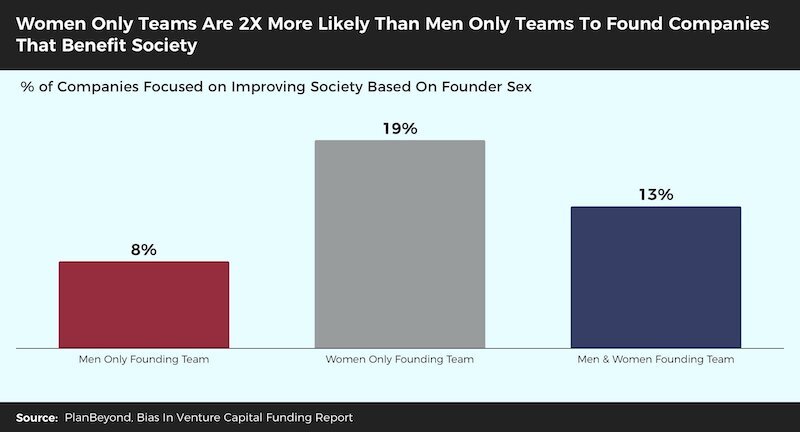
The PlanBeyond team found a wealth of female-led, for-profit organizations building solutions across industries, including food and consumer packaged goods, education, manufacturing, healthcare and technology.
The report highlights a few of the types of companies working to improve society as a whole, and also points out that this work is not done equally by all founders. In fact, women and Black-led companies are more likely to build these types of companies.
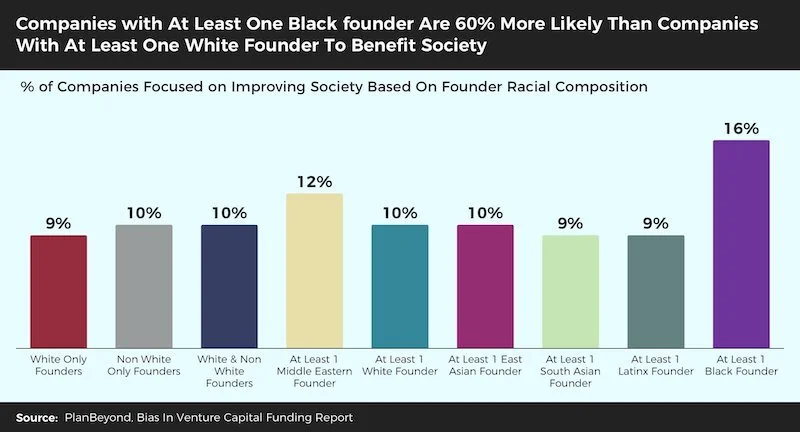
Despite their value to society, the report also shows how organizations with women Black founders are receiving disproportionately less funding throughout their life stages.
I give full credit to the PlanBeyond team for digging deeper on race. They used LinkedIn and Google Image searches to identify and label founders based on easily-visible traits. That was smart because it mimics how founders are likely perceived when interacting with investors. While not a perfect measurement, this approach went deeper than I was able to do on my own and helped to surface the report's most valuable insights around race.
Other findings from the report:
Venture-backed founders mostly look the same—white and male
Want to raise the big bucks? It helps to be a man, it hurts to be Black
Venture capitalists prefer white men
Big duh. We know these unfortunate truths about the VC ecosystem and white-male bias.
The timing of this report coincides with our collective attention on racial inequality in the U.S., as it should be. We’re fortunate to be able to share this data in support of our Black colleagues. For a just and equal society, we need their full participation in founding and scaling companies.
Please read and share PlanBeyond's report. Post it to LinkedIn and tag @PlanBeyond so Laura gets the spotlight this deserves. It's important. The health of our society depends on it.
Related to the above, I’d like to call out presumptive Democratic Presidential candidate Joe Biden’s Build Back Better economic plan. His platform aims to reinvigorate America's economy with significant investments in R&D, infrastructure and education.
As part of his R&D Challenge for All of America, he calls out the gender and racial inequality of the VC system and pledges to direct federal investment toward 50 diverse communities across the country that could become new centers of job-creating innovation and production. He also pledges to guarantee that funding is equitably allocated so that women and communities of color receive their fair share of investment dollars.
If elected, Biden's administration could provide the spark to finally tip more money into Black- and Brown-led businesses.
Here’s an excellent analysis of Biden’s economic plans from Seattle Times business columnist, Jon Talton — “Biden economic agenda presents voters with a clear choice. “
As PlanBeyond’s report attests, our current system isn't working and will not make society a better place for our children. Voting for an administration that has a plan to give Black and Brown business owners this necessary support is one part of the solution.
Please vote.

Frozen, too
No, this is not an article featuring blockbuster animated Nordic characters. But it is a good metaphor for what’s happening to Underwire in the short term.

The frozen waterfalls of Robe Canyon with Ava Baker Olsen.
Winter is here
Something you may not know...
Recently I took a full-time J-O-B with Hornall Anderson as their Head of Marketing.
If you’re a Seattle-area resident and intersect with the brand and design world, you know Hornall Anderson. For 37 years, they’ve been branding, rebranding, designing and impacting the businesses of the world’s most beloved brands, including Alaska Airlines, Gerber, Fred Hutch, Pedigree, Quaker Oats, Starbucks, University of Washington, and many other companies.
Hornall is merging with a larger creative company called Sid Lee. The opportunity to help move a global creative community forward, and to learn the business of an entity billing at 10X what I’ve been able to bill in a year, was too compelling to turn down.
My full-time work, combined with the busy-ness of December, brings me to the decision to downsize Underwire for awhile.
I negotiated to keep producing Underwire as part of my job. Easier said than done. Mergers are messy. A role that felt comfortable upon acceptance is far more demanding than anticipated. Duh, babe. A situation that reminds me of this quote:
“We are never prepared for what we expect.”
Since returning to full-time work, I produce Underwire on nights and weekends. I’ll be real, it’s grinding me down. I don’t want Underwire to be a dreaded task. Writing this newsletter each week connects me with incredible women and hones my perspective. I get a perverse pleasure reporting on the weekly funding data. From the venture-capital data set alone, I can see the impact women-led companies are having on the tech, biosciences, health and wellness, and e-commerce sectors. The ~3% of venture capital going to women-led companies won't yield "hockey-stick growth" any time soon. Change will continue at a glacial pace for us.
More realness, I’m going through peri-menopause. Most nights I wake up at 3 a.m. and can't get back to sleep. My body is a furnace that cranks to 100-degrees at the most inopportune times. I forget details. I rage against humanity hourly and cry at the drop of a minor key. The random bleeding...well, I'll spare you those details. I'm on the same physical and emotional seesaw as my 16-year-old daughter. Oof. How delightful for my new co-workers.
I tell you this because Underwire is about the female journey. Like me, women at the height of their careers are going through this, too. As I sit in conference rooms and feel a hot-flash broiling, I remember that our experience is very different from the male journey. There is still a mountain of inherent white male privilege in the business world. It exists in my new organization. Five of the six people on the leadership team are men. Most are Caucasian. These stats mirror the majority of creative agency leadership teams.
In taking this job, I cut a deal with myself that from within the belly of the beast, I have to be a voice for equality. We're on the brink of a new decade. My industry needs to change to reflect the diverse reality of life as a human in 2020.
So, here's what I'm going to do: I will continue to produce the funding updates weekly. I want to close out 2019 with a solid year of data. Underwire will still arrive in your inbox on Monday, but limited to the funding report. For now, I'm signing off from lead-in soliloquies, guest posts, link summaries and how-to guides. I need time to retool Underwire to be a sustainable, helpful and joyful part of the next chapter of my work life.
I do have a request. I'm eager to geek out on the funding data but I lack deep data-analysis skills. If you would like to volunteer to help me run analysis on 2019 funding data, I’d love to produce a report. I just can’t do it alone.
It means the world to me that you read Underwire. I hope you stay tuned in 2020.
xxxo. britt

Thank you for your ....
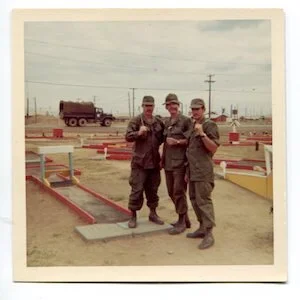
In honor of Veteran’s Day, I share polaroids from my father’s service in Vietnam. This was his “office” during two prime years of his life. These years made him the role model and leader that he is today.

Sacrifice
Today I write in honor of my father, Brent Stromberg, veteran of the Vietnam War. I also honor all of the veterans who may be reading this issue, and the veterans of my extended family—Nick Olsen, Jonathan Olsen, and my late grandfather, Edwin Stromberg.
I read this editorial by Gina Barecca, which made me think about service more deeply, and the shared experience that only those who served and fought for our country can understand. Saying to a veteran, "Thank you for your service," is appreciated but perceived as a platitude, at best
Growing up, my dad rarely talked about his experience in the Vietnam War. The strongest memory I have of his service was his Combat Infantryman Badge. He kept it in the top drawer of his closet bureau in a shallow dish with coins and souvenirs. The pin mesmerized me, a rifle on a pretty light blue background. For such a small object it felt weighty. I remember placing it in the palm of my hand and wondering, did my dad know how to shoot a rifle? What did he do to receive this pin? Why was it now stored next to his socks and underwear?
Two years ago, my mother gave me an inch-thick stack of polaroids that my dad shot while serving as an Army Infantry clerk on the Tay-Nihn Combat Base. She pulled the stack from one of dozens of shoeboxes filled with printed photographs. One epic chapter in the paterfamilias' life, faded images and frayed edges from half way around the world, contained with a rubber band.
Midway through my life and I had never seen these photos before. I share a few of them today. While serving our country, this was Brent's "office." I can never fully understand what he experienced but I deeply respect the sacrifice that he made for our country and my family. I've always admired my father's stoicism. He always gets the job done. Works hard. Hides the pain. Supports his family. Never complains.
I feel ashamed that don't know more details about these pictures. Dad, when we're together this Christmas, let's pour ourselves a couple fingers of single malt and you can tell me about these people and places.
Readers, please call your veterans and honor them, in your own words.





How to write your company one-liner
Get your description in order by following the example of Stride Funding, Aviatrix Systems and ROYBI. How does the one-liner fit into an integrated messaging framework? That’s in here, too.

Stride Funding offers a textbook example of how to write a description.
One line wonder
When did you last update your one-line company description?
Perhaps you nailed it from the get go? I'm guessing not.
Every week as I research the funding updates from Crunchbase, I see first-hand how companies are positioning and messaging. Most try too hard or wind-bag the exercise, thus missing an opportunity to help customers, investors and media quickly understand your company.
Let's use this week's Funding Update as a lesson in how to write a one-line description that can be the foundation of your integrated messaging framework. That may sound complicated —"integrated messaging framework"—but it's really just a simple, structured approach to how you tell your story consistently across marketing channels.
Your one-liner anchors your messaging. It's what you say at networking events when someone asks, "What do you do?" It's the text you put into your About Us box on Twitter, Instagram, Facebook, Crunchbase, etc.
After that, your one-liner sets up add-on messaging such as home page copy, and supports value propositions. I'll show you an outstanding example below from Stride Funding.
Components of a one-line description
A great one-liner conveys the following info:
Company name
Service or product offering
Target audience
Don't get fancy with this. Be direct and explain what you do, for whom.
Best one-liners
Here are three of the best examples from women-led companies who raised money this week:


Decent one-liners
Here are a few examples that are so close. One or two tweaks and they'll be 👌:

Snaps to Kira Biotech for brevity, but for whom? Which markets or patients?
Here's another biotech that needs to clarify the audience:

Hells, Tmunity could be focused on the same patient populations as Kira.
Here's another concise description:

"Animal lovers" is a nice touch. Upon digging further I learned they use ethically sourced ingredients. Add "ethically sourced" before "pet food" and this becomes a stellar description.
Bad one-liners
Most of these are bad because they're unclear or too long. I cringe when I see the ... to the right of the descriptions. That means there's more copy. There shouldn't be more copy. Your description should fit within the limits.
This one is trying too hard, or they forgot to revisit their Crunchbase description after setting up a profile:

Integris does data-privacy compliance automation—an essential service for enterprises who have to comply with strict data-reporting policies. They're close in their description but would be better served by keyword loading with "data protection" and "privacy."
Here's another missed opportunity:

WTF? I have no idea what they do other than retail, and they just raised $6 million dollars. I dug deeper to learn RUTI is developing a proprietary CRM and facial/body recognition technology with an affluent female fashionista GTM strategy.
Another one that makes me go 🤔:

Yeesh, turns out they make hair-care solutions for African American women, sending a box of personalized ingredients each month for customers to mix up at home. That's cool. JUST SAY THAT!!!!!
Finally another miss from a brand that's otherwise crushing their market launch thanks to a collaboration with Chrissy Teigen:

Again with the ...
They could say, "from the team that brought you the corn test." Not really, but they should use their Twitter description and call it done: Burst is a Sonic Toothbrush and oral care subscription-only service delivered direct to consumers at a fraction of the cost of big name brands.
Key takeaway
Revisit your description. Now. Make it consistent across channels. Include your Crunchbase profile, if you're raising.
BTW, your personal brand description can take this approach, too. 😘
I leave you with Stride Funding as a stellar example of how to do it best.

Stride Funding’s Crunchbase description clearly states what they offer and for whom (student loans implies the audience).

The Twitter description slightly tweaks the language but all of the necessary components are included.
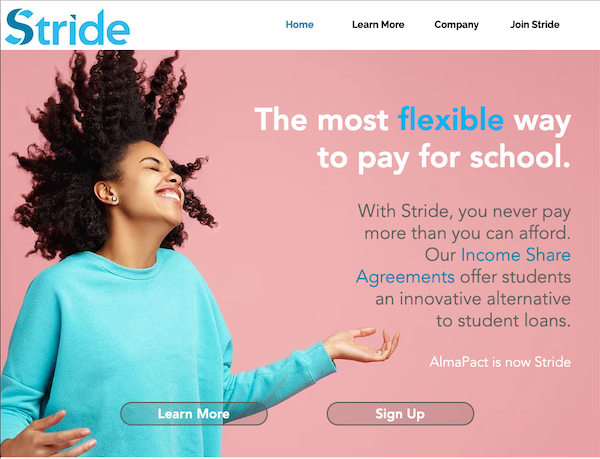
Stride's home page sticks to the core messaging and expands the story. Bravo Tess Michaels and team!

Boss women borrow balls
It’s time to plan for 2020. Strap on the biggest of the baller tactics and plan for growth the way the greats do—flywheels, baby.

Illustration by Todd St. John from The New Yorker.
Deep in manland
As we near the end of October, it's time to plan for 2020.
To prep, I spent the weekend balling up on:
1. Charles Duhigg's analysis of Jeff Bezos and Amazon in the article The Unstoppable Machine.
2. Turning the Flywheel: A Monograph to Accompany Good to Great by Jim Collins.
Duhigg's article is a long, thought-provoking read that presents a well-researched perspective on the personal, economic and societal ramifications of Bezos' ambition. (There's an audio version that runs 1:21:42.)
The article references Amazon's flywheel and provides context for how Amazon uses process to spin out innovation after innovation. Duhigg compares Bezos and Amazon to Alfred P. Sloan and General Motors, correlating a framework for success that Jim Collins runs with in Turning the Flywheel. Many of the world's great companies grow and maintain dominance by creating structured and repeatable processes that are adhered to with maniacal discipline.
Like GM at the height of its power, Amazon is a process company. Here is the staggering effect of the 2018 revenue from their flywheel (all data from the Duhigg article):
Online sales - $122 billion
Fulfillment by Amazon - $42 billion
AWS - $26 billion
Amazon Prime + Kindle Unlimited - $14 billion
Whole Foods - $17 billion
Ad sales - $10 billion
Amazon devices - Estimated hundreds of millions
Their process is fueled by a strict adherence to hiring and living by their Leadership Principles and the company's Day One management style.
Regardless of how you feel about Amazon's values and ethics, there are lessons you can apply to your own growth machine. In Jim Collins' monograph, Turning the Flywheel, the author breaks down Amazon's momentum machine:

Jim Collin's explanation of Amazon's flywheel from Turning the Flywheel: A Monograph to Accompany Good to Great
Collins also shares flywheel examples for Intel, Giro cycling helmets, an elementary school, a music festival, and a health clinic. He also lists out how 18 corporations moved from first arena success to the next big extension of the flywheel.
This is useful as a planning tool because of its simplicity. You can see how every revenue-generating aspect of the company maps back to a basic structure. Use other companies' parts as a springboard to think of your own.
Turning the Flywheel is just 37 pages and takes about two hours to read. It's all you need to start mapping out your flywheels.
BTW, skim Jim Collins' concepts for a refresher on BHAG, The Hedgehog, First Who, Then What, and other management nuggets. Also notable is that none of the 18 companies mentioned in the success list are run by women. Mr. Collins could start with the Fortune Most Powerful Women of 2019 for inspiration.
Thanks to Jeff Alpen for lending me a copy of this book. That action made this article possible. 🙏
I’m an Amazon Associate. That means that I earn from qualifying purchases. So when you buy a book from a link on my site I make a (very small) amount. Buy more books!

Mother of all role models
Kristen Miller, CEO and Co-Founder of Stylyze on pregnancy, taking leave, taking care and why you should stop waiting to have a baby (or whatever it is you’re waiting for).
This conversation with Kristen Miller was originally published on October 16, 2018. Since that time, Kristen gave birth to her son, Malachi. As Kristen explains, “I had him on Thursday and was back in meetings on Monday, working from home. It was seamless without a maternity leave. Business as usual from Children’s Hospital.”
Malachi had heart surgery at two months old. The idiom, “sleep when your baby sleeps,” doesn’t apply to CEOs of babies and startups. In the first two months of Malachi’s life, Kristen and family were in and out of the hospital. He’s now nine months old and, “the happiest little guy. He’s truly a joy.”
Meanwhile, alongside her team at Stylyze, Kristen is focused on delivering against her original vision and product roadmap. Multiple top-tier retail partnerships have allowed the company to focus on execution instead of fundraising, and they’re hitting their milestones.
To enable the work, the team has gone to a remote organizational structure. “I can’t spare the time to commute,” says Kristen. “I’m so protective of my time blocks.”
Read more about Kristen below, and on GeekWire here and here.

Kristen Miller leads a tech company that uses machine learning to help major retailers offer personalized digital shopping experiences to their customers. Kristen has raised over $3.5 million in two rounds. Her customers are some of the biggest names in retail.
On December 23 of 2018, exactly one year to the date that she miscarried a baby in 2017, Kristen is due to give birth to a son with Down syndrome and a serious heart condition. He will require major surgery within the early days of his life.
As she moves into her third trimester of pregnancy, Kristen’s focus is on fundraising and preparing the Stylyze team for her maternity leave.
I wanted to capture Kristen’s story at this specific point because it’s uncommon to read stories of pregnant CEOs and how they’re managing that change on top of running a business.
The circumstances of Kristen’s pregnancy journey are not uncommon. Women miscarry. Women at the top work their asses off and delay having children.
What is stunning about Kristen is her willingness to share the tough parts that most of us would rather bury. Kristen has recast her heartbreak into fierce courage and a will to rally other women to live life fully as women and leaders.
In this conversation we talk about:
Being true to your needs as well as the business’ needs
Maternity leave as a forced growth mechanism for highly operational CEOs
Fundraising while pregnant
The importance of a supportive board of directors
This conversation was edited for length and clarity.
Underwire: What have you done to move through a growth period in the business, while also growing a baby, without depleting your energy?
Kristen: There’s a point to make in the set up to that answer. I’m a person who’s very attuned to my own internal balance and there are just things that I know that I need for myself to function regardless of if I’m pregnant or not pregnant.
For example, even in college I never once pulled an all-nighter because I knew that I would perform better if I actually took care of myself and got my sleep. So I’m very aware that there are a few things that I really need to stay healthy.
For me, sleep is number one. It’s huge. Diet’s huge. There are things that I know if I eat, it just tanks my energy and I’m in trouble and I get sick. Exercise is also important. Pregnancy changes the definition of what that means. Then, there’s time with my family and people that I love and enjoy to recharge me.
I think one of the things that has been a challenge through this season of pregnancy is that there have been a lot of really exciting opportunities and growth in the business, but also a huge number of demands on me.
It’s really hard to make time for life outside of the immediate stuff — my business is a baby and then I’m growing this baby. I also have a seven-year-old son at home and a husband and a family. So that aspect has been challenging.
But what I have made sure that I haven’t lost are those foundational things like sleep and diet and exercise that I know that I need.
In addition to that, one of the things that this pregnancy has given me is a shift in perspective. Sometimes I get so on the hamster wheel that I lose sight of what’s important and what I have to be grateful for.
So leading up to this pregnancy, we had a miscarriage right around Christmas last year (2017). It was a miscarriage where everything went wrong medically and otherwise. It was traumatic for me and it was traumatic for my whole family. For my son, who’s seven, he was so excited, that was devastating.
So that was a shift in perspective. Then three months later we found out we were pregnant again, which was actually a surprise because medically I wasn’t even sure that was going to be possible. And then fairly early in the pregnancy we learned that our son has Down syndrome and a very severe heart defect that will need open heart surgery. Hopefully he can make it three to four months after birth.
“Miscarriage…a baby with Down syndrome who will also need surgery…it’s that confluence of experiences, layered on top of everything else that has been a reset for me. There’s a different sense of what a good day or a bad day is. There’s a different sense of what’s important and there’s also a different sense of fearlessness.”
As the CEO, how do you prioritize what’s important when everything is on the line as an early stage company?
I struggle with that. I really do because the company is in a growth phase and I’m highly operational. My hand is in everything, which is super unhealthy, but it’s been necessary, just because we haven’t raised a huge amount of capital to where we can hire all the headcount that we need. So often I’m doing everything from the admin work, the bookkeeping, taking out the trash, raising the money, selling customers, onboarding new customers and managing the quality of the product and developing the product, it just goes on and on. That for me is the ongoing challenge.
When you layer on top of that this lens of, wow, I am going to have a baby. That’s another amazing thing. We lost our last baby on December 23rd of 2017. Lo and behold, that is the due date of this baby, exactly one year later to the date.
It feels like this miracle in and of itself. But come December not only are there all these responsibilities with work, but I’m having a baby. And not only am I having a baby, but I’m having a baby with serious health issues and this is very uncharted territory for my husband and my whole extended family.
“For the business, I look at it almost like the parent/child relationship. What do I need to do for this baby to position her so that there’s time and space to go through that other experience? What needs to happen? That is my priority as a CEO and really leaning into the fact that one of my number one jobs is raising capital.”
Frankly I’ve been pulled in so many different directions that fundraising just hasn’t been a focus, but it’s necessary. I don’t want to be in a situation where I have this baby and oh, two weeks later we’re out of money, and I’m dealing with that. That’s not the ideal, so prioritizing for fundraising, and helping empower my team by saying, “Look, I need to put my focus on these activities as opposed to these 30 things I was doing because we need to create some stability for ourselves for the long term. And so therefore, it’s going to shift everyone else’s workflow.” Having the discipline to have those conversations and then maintain those types of workflows, that’s been really helpful.
Letting go. And really staying out of it?
Yeah, which for me, has always been a challenge. I just jump back in too easily, so this has been a forced, in a good way, a forced growth experience with both of those things.
Then your focus leading up to the baby is fundraising?
It’s a couple of things. It’s fundraising and customer acquisition. We’re in the process of negotiating exciting contracts and just making sure that the revenue piece of the equation lines up as it needs to. And that the implementations that we have going live are successful so that the revenue follows. It’s really those foundational pieces around managing capital that come through investment, capital that comes through revenue, and managing expenses.
Given that you’re trying to balance two very different activities, fundraising and customer acquisition, how do you approach your time management?
Frankly, it’s not as scientific as it could be or should be, other than to say, I’ve prioritized certain client meetings for example. If it’s with either specific clients or certain members of those teams, like the C level or the VP level, then I’ll participate in those types of conversations. If they’re implementer conversations, then I won’t because my team can do that. Previously I might have been in all the conversations, now I’m a lot more strategic about which ones I’m participating in.
“Also, from an investment perspective, it used to be that I’d take any introduction, I’ll meet with anyone, I’ll talk to anyone. Now it’s a matter of being more focused and saying, well is this a genuinely a happy fit? Because if not I can’t network for the sake of networking right now. It has to be very purposeful and focused, with an outcome in mind. So I’m more careful with that process as well.”
What would you say to women who might doubt if they could run a venture-funded company and have a child?
Life is really short. As women, we push ourselves so hard and we sometimes make a lot of sacrifices, some that we should, but some that we shouldn’t. I put this off, a second child. I thought, “Oh I gotta wait till I’m done raising money or I gotta do this or I gotta that.”
It’s just taking the plunge, knowing that you don’t have it all worked out because you’re not going to have it all worked out. The reality is that things change and sometimes they change in ways that we can’t anticipate.
“We’re pregnant for nine months for a reason. It does give us some time to plan and adapt and I think if any of us are being really honest with ourselves, we might have an idea where we want our business to be in nine months, but none of us know for sure what’s going to happen and how things might be different than they are today.”
And so if having a child is something that is in your heart or is a priority, then I think you just go for it and know that it will be hard, but you’re going to work it out and the only way you’re going to work it out is by being in that situation, in that moment and being able to kind of reframe and reshape to what’s in front of you.
Is there anything else about maternity and running a business that you think needs to come to light?
There are a few things that, as women, we don’t talk about a lot. And I think one of them is just the subject of courage. I think that as women, we carry a lot with us and having the permission to share our stories and share our journeys with each other.
I recently connected with a female entrepreneur in Australia who had gone through a miscarriage. She was feeling so unsupported and didn’t know how to handle it or how to talk to her team about it. She also didn’t know what to tell investors and all these other things. So I think it’s important to open up a channel for a dialogue about some of these things that we face as women.
The second is, there is all kind of talk as we know in press and media about being a woman and raising money and what that means. Well, it’s an interesting journey to try to do that while you’re pregnant. Let me tell you, and I think there’s an elephant in the room and I’ll admit it, right, I’m starting to look like an elephant. But there’s this other elephant in the room when I walk into these boardrooms with investors [the abysmal percentage of venture funding for women-led companies]. I’m of the mindset that the only way we’re going change the numbers of women at the top is to go and kick ass.
“I’m encouraging myself and other women who find themselves in this situation, to not be afraid, to just go and do it. Who cares, I’m going be waddling into some boardroom nine months pregnant, trying to close capital. Is it ideal? No, but at the end of the day, it’s going to get done and then there’s a great story of encouragement to share with other people, that look, this is doable, you can do it. You can help change those statistics.”
Damn straight, if Kristen can do it in her third trimester with all the other stuff on her mind, get your non-pregnant ass in there, ladies!
One last thing that’s a positive add is that my board and our investor team have been extremely supportive of this situation. I probably have a unique situation. I’m very close to my board. They knew about all of it. They knew about the miscarriage and in fact, encouraged me after that experience, don’t give up on this. You should keep trying.
So the other side of this equation is that they’re really amazing people that are out there who will put their arms around us as women. They will support us through these decisions and through the hard things that we go through and so truly, my board has been so supportive and such a huge advocate of all of this. There are people out there who encourage us as women and entrepreneurs to bring our full selves to what we’re doing.

How to avoid small talk
Five questions to ensure you never make small talk again. A link to excellent insurance for small businesses. And $212 million raised with funds coming from the Dept. of Labor to support women affected by the opioid crises.
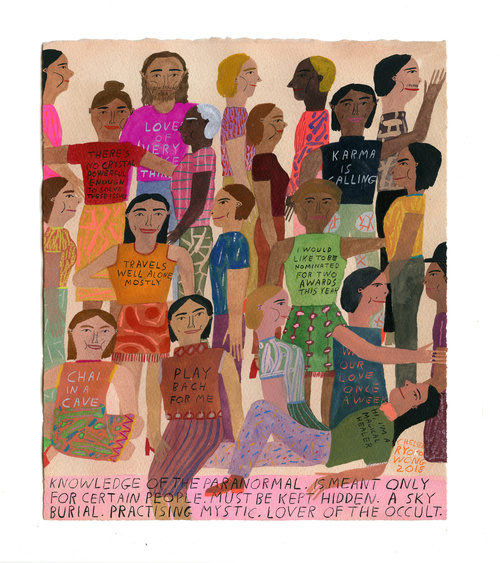
Art by Chelsea Ryoko Wong.
The talk of influence
To succeed in business, you need influence. You need to know meaningful things about the people you're trying to convert. I don't mean that in a sinister way. (Unless you're Nancy Pelosi, in which case, Madam Speaker, you go where you need to go to take care of this situation.)
I mean that you need to build the kind of trust that leads to a sale, be it a new customer, investor, employee, mentor, co-founder, etc. We are nothing without sales.
Dr. Robert Cialdini wrote a book on Influence, which details the six scientific shortcuts to gaining it. (Here's an excellent video that illustrates key takeaways from the book.) One of the shortcuts to influence is likability. We like people (and companies) who are similar to us, who pay us compliments, and who cooperate with us toward mutual goals.
I encountered a powerful new tool for finding commonalities that lead to likability at a recent women's group meeting in my city. The facilitators introduced a structured group conversation technique that was like intergenerational speed-dating.
Here are the guidelines:
Divide attendees into two groups, those above the age of 45 and those below 45
Give everyone a handout with five questions (see below)
Seat the 45+ women around the room with an empty chair and enough space to hold a conversation
The younger women rotate, finding an empty chair next to an older women
Once seated, the younger woman picks one question from the handout to ask the older woman, who has 2 minutes to answer (timed by a facilitator)
After answering, the older woman asks the younger woman a question of her choosing from the handout; she also has has 2 minutes to answer
Continue until each younger woman has talked with every older woman
Time permitting, have the older group huddle and take turns answering the questions while the younger groups listens
I know, 45 is not old. Alas, we need to divide the group.
Here are the five questions:
What strongly held opinion have you changed or reversed?
What was the genesis of your greatest turning point in life?
What's your secret for gearing up for a dreaded task?
From personal experience, I would counsel that to achieve your dreams you should NEVER _______.
I'm know I'm right about _______.
There were about 20 women in attendance, many of whom are elected officials and powerful executives. This format leveled the power dynamic and facilitated conversation between every woman in the room. The depth of the revelations were astounding, spanning politics, childbirth, addiction, infidelity, grief, parents and parenting, insecurity, and self-doubt. I revealed parts of my life experience that I typically reserve for close friends. I didn't feel vulnerable. In fact, I felt celebrated since I landed in the "older" group.
I dare you to light up your next customer convo or coffee chat by asking one of those five questions.
"You know, I'm tired of the usual small talk. You seem like a successful person. Would you mind sharing the genesis of your greatest turning point in life?"
Or, "Hi, I've seen you at these events before. You must be building a business. I'm curious to know, what is your secret for gearing up for a dreaded task?"
Or, "Can I cut the chase with you? I really want to know how you'd answer a fill-in-the-blank question. You ready? I'm know I'm right about _______. Go."
Give them space to think before they answer. Embrace the silence.
Importantly, don't let them off the hook if they forget to ask you to answer the same question. Simply say, "I'd like to share my answer, too."
Tell me, does deeper questioning create more influence? I'd love to hear what you think. Send me your questions and stories.
Boring but important: insurance
Polina Marinova of Fortune's Term Sheet newsletter has been tracking the venture capital pouring into insurance. She's gone so far as to call insurance the sexiest category in tech.
Next Insurance of Palo Alto, Calif. just raised $250 million in Series C funding at a $1 billion valuation. Next is not female founded or led, but I'm bringing them to your attention for two reasons.
You should have general liability business insurance to protect against if a customer or client sues you for bodily injury, medical payments, advertising harm or property damage. Next makes it easy, fast and affordable to get a policy.
If you're a B2B brand, you could emulate what Next is doing with their brand marketing.
Their website clearly lays out their value propositions, is well designed and employs video and customer spotlights as relatable storytelling. (Damn, Robert Pauley.)
Pricing and reviews are upfront and clear.
There's a touch of humor drizzled throughout the content.
They haven't overspent on branding as they scaled.
Weekly Funding: 28 women, $212 million raised
Read the details of VC funding here.
In the newsletter, I also shared this positive update:
The U.S. Department of Labor announced their RESTORE grants, which award nearly $2.5 million in funding to organizations in five states to help women affected by the opioid crisis to re-enter the workforce. The 2019 recipients are:
Helen Ross McNabb Center, Tennessee ($499,999)
Public Health Management Corporation, Pennsylvania ($499,730)
The Research Foundation for SUNY – University at Buffalo, New York ($500,000)
Total Action Against Poverty in the Roanoke Valley, Virginia ($500,000)
Urban Workforce Advantage, New Jersey ($500,000)
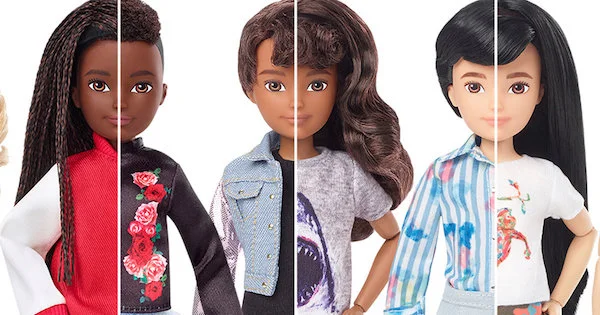
Sept Ifs: Play Time
Mattel’s new Creatable World product launch owes a lot to Margaret Woodbury Strong, founder of the world’s only museum devoted to the history of play.
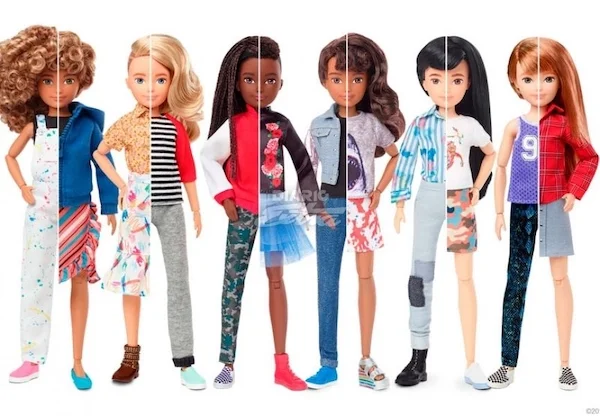
The Creatable World doll launch. Future CEOs and world leaders. Photo by Mattel.
The Ifs change up
If you're new here, the monthly "Ifs" issue is a mashup of aspirational, useful and random stories to help you think about your business in new ways.
This month is different. The launch of Mattel's Creatable World gender-neutral doll line, and the funding of The Strong museum got me thinking about innovation roadmaps and how we play (or don't). So this Ifs issue has more of a theme than in the past, save for one article that will encourage you to let it all out in the shared bathroom.
Also, I've added Amazon Affiliate links to this newsletter. So if you purchase a Creatable World doll, or books or other items referenced in a future articles, I'll get a small fee from the sale. I'm pre-revenue with Underwire, so your conscientious shopping from my links can make a small difference. 😘

Aspirational....
If product innovating
On September 25, 2019, Mattel launched Creatable World, the world’s first line of gender-neutral dolls. Featuring four skin tones and various hair styles, the dolls are part of a $30 kit that includes different sets of clothing and accessories for customization.
I've followed Mattel closely since 2016 when they gave Barbie a body image update. I was curious to watch how an enterprise toy company would outwit a startup like Goldieblox and their viral video machine. The body image product line was a solid attempt to appeal to the realities of a changing fashion doll market, helping to increase sales in single digits in 2017 (according to their Annual Report).
A year later in June 2017, former CEO Margo Georgiadis (since departed) announced a new strategic growth plan at Mattel's Investor Day. Georgiadis set the stage for the launch of the Creatable World product line 15 months later with these key organizational priorities and actions:
A focus on strengthening their product innovation pipeline, specifically targeting 6 to 9 month product development cycles (compared to 18 months)
Reshaped operations to align to market opportunities and support omni-channel distribution (Amazon and WalMart)
A new Mattel employer brand initiative, sparked by an updated brand purpose, promise and values.
Creatable World is an innovation throw-down. This product line is the result of targeting a specific void in the doll market with a cultural and political anchor. From what I've read, the broader customer profile looks like this:
Millennial parents of young people identifying as gender-nonbinary (a growing category, according to Pew Research data)
Mattel tested the doll with 250 families across seven states, including 15 children who identify as trans, gender-nonbinary or gender-fluid. Since the parents buy the dolls, this product launch is a mainstream test of Millennial values and how accepting that demographic really is of gender-fluidity.
The sales will tell. Mattel currently has 19% market share in the $8 billion doll industry; gaining just 1 more point could translate into $80 million in revenue for the company. Will ~500,000 values-driven Millennial parents buy this doll?
We'll have a clear read on the effectiveness of their innovation strategy when Mattel announces Q4 2020 earnings in February.
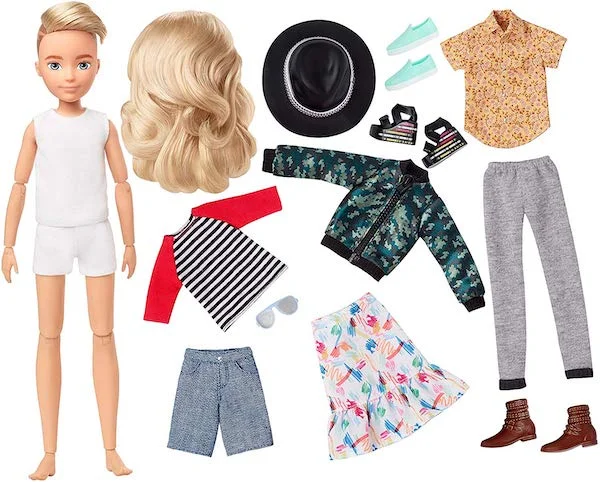
For the record, I bought two of these dolls to show my solidarity for the acceptance, freedom of play and cultural button-pushing these toys represent. Besides, Blonde Wavy Hair she/he/they...I can finally have my own mini Megan Rapinoe / Justin Bieber to fire me up when I'm disgusted by the patriarchy. And Black Braided Hair, those braids. Um, I'm struggling with how to say this respectfully...but I'm really looking forward to styling that gorgeous black hair.
Side note: I get Mattel's naming strategy for this line—keep it neutral—but Copper Straight Hair, etc. does feel slightly off to me as a namer. Why categorize by hair color? Hmmm, maybe in their rush to market they cut the naming spend and figured they'd tweak it on the next gen?
Read the full backstory of the product launch on Time, which details all of the market and product-development factors that impact corporate innovation work.
“I think being a company today, you have to have a combination of social justice along with commerce, and that balance can be tricky.”
Practical....
If you want Mattel-style segmentation
If you're having difficulty growing or acquiring new customers, you should conduct segmentation research. In this article, Laura Troyani of Plan Beyond details what segmentation is, how to use it to pull different growth levers, and what to do with the results for a stronger marketing and product-development strategy.
Random...
If you don't poop at work
Take back your bio-break. "The patriarchy has seeped into women’s intestinal tracts. Let’s call it the pootriarchy." 😬 From the Flush Hush to the Scatological Standoff, we need to get over our fear of being heard in the bathroom. Let it all out, with a little help from a Squatty Potty. Thanks, The New York Times.
Last week 26 women raised over $255.3 million in funding from venture capital, grants and accelerator groups. Read the full list on our Funding Update. Subscribe to our newsletter to receive the previous week’s funding details in your inbox each Monday.
There is one update from this week’s newsletter that I want to share below, as it relates to the overall theme of play…
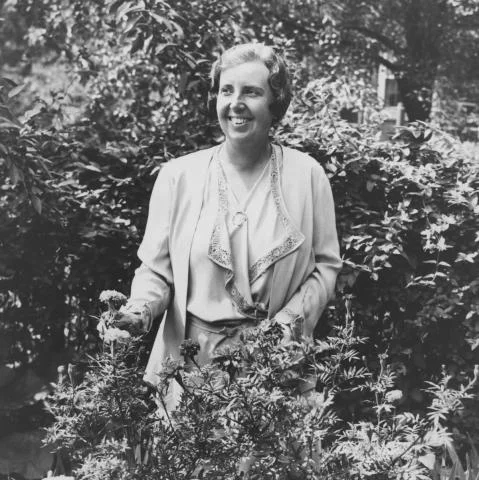
Margaret Woodbury Strong, founder of The Strong museum of play.
The Strong, Margaret Strong, Founder, $700,000, Grant
Rochester, NY-based non-profit and the world’s only collections-based museum devoted to the history and exploration of play; first round grant from National Endowment for the Humanities. (Website, Crunchbase)
The Strong received the NEH’s “Chairman’s Special Award,” which highlights major exhibit projects that present significant topics in the humanities. The funding will support the implementation of Digital Worlds (tentative title)—a 24,000-foot exhibit planned as part of the museum’s expansion that will explore the influence of electronic games on cultural history.
A woman I’d want seated at my dream dinner table: Margaret Woodbury Strong, a prolific collector of everyday objects, especially dolls and toys, founded The Strong in 1968 under the name “Margaret Woodbury Strong Museum of Fascination.” Before she died in 1969, she bequeathed her considerable estate to help support the museum, and 13 years later it opened in a new 156,000-square-foot building on 13.5 acres in downtown Rochester.
Legendary
A epic week: $1.1. billion in funding for women-led companies and the passing of Cokie Roberts.
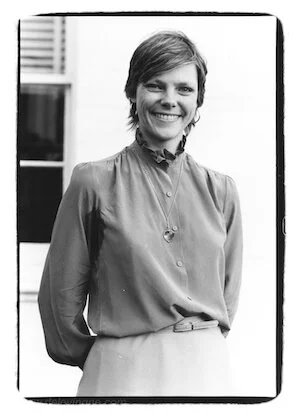
Cokie Roberts. Photo by Lionel Delavigne.
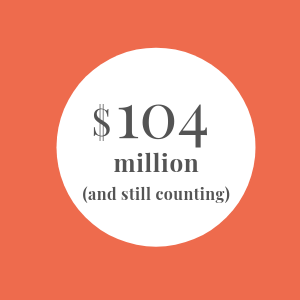
Last week 17 women founders raised over $1 billion dollars for their companies. Precisely, $1,165,715,000.
Also notable, four companies raised $100 million and above:
Reshma Shetty at Gingko Bioworks
Eva Shang at Legalist
Jennifer Parke at Fair
J. Jean Cui at Turning Point Therapeutics
Deal flow is following growth opportunities in artificial intelligence, biotechnology, software as a service, and consumer food, health and beauty. The past two weeks have also seen investments in value-based health care technology. View the week’s funding update. And be sure to sign up for Underwire’s weekly newsletter to get deeper insights into the funding founders and companies.
Last week also brought news of the death of Cokie Roberts, journalist, author, political correspondent and commentator. Her deep, raspy voice comforted me for as long as I've been paying attention to news and politics. Her commentary was always objective, no-nonsense and illuminating.
I first heard it in a blip on NPR. Cokie Roberts had died from breast cancer. I was in my car, driving to catch an early train. My chest and sinuses tightened. Tears welled in my eyes. Done in by the boobs.
Cokie Roberts was among my circle of Baba Yagas, wise women who've seen shit and know the way the world works. Women like Nina Totenberg, Terry Gross and Krista Tippett. These are a few of the high-profile women who help me process events and better understand humans.
In reading quotes from The Washington Post and The New York Times obituaries, I saw how Cokie's journey through politics and media paralleled that of other professional women, myself included.
Cokie was a lifelong mentor to female journalists. "Duck and file," she advised aspiring female reporters. "Just do your work and get it on the air."
Cokie worked for competing new organizations ABC News and NPR at the same time. She was a true professional, avoiding stories where there might be a conflict of interest. When The Post asked her about this in 1993 she said, "I think it's a woman's talent. Being able to do two things at once."
In 1992, on record for The Los Angeles Times, Cokie talked about the impact of sexism in the workplace:
"We had people tell us all along the way that we weren't qualified to deliver the news, that we weren't authoritative enough. We would have meetings with men in high positions and find their hands on our knees. We would have invitations from those people to hotel rooms. All kinds of propositions. Insults they didn't consider insults."
She added, and this is what's still true today, "Those assaults make a difference in terms of how you think about yourself. Maybe they're right, you begin to think. Maybe I'm not authoritative. Maybe I'm not smart enough. And then you say to yourself, 'God, I went to the same schools as those guys. I have the same education as they do. What's the problem? Why am I asked how many words a minute I can type when the guy next to me can't type at all?'"
That was 27 years ago. At that time, I was a young woman in advertising. My boss used to come into my cubicle without asking and massage my shoulders while I worked at my desk. On more than one occasion he asked if I'd like to go camping with him. Or would I like for him to teach me how to fly-fish? Another male superior, my creative director, once mentioned in a hallway conversation that I should wear a tight turtleneck to the next creative review so my ideas would be taken more seriously.
I never reported those incidents. Like Cokie said, you begin to think. My ideas aren't good enough. I don't deserve to ask for more. Or for improvements to the way we work.
Fortunately, I didn't let these bastards grind me down. I found a better job in a new city. But that early experience did contribute to an ongoing battle with anxiety.
So, legends. Rest in peace, Mary Martha Corinne Morrison Claiborne Boggs Roberts. What a glorious name. What an epic role model.
Duck and keep doing the work.
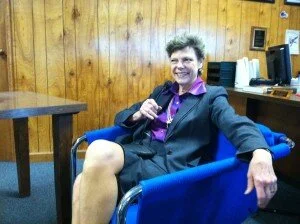
Shoulders open, firm grip on the microphone. Cokie Roberts owns the room.
Also legendary...
If you're in the Seattle area, block out the evening of October 17.
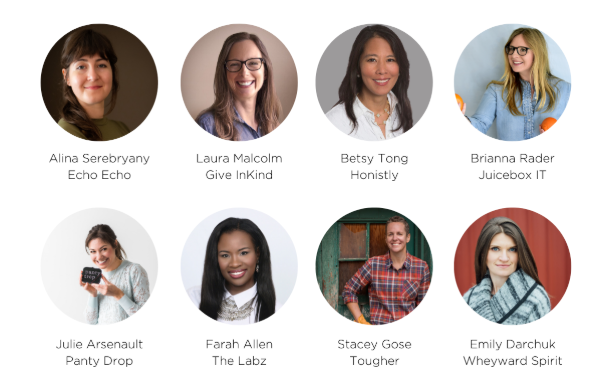
Onstage at Seattle Center's PACCAR IMAX Theater, you can witness a beautiful thing: an entire accelerator cohort of women-led companies. Brought to you by the Female Founders Alliance and their Ready Set Raise national startup accelerator.
This is a fun event where you get to see eight women or non-binary founders pitch their business models to a sold out crowd. How often does that happen?!? Don't be shy, last year's event featured an open, friendly crowd and great food.
Here's the 2019 lineup:

It's time
You see that stick figure yogini above? She's doing a balance pose. I don't know the name of it. I just know that it rattles my confidence unless I'm totally grounded and in the moment. It's not easy to stand on one leg, hold the other leg up in the air, out to the side, and keep your balance. Kinda like how I feel right now about the Fall yoga retreat.
I'll be real, I'm wobbly. We're one month out. Sign ups so far are making me go hmmmm. It could be that I suck at event promotion. Which I do. I'm not on Facebook and barely on Instagram.
So I'm asking for help. Use this link to share the event on your socials. If you're planning to come, please sign up now.
This is the real deal. Awesome yoga teacher, food, location. All women, so you can skip the makeup. Throw you hair in a ponytail and pull on your rattiest yoga pants. Just come and be the real you. Let's make this happen. Hugs and love.
Fall Female Founders Yoga Retreat
Sunday, Oct. 20, 2019
8:30 am - 5 pm

What it takes to raise a Seed
Surbhi Rathore, CEO of Rammer.ai answers questions about her Seed round. And while we’re on the topic, what exactly is a Seed round?

Surbhi Rathore, CEO and Co-Founder, Rammer.ai
Seed round short Q&A
Last May I featured Surbhi Rathore's perspective on her company's participation in the 2019 Techstars Seattle accelerator program. Three and a half months later, Surbhi and the Rammer.ai team closed a $1.8 million Seed round. Here are key takeaways from her fundraising journey.
How many investors did you pitch (approximately) to close the round?
We ended up having meetings with less than 30 or so investors. We were very targeted in the approach of only reaching out to the firms with some investment thesis around Enterprise AI or platforms. And it was a pleasure to get connected with each of them.
What about your company's story changed or evolved as you pitched? What narrative worked best?
Every meeting was a new learning experience that gave us further clarity on handing the objections. One of the things I learned was making sure we communicate the vision in the right proportion to what exactly we are doing near-term. I would say in the end it was the strength of the founding team, the founder's insights in the market and what hypothesis we are validating, with a clear understanding of how we will get to the next stage.
How will you use the proceeds?
With this Seed round we will expand the engineering and data science teams to scale the platform and make it easy for developers to adopt this technology. We are also investing in business fundamentals to grow, acquire, and delight both customers and partners.
What people or groups were most helpful throughout the fundraising process, and how?
Techstars helped us immensely with the support system and access we needed to the right investors. Not just the entire Techstars team, but the alums from previous batches and mentors helped us with introductions and sharing the knowledge of what worked for them. It's always faster to learn from others' experiences and apply to your own journey.
Anyone you want to give a special shoutout?
Chris DeVore, Aviel Ginzburg and all our mentors during the Techstars program. Our entire team in India who stepped up to take more responsibilities as I (alongside Toshish Jawale, my co-founder) went through our first fundraise process. We are so excited to unfold the next phase.
What is a Seed round?
Here's an overview from Investopedia's Series A, B, C Funding: How It Works...
Seed funding is the first official equity funding stage* and typically represents the first money that a business raises. Some companies never extend beyond Seed funding into Series A rounds or beyond.
You can think of the "seed" funding as part of an analogy for planting a tree. This early financial support is ideally the "seed" which will help to grow the business. Given enough revenue and a successful business strategy, as well as the perseverance and dedication of the founders and investors, the company will hopefully grow into a "tree."
Seed funding helps a company to finance its first steps, including things like:
Market research and product development to dial in product-market fit
Hiring a founding team, or expanding the team
*I'm seeing more Pre-Seed rounds pop up on Crunchbase (there are two listed below in this week's update). Funding for a Pre-Seed business normally comes from the 3F’s (Friends, Family and Fans). The amount of money is usually small (under $1 million) because the business is still in the idea or conceptual stage. That said, both of this weeks's Pre-Seeds are $1 million and above (Airspace Link, $1 million; Kensho, $1.3 million).
Investors, I'd love your insight on the Pre-Seed trend. Contact me.

Updated Female Founder Spreadsheet
The YTD public spreadsheet is new and improved with data pulled from Crunchbase, Fortune Term Sheet and readers like you. Do play along and keep us posted on announcements.

This is Flo Freely, the code name for the new and improved Underwire Female Founder Funding Update. Access the full spreadsheet here.
Crazy, sexy, cool data
Mama's been giving her spreadsheet some TLC.
I spent the past two weeks revamping the Underwire Female Founder Fundings Update. Yeah, the name's a mouthful. But that bitch is SEO'd up. Just between you and me, I call it Flo Freely in honor of Margaret Jane Swendsen's alter ego, and the hope that one day funding will flow freely and equally to womankind.
I never thought I'd enjoy working a spreadsheet so much. Pffftt, yes, Sarah Bryar, I really just said that.
So what's up with Flo?
You can now access year-to-date funding and exit details for U.S. headquartered companies with at least one female, non-binary, bigender, gender fluid, gender-nonconforming, or transgender female founder.
For ease of weekly reporting, I made an executive decision to focus on:
Crunchbase as my primary data source; Crunchbase gets its data from AI and machine learning, a venture network program, investor and founder contributors, third-party partnerships and in-house data analysts
Additions from Fortune Term Sheet, as well as investor and founder word of mouth for deals that don't show up on Crunchbase (happens very rarely)
U.S. only companies (for now)
Filings for Pre-Seed, Seed, all Series rounds, Venture - Series Unknown, Angel, Private Equity, Debt Financing, Convertible Note, Crowdfunding, and Initial Coin Offerings.
At the bottom of each future newsletter I'll cover filings reported from Friday to Friday of the previous week. Details will include:
Company name and industry
Founder(s) name and title
Last funding round and type of deal
Number of funding rounds total
Top 5 investors
Links to their website and Crunchbase profile
Notable insights about a founder, investor, or category.
Finally, one big change to save my sanity: the weekly summary will only be available in the newsletter. The easiest way to stay current on female fundings is to subscribe to the Underwire newsletter (it’s an irreverent doozy).
Click here to see the full year-to-date Underwire Female Founder Update.
Tips encouraged
Contact Underwire if you’re a founder or investor with a funding tip to share. In addition to inclusion in the YTD update, I’ll feature your company info in an upcoming newsletter.

Aug Ifs: Heart at Work
Megan Rapinoe’s rally cry, the FFA Female Founder Challenge, the University of Washington’s Compassionate Leadership Summit, the best email signature ever, and a book and yoga retreat to cope with Fall anxiety.

If Megan Rapinoe were CEO
No imposter syndrome here.
Before the memory of the awesomeness of Megan Rapinoe fades into the next up-with-women surge in the news cycle, take 60 minutes and listen to Kara Swisher's interview with her on Recode Decode.
In this podcast, Megan says this:
“I deserve this. I want everything.”
...which has me considering which font to use if I tattoo that statement on the inside of my forearm. To go with with my Melody Ehsani power ring.
In the podcast, Megan also talks about:
Where her confidence comes from
How she markets herself
The importance of celebrating wins
The need for equal investment of a revenue-positive market segment that wants, and will buy, more of the "product" (WTF...why the patriarchy can't go where the money is just continues to baffle me...women buy all the shit, dudes!)
How the only option is to be LOUD to get more money
Listen to Recode Decode episode here, or wherever you get your podcasts.
And I have to say how much I love Megan's "pose" pictured above. I know it's a meme, and for damn good reason. She owns her power on the biggest stage of them all.

If push comes to product-market fit
If you've got an idea for a business or a new revenue stream, the Female Founders Alliance and Pioneer Square Labs are giving you the perfect challenge to test it. Huzzah for the FFA Female Founder Challenge.
With the accountability of your friends and some hefty brainpower, you can sprint test a business idea with real customers. Put in the work and you'll know in 30 days if your idea is viable enough to go all-in. This could save you YEARS of your life flailing on a bunk business model.
All you gotta do is give FFA your email address and they'll give you content, workshops and office hours with the team at Pioneer Square Labs, a startup studio that's launched 15 companies from the Lab in 4 years.
This challenge is open to all entrepreneurs. Sign up here. It starts on September 1.
P.S. This is a sweet marketing tactic to get more email newsletter subscribers for both FFA and Pioneer Square Labs.
P.P.S. I'm in on the challenge. I'm curious to see how valuable the support is, and to test an idea for the Female Founder Funding Update. I'll share what I learn.

If soul works
I'm fascinated by founders who fold moments of grace into their companies. I'll never forget how Alyssa Leinonen, CEO of Gourmondo, creates flexible work schedules so that her employees can drop off and pick up school-age children.
That's compassion in action. It takes a strong will for a founder to say, "We're going to do things differently for our people."
For Seattle area readers, the upcoming Compassionate Leadership Summit is an opportunity to learn from some of the most enlightened thinkers and teachers on workplace compassion. It runs November 8-9, 2019 at The Hub at the University of Washington.
What you can expect:
The summit's vision is a world in which awareness, justice, inclusivity and compassion guide our actions as a society (yes, please)
Bringing together leaders from various sectors, including corporations, non-profits, government, healthcare, education and communities of faith (good intersectional networking)
Presenters are visionaries, teachers, cultural trailblazers and creators who represent diverse applications of compassion and mindfulness (notables include Karen Guzak, the owner of our Fall Yoga Retreat facility, and Joel and Michelle Levey, powerful teachers on how to be more mindful in your workday)
The event is designed to share tools, best practices and methods with interactive learning sessions (a cost-effective way to learn for small businesses)
Co-hosted by UW Undergraduate Women in Business
Plus, I have discount codes:
Sign up for the summit here. First come, first served on the discounts, so act fast:
2D15 15% off the 2-day admission (save $60)
1D15 15% off the 1-day admission (save $30 )
If your company wants to sponsor this event, please email Ryan Crowther.

If underutilizing your email sig
Above is the email signature for Karly Siroky of Karma Design. This is the best email signature I've seen. Ever.
Smiling face — nice typography — warm color palette — hmmm, this looks like person who goes above and beyond — just what I want in a business partner — yes, I'll click on those social buttons to learn more about you, Karly Siroky.
Damn that's good.
Karly showcases why this is a genius brand touchpoint. If you want an email signature like this, Karly has offered to give you instructions. Email Karly.

If Fall feels anxious
I grapple with anxiety. On the order of the 3 a.m. wake up, the to-do list multiplying, can't go back to sleep. The Sunday evening curtain of impending doom. The Instagram poison pill, my family-marriage-kid-house-vacation-style aren't good enough, and why do I just want to buy everything in my feed?
Then comes September. Every year it happens, the intensity ratchets up as the light and warmth of the summer fade. The school bell rings again and the routine tightens. So do the shoulders and neck, and maybe the heart, just a little, as if the Universe knows annual goals need to be met, or else. Or else, what?
I've been reading The Wisdom of Anxiety by Sheryl Paul of Conscious Transitions. This passage from her books is why I'm hosting the Fall yoga retreat:
“...When you walk through a transition consciously, you’re given a potent opportunity to shed a layer of mindsets, beliefs, patterns, and habits that are contributing to your anxiety.”
Let's walk through the Fall transition together. What are your intrusive thoughts? How are they holding you back in business? I'm learning to let go. Join me. Learn more about the October 20, 2019 retreat.
Business Models for Startups
Fresh from vacation come two key takeaways: think epically big and don’t waste time re-inventing your business model. Here are 16 proven business models that will live up to your vision.

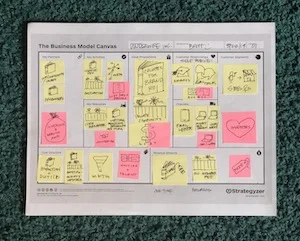
Early version of a Business Model Canvas for Underwire
Money Making
I spent a considerable part of Q2 obsessing over how to make money with Underwire.
The Business Model Canvas above is my first iteration. I shared it with advisors and confidants. I simplified it to two revenue streams. I set goals and made plans.
Then I went on vacation. I didn't think at all about models. Instead, I thought about scale. I visited eastern Europe and witnessed the ruins of the Holocaust and its impact on the cultures and landscapes of Berlin, Warsaw, Krakow, Prague, Nuremberg, Munich and Berchtesgaden. The scale of Hitler's vision was utterly astounding and sickening. He went as big as inhumanely possible.
Then I experienced the scale of Hell's Canyon, North America's deepest river gorge, and the Oregon coast at Bandon. These are epic landscapes that prove who's in charge. Not us. There are much bigger forces at work. Mother Nature being one of them, and oh baby is she ever going to work us over in the years ahead.
Out of this vacation came key takeaway no. 1: Men think big.
Women do, too, but we all know that the money goes to help men realize their big vision way more than it does to women. We have got to create more space for women to realize epic, blow-new-markets-wide-open visions.
Key takeaway no. 2: There are proven ways to make money. We don't need to get tricky with our business models.
I came to this second takeaway last week at lunch with Dave Parker, who kicked my ass with the insight that there are only 16 startup revenue models. Your idea for a company may be unique and huge but how you make money isn't.
Dave created a 22-page Slideshare deck that eloquently outlines the purpose of a business model with examples of the 16 options. Each option has use-cases, key metrics and succinct challenges and notes based on Dave's extensive career as an entrepreneur and investor.
BTW, Dave is one of the good guys working to support female founders as an investor and advisor. I see him around Seattle at the female-focused events, and he developed a program called the 6 Month Startup: From Ideation to Revenue. The fourth Seattle cohort begins this Fall, and he's taking the program to cities around the world.
If you've got your model nailed, brava for putting in the work and finding product-market fit. Run with that. However, I suspect many of us have anxiety about our models. Use Dave's examples to think about how you might pivot or add another model to your mix to diversify your income streams.
One other practical tool is the Business Model Canvas from Strategyzer. I love how it requires you to simplify and visualize your model by looking at how you'll create, deliver and capture value to your customers. Download a blank canvas here.
I'm trained in the Strategyzer methodology. I'm happy to coach you through scenarios if you want to buy a couple hours of my time. Shoot me an email.

Namaste, Bitches!
I'll be talking about this yoga retreat until it’s booked because I believe it in that much. For bendy-flexy types, it’s the trifecta—yoga, supportive women and incredible food. With a cherry of a space on top.
Last January, 13 amazing women gathered for one day. We had a VC, a couple of seed stage startup founders, many bootstrappers and a CEO of an established company expanding into new markets. You get a full day with the highest caliber women. There is no other networking like this in the Seattle area.
Underwire Yoga Retreat
Sunday, Oct. 20, 2019
8:30 am - 5 pm
Summer Female Founder Funding Update
I’ll be updating this page over the coming week to reflect all investments for the past 7 weeks. Meanwhile, Series A raises for Figure8 and Herbivore Botanicals. Series B for Hipcamp. Seed round for Genneve.
Welcome to Underwire’s female founder funding update. We track this information to combat the negativity around women-led venture funding (yes, it still hovers around 3%). We know that it can feel self-defeating to read about companies getting funded when you’re not. Still, this is important to track. This page is proof that women are building and scaling incredible companies. Dream big, dammit!
We cover mostly venture capital updates and exits. We source our updates from Fortune’s Term Sheet newsletter (edited by Polina Marinova), Crunchbase, GeekWire and tips from local investors and founders.
Here is the Underwire Funding Update spreadsheet with a year to date (to the best of our knowledge) summary of fundings, including founder names and titles, industry, investors and diversity info. This is a labor of love from a person that dislikes spreadsheets, so be nice. Better yet, contact us if you have info to share or want to make improvements.
Funding
Genneve, $4 million, Seed, Jill Angelo, Founder & CEO
Seattle-based digital health platform for women in midlife. BlueRun Ventures led the round, joined by StartupHealth and Maven. (Website, Crunchbase)
Herbivore Botanicals, $15 million, Series A, Julia Willis, Co-Founder, Co-CEO and CCO
Seattle-based clean beauty brand. Silas Capital led the round, joined by Stage 1. (Website, Crunchbase)
Figure8, $40 million, Series A, Maryellis Bunn, Co-Founder
New York-based brand marketing firm and creator of the Museum of Ice Cream. Lead investors include Elizabeth Street Ventures and Maywic Select Investments, joined by OCV Partners. (Website, Crunchbase)
Hipcamp, $45 million, Series B, Alyssa Ravasio, Founder and CEO
San Francisco-based outdoor recreation content platform. Round led by Andreesen Horowitz, joined by Jay Z (Marcy Venture Partners) and Will Smith (Dreamers Fund). (Website, Crunchbase)

The Art of Vacating
Megan Rapinoe, E. Jean Carroll, the Center for Humane Technology, Keita Williams, and a $50 discount on our Fall yoga retreat. This article has it all for summertime perspective!

Fish pens off the coast of the Isle of Skye; drawing by Britt Stromberg
And Scene
Today I hit the pause button on writing Underwire. I'll be back in August.
Meanwhile...
First, my husband and I will chaperone a group of high-school students through Eastern Europe to study the origins of Hitler's rise to power. What happened in Germany, Poland, the Czech Republic, and Austria 100 years ago parallels what's happening today politically and culturally in the United States.
Next, I will float down a new river with dear friends, be off, off, off grid and get filthy dirty.
Finally, I will reconnect with family on a sandy stretch of Oregon coastline.
I am a privileged woman who intentionally planned this summer. Along the way, I will sketch and color the details. That is what I'm doing with my one wild and precious life.
In my wake, here are some important topics to consider:
Megan Rapinoe Isn't Here to Make You Comfortable.
The picture in this article says it all. Megan is a rebel and a team player. We can be both. Go team U.S.A!Hideous Men: Donald Trump assaulted me in a Bergdorf Goodman dressing room 23 years ago. But he's not alone on the list of awful men in my life.
Please read E. Jean Carroll's excerpt from her new book. Better yet, buy her book. Warning: this is tough to read. Tough but necessary. I shared this article with my teenage daughter and then we talked about some of the hideous men in my past. My daughter will encounter her own hideous men and I want her to be prepared. Eyes-balls-throat! If I learn anything from reading the daily newspaper it's that violence against women persists; it actually feels worse than ever. Thank you to Richard Pelletier for bringing this excellent piece of writing to my attention.The Center for Humane Technology. "Today's tech platforms are caught in a race to the bottom of the brain stem to extract human attention. It's a race we're all losing." This group is doing important work around human downgrading and how our tech overlords are stealing and selling our attention. How do your products and services impact human sensitivities? As more of us rebel against our machines, there's market opportunity for those who know how to engage as real humans. And this "Get Involved" copy is brilliant. Thank you to Bryan Condra for the link, and the thoughtful lunchtime discussions.
“You cannot expect the world to be interested in what you are doing unless you are interested in what the world is doing. If you want to be listened to, then pay attention. You’ll probably hear something you never knew before.”

It's Back!
I'm hosting another yoga retreat this fall. For you early bird, discount wormers, you can save $50 if you buy your ticket before end of day on July 4th (Thursday). This is the only time I'm discounting the retreat, so get in early to save some moolah.
Underwire Yoga Retreat
Sunday, Oct. 20, 2019
8:30 am - 5 pm
$299 through July 4
(goes up to $349 after that date)

This is Keita Williams, founder of Success Bully. She has a special offer for Underwire readers good through through July 10th, 2019. I urge you to DO THIS. Talking with Keita is a triple-shot of positivity and the fastest way to turbo-charge your last half of 2019.
The Focused Founder
Have you found yourself stressed, spread too thin, but filled with great ideas and way too many tasks?
I know, I've been there. Lack of focus, procrastination, fear of failure, fear of success, spending way too much time on the wrong things. I’m pleased to say I have cracked the code. When you really break it down, we are our own biggest holdup.
As the founder of Success Bully, I help badass female founders learn how to get the F out of their own way by engaging in action-based goal setting and accountability, so they can STOP wasting their time and START taking radical actions to produce radical outcomes in their business.
Book a complimentary 30-minute kick-ass coaching call with me by July 10th to get tips on how to become a Focused Founder.
Weekly Female Founder Funding Update
Seven fundings, one exit and a new fund. Series A raises for Remedy, DotLab, Chief and Anomalie. Series B for Genome Medical. Seed rounds for Homeroom and Miss Grass. SheWorx gets acquired. And Vice Ventures raises a fund for sinful companies.
Welcome to Underwire’s weekly female founder funding update. We track this information to combat the negativity around women-led venture funding (yes, it still hovers around 3%). We know that it can feel self-defeating to read about companies getting funded when you’re not. Still, this is important to track. This page is proof that women are building and scaling incredible companies. Dream big, dammit!
We cover mostly venture capital updates and exits. We source our updates from Fortune’s Term Sheet newsletter (edited by Polina Marinova), Crunchbase and GeekWire.
Here is the Underwire Funding Update spreadsheet with a year to date (to the best of our knowledge) summary of fundings, including founder names and titles, industry, investors and diversity info. This is a labor of love from a person that dislikes spreadsheets, so be nice. Better yet, contact us if you have info to share or want to make improvements.
Funding
Anomalie, $13.6 million, Series A, Leslie Voorhees, Co-Founder & CEO
San Francisco-based custom wedding gown company. Goodwater Capital led the round, joined by investors including Signia, SoGal Ventures, Lerer Hippeau’s BN Capital Fund, and Fin’s Sam Lessin. (Website, Crunchbase)
Chief, $22 million, Series A, Carolyn Childers and Lindsay Kaplan, Co-Founder and CEO and Co-Founder, respectively
New York-based private network of women. General Catalyst and Inspired Capital co-led the round. (Website, Crunchbase)
DotLab, $10 million, Series A, Heather Bowerman, Founder and CEO
San Francisco-based personalized medicine company for women’s health. CooperSurgical led the round, joined by investors including Tiger Global Management and Luxor Capital Group. (Website, Crunchbase)
Genome Medical, $23 million, Series B, Lisa Alderson, Co-Founder and CEO
Monterey-CA network of genomics services experts using telemedicine to integrate genomic insights into everyday health care. The latest financing was led by Echo Health Ventures, a collaboration between Cambia Health Solutions and Mosaic Health Solutions. Other backers included LRVHealth, Casdin Capital, Perceptive Advisors, Manatt Venture Fund and Dreamers Fund. Thanks for Kristine Ashcraft, CEO of YouScript for the tip.(Website, Crunchbase)
Homeroom, $3.5 million, Seed, Casandra Espinoza Stewart, Co-founder & CEO
San Francisco-based platform for after-school enrichment programs. Forerunner Ventures led the round, joined by Felicis, Precursor, and Kapor Capital. (Website, Crunchbase)
Miss Grass, $4 million, Seed, Kate Miller, Co-founder and CEO
Venice, Calif.-based cannabis brand with a content and e-commerce platform. Investors include Listen Ventures, Casa Verde Capital, Advancit Capital , firstminute capital, Third Kind Venture Capital, and Muse Capital’s Assia Grazioli-Venier and Rachel Springate. (Website, no Crunchbase listing)
Remedy, $10 million, Series A, Christina Gabrysch, Co-Founder
Austin, Texas-based provider of healthcare services. Sante Ventures led the round. (Website, Crunchbase)
Exit
SheWorx, Undisclosed, acquired by Republic, Lisa Wang, Founder
New York-based platform and event series for female entrepreneurs. Financial terms weren’t disclosed. (Website, Crunchbase, article on Republic’s blog)
New Fund
Vice Ventures, $25M fund to back sinful sectors, led by founding partner, Catharine Dockery. (Website, Crunchbase)
How to Be a Good Client
Rachel Lazar from Lazar Marketing Consulting offers 5 ways to get the most from your flexible workforce and not suck at being a client.

Illustration by Petra Eriksson.
This is a guest post by Rachel Lazar, a seasoned consultant and marketing expert who's worked with hundreds of clients. For a complementary article, read A Scope of Work Template to CYA with Vendors.
Get the Most from Your Flexible Workforce & Not Suck at Clienting
As the workforce continues to evolve and move towards greater flexibility for both employees and companies’ needs, it’s imperative to focus on how best to maximize this new team of workers. No doubt, you will hire contractors and outside vendors at various points in the lifecycle of your business.
Being a pleaser and a workhorse myself, it’s taken time, and many engagements with clients as an outside vendor, to gain clarity into what is truly important in the client-consultant relationship.
Like anything in life or business, it’s ultimately about finding the right people. Whether they be in-house or contract, the right people will care deeply about growing your business. Their business is your business. As such, people who are committed to and engaged in their work want to be all in—informed, working from complete context, collaborating with your team members, and ultimately, confident that they are doing good work.
As all consultants can attest, there are both incredibly wonderful and incredibly challenging clients. Interestingly, it’s rarely the actual work that determines how an engagement will go. The best clients take the time to bring contractors truly into the fold, an endeavor that often takes way more time than you think it will. Putting in this effort to educate on the business, the market, internal team dynamics, and the challenges and objectives, complements your contractors' expertise and allows them to do their best work for you.
On the flip side, the clients who lob bits of information across the fence, or don’t communicate well or provide timely insights and updates, make it more challenging to ensure contractors can focus on the most impactful efforts. Speaking from experience, when you have a team of seasoned marketers who go deep into each marketing channel to drive new customers and revenue, we don’t need a lot of hand holding but it’s always surprising when we learn that we haven’t been given the full picture.
Nine years into my consulting practice, we are working with our favorite client ever. Yes, I know we’re not supposed to pick favorites, but we do. With this client, we are truly embedded with the team, including being invited to their holiday party and team offsites. We have visibility into all aspects of the business, and with that perspective we can provide support in a number of areas, and ultimately, to help them scale their marketing and revenue significantly.
The gist is that the more you treat your flexible work-force similar to how you treat internal full-time employees, the more effective and efficient your contractors will be. As the lines blur between these two types of staff, this will only become increasingly more important.
Good Client Cheat Sheet
Acknowledge that you can’t do it all yourself
This is the biggest hurdle to being a good client. If you’re gripping the reins, it’s likely for financial or control reasons. Remember, you hire outside expertise to push your business and brand goals forward in ways that you cannot do alone or with the resources you currently have in-house.
To get your control-freak self over this hurdle, you must distance yourself from the assignment emotionally. It’s business. Prioritize the skill sets you need to hire for, establish a reasonable budget, write a specific and actionable scope of work, and commit to the project (more on that below).
If hiring for marketing, recognize that there is no longer one marketer that can do everything well. Both performance and brand marketing require niche expertise if you want them done well.
Understand that the performance marketing landscape is especially nuanced. Bring in expertise for the channels that will most impact your business, from PPC/searc to social media to email marketing.
Really let contractors/vendors do their job
Establish clear expectations. This includes defining a single key objective, project KPIs, a budget, and timeframe for success. Consider writing a project plan or creative brief to document all of these requirements.
Set regular check-ins that map to the project timeline and deliverables.
Don’t micromanage contractors. You are paying them well to do their job. They will move mountains for you if you demonstrate trust early.
Be a true leader. With a clear scope of work you can confidently assume they’ll do their job, so get out of their way.
Provide full disclosure, especially when times are tough
Be 100% open about the state of your business. If you’re holding back information, it likely goes back to control issues. Over-communicate, especially when the working relationship is new.
Your contractors are part of your team, so connect them with all of the necessary internal and external stakeholders necessary to move the work forward. Too much visibility is preferred to not enough.
Communicate early and often if changes occur that impact the contractors’ scope of work.
Pay invoices on time
This is a small but mighty touchpoint in your contractor relationship, especially if the talent is early in their career and establishing a business. They depend on your payment to meet their payroll.
Paying on time, and early if you can, goes a long way to create trust and loyalty. This is an unspoken gesture that says you’re looking out for them and value their work. Tracking down late payments distracts from the work and drags down contractor morale.
Give referrals generously
At the end of a project engagement, show that you appreciate your contractors by writing a LinkedIn review and sharing out your work in social channels. They will do the same.
Talk up your contractors in your business networks. Referring them to other good clients is the third best thing you can do to make them love you (after trusting them to do their jobs and paying your bills on time).
Rachel Lazar is the Principal of Lazar Marketing Consulting. Her team provides full-service marketing strategy and execution, as well as management for Google Adwords, PPC and SEO. Rachel also co-founded Impact West Seattle, a local women’s giving group, and advises startups.
Weekly Female Founder Funding Update
Five seed rounds and one Series A this week for Athena Security, Kango, Mixlab, Needslist, Novi, and Part & Parcel. Plus The RealReal files for IPO.
Welcome to Underwire’s weekly female founder funding update. We track this information to combat the negativity around women-led venture funding (yes, it still hovers around 3%). We know that it can feel self-defeating to read about the companies that are getting funded when you’re not. Still, this is important to track. This page is proof that women are building and scaling incredible companies. Dream big, dammit!
We cover mostly venture capital updates and exits. We source our updates from Fortune’s Term Sheet newsletter (edited by Polina Marinova), Crunchbase and GeekWire.
Here is the Underwire Funding Update spreadsheet with a year to date (to the best of our knowledge) summary of fundings, including founder names and titles, industry, investors and diversity info. This is a labor of love from a person that dislikes spreadsheets, so be nice. Better yet, contact us if you have info to share or want to make improvements.
Athena Security, $5.5 million, Seed, Lisa Falzone, CEO & Co-Founder
Austin-based AI security camera startup. Pathfinder led the round. (Website, Crunchbase)
Kango, $3.6 million, Series A, Sara Schaer, Co-Founder & CEO
San Francisco-based ridesharing for kids. National Express led the round. (Website, Crunchbase)
Mixlab, $8.5 million, Seed, Stella Kim, Founder and CXO
New York-based pet pharmacy. Global Founders Capital led the round, joined by Monogram Capital, Brand Foundry, Lakehouse Ventures, Mars Petcare, Joyance Partners, and TQ Ventures. (Website, Crunchbase)
Needslist, $1 million, Venture, Natasha Freidus, Founder
Philadelphia-based online platform that matches products and services to communities in need. Investors include Amplio Ventures, Marigold Capital, Omidyar Network, Next Wave Impact, Silicon Valley Social Ventures and the Kuo Sharper Fund. (Website, Crunchbase)
Novi, $3 million, Seed, Shannon Mosier, Co-Founder and COO
San Francisco-based company focused on improving financial literacy. Investors include Runa Capital, Lightspeed, Doberman Forward, Freedom Financial Network, M ventures, SGH Capital, Republic.co and Vectr. (Website, Crunchbase)
Part & Parcel, $4 million, Seed, Lauren Haber Jones, CEO and Founder
San Francisco-based community commerce platform for plus-size women, selling apparel and footwear. Lightspeed Venture Partners led the round, joined by Village Global and Peterson Ventures. (Website, Crunchbase)
Exit:
TheRealReal, IPO, Julie Wainwright, Founder and CEO
San Francisco-based luxury reseller, plans to raise $270 million in an IPO of 15 million shares priced between $17 to $19. The firm posted revenue of $207.4 million and loss of $75.8 million. The firm is is backed by Perella Weinberg Partners (11% pre-offering), Canaan Partners (13%) and Great Hill Partners (14.7%). It plans to list on the Nasdaq as “REAL.” (Website, Crunchbase)

Father's Day Ode and June Ifs
For every businesswoman, there is a man who plays a role in the drama of who we become. This is for my father, Brent Stromberg.

It takes a man to make a businesswoman
Happy Father’s Day, Brent Stromberg.
LawnLife was my father’s lawn-care business. The image above is from an outdoor campaign he ran in 1984. It’s noteworthy that this message stood high above Main Street in Layton, Utah, a conservative Mormon suburb of Salt Lake City.
Strong words for a man who didn’t say much.
Brent is a Vietnam veteran and a serial entrepreneur. He witnessed the horrors of what humans can do to one another, surviving the twin scenarios of war and business. Those experiences keep us mute, until we can’t take it anymore.
I bury my feelings like he does.
I prefer to roam the edges, observing the pack from beyond the fire circle, stalking the perimeter where the dark meets the light. For too long I was ok with just warm enough.
Until now. Until this venture called Underwire.
I want all in, to be the one dropping another log and chanting burn-baby-burn while I whirl around the bonfire.
I want a female president of the United States. I want 50% of CEOs to be women. I want 50% of the money to go to female-led companies. I want every girl on the planet to understand a balance sheet and the cost of goods sold and where every cent they earn goes and what it can yield, and that when our economic system works for women and men equally, the balance of power will tip.
I could incinerate the status quo with all my wanting. Burn the trash and start over with women in charge.
I have no traditional reason to rage against the patriarchy. I experienced no major violation, mental or physical. I had close calls and pervy situations happen to me, outmaneuvered by my inherent privilege and overflowing luck. Frankly, I would not be where I am today without a handful of men who lifted me into situations that advanced my career and guided me to where I am today.
We're not all so fortunate. I get that. I struggle with the overwhelming inequality in our world. It breaks my heart that the situation we are born into dictates the trajectory of our lives. Alas, here we are, confronted with the biological fact that for every woman, there is a man out there who plays a role in the drama of who we become.
Dad, thanks for the fighting words. I love you.
Now ladies, go up your fucking grass.
If Mary Meeker isn't on your radar
She is now, happily ever after. Ms. Meeker writes the influential "Future of the Internet" report. She's also a legendary venture capitalist, and the founder of a new $1.2 billion fund at Bond Capital. Use her insights to inform your market focus, double down on Instagram and YouTube, or validate your vision in a pitch deck.
Here are highlights of the report, thanks to CNBC:
More than half of the human population is online.
Public and private investments into tech companies are at a two-decade high, nearing $200 billion last year.
Wearable technology is booming, and users have doubled in the past four years.
E-commerce and ride-share driven digital payments are rising.
Image-based communication like Instagram, is on the rise. YouTube and Instagram are gaining the most for time spent on online platforms.
Interactive games like Fortnite are gaining ground. Total players have accelerated at 2.4 billion, up 6% this year.
Media time spent on mobile hit “equilibrium.”
China makes up 21% of total global internet users vs. 8% in the United States.
Read the entire 2019 report here.
If you declared bankruptcy, so did one of the world's richest women
Take 30 minutes and flip through the Forbes Richest Self-Made Women of 2019 list. These are fascinating stories from a diverse group of women and a necessary reminder that you will have to work your ass off, but yes, YOU CAN DO THIS. Some highlights:
Jessica Iclisoy of California Baby vertically integrated her company and never brought in investors.
Number 5 on the list, Thai Lee, spoke at this year's Women in Cloud Summit, yet another reason to get involved with this powerful group.
Suzy Batiz went bankrupt twice before building Poo-pouri, known for their hilarious marketing videos and now distributed through major retailers.
Serena Williams has invested in 34 startups founded by women and minorities through Serena Ventures.
If you grapple with what to wear
This article from Fast Company details the effects of two female editors who wear the same clothing for two weeks. Thanks to MM.LaFleur's excellent email newsletter for the recommend.
Weekly Female Founder Funding Update
A first-time foray into femtech for Forerunner, and a big exit for a female-led tech company with a service fueling Fortnite’s dominance. Alliteration!
Modern Fertility, $15 million, Series A, Afton Vechery and Carly Leahy, Co-Founders and CEO and Chief Creative Officer
San Francisco-based women’s health company closing the fertility information gap by letting women test key fertility hormones at home. Round led by Forerunner Ventures. (Website, Crunchbase)
Exit:
Houseparty, terms N/A, Sima Sistani, CEO
San Francisco-based group video chat app acquired by Epic Games, the company that created Fortnite. Financial terms weren’t disclosed. Houseparty raised approximately $70.2 million in venture funding from investors including Sequoia, Greylock, Arena Ventures, Aleph, and Soma Capital. (Website, Crunchbase)