

Psychic Sidekicks
From lepidolite to black tourmaline, here’s your boss guide to the psychic secret weapons of the business world. You’re welcome!
This article was curated by Lady Stardust, Underwire’s patron saint of Earthly delights.
Good riddance, mercury in retrograde. 🖕
Today’s the day we turn to Earth's atomic particles for business guidance. The Universe will step in if you let it.
Here are Lady Stardust’s secret weapons for the startup grind….
Communicating

When you need to tap into your most badass self—you know the one, that chin up, shoulders back hot shit with the confidence to sell in anything—Lapis Lazuli is your linchpin. It taps into your self expression without compromise, calms the butterflies in your stomach and harnesses the power of the throat chakra so you speak with clarity and authenticity.

All your direct reports want a piece of you today and it’s only 9:00 a.m. Tuck a piece of Kyanite in your bra and get to it. Kyanite bridges communication between people and allows ideas to flow. It keeps you grounded and allows your energies to vibrate on a higher frequency so you can be present for your team.
Concentrating

Concentration and productivity are the keys to the queendom. Hematite keeps you on track and brings strength to your beliefs. It also wards off those negative energies so you can tackle that presentation, dive into those financials, and keep ticking off the to-do list.

Need more fire in the belly? Malachite breaks those habitual patterns—the social-media distractions, that 10:00 a.m. snack break, the procrastination of the monthly KPI report. This green beauty accentuates the vibrational equivalent of luck, keeping your mind on track and the heart engaged in finding new ways through the daily muck.
Manifesting

No doubt, we need a lot of help. Pro tip: your manifestation cheat sheet always starts with Smoky Quartz. Use it in conjunction with…

Pyrite in your pocket attracts the big money and helps you set up your superpower shield to keep the money leaks to a minimum.

You need that strategic partnership to lift your business to the next level. Spirit Quartz puts you in the center of the collaboration nation and lets you pick the highest and best relationship to suit your needs.

You know your business soulmate is out there. That person who just “gets” your vision, who adds to it, making it bigger, better, stronger. Apophylite helps you harness your joy, gets the universe to bless it, and brings you your person.

You need customers and social media interns and sponsors and spreadsheet wizards—damn, you need bodies! Argonite is the stone of community. By letting you find your shine, it helps light the way for the right people to find you.

Your product hit the market and the timing was spot on. The peoples are clamoring for more. Keep the abundance flowing and the competition at bay. Citrine is your inner sunshine and solar-plexus friend. Trust your gut.
Celebrating
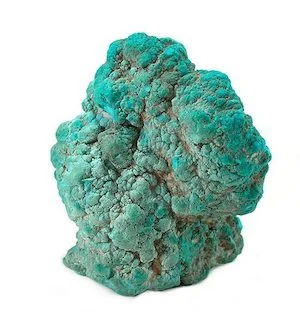
Pop that cork! When you hit those quarterly revenue goals early, you take the team out to make some noise. Turquoise amplifies the satisfaction of a job well done. After all, it’s the stone of extroverts and influence, making you the most fun person at celebratory happy hour.

Funded your Kickstarter? Check. Lined up manufacturing? Check. Pregnant? Whoops. And...check!!! Congratulations! Emerald keeps your heart open and magnifies your joy so you can bask in that pregnancy glow.
Sleeping

Maybe it was that after-dinner espresso but more likely it’s the endless to-do list that wakes you at 3:00 a.m. A girl has got to get her sleep. So under that silk pillowcase (true fact, your hair will look great in the morning) slip a piece of Danburite. It’s a shiny glossy chisel that will chip away at the anxiety that is keeping you up and bring a sense of peace so you can get the sleep you need. It’s also great for migraines.

A wand of Selenite to keep you vertically aligned and help you get your serenity back when you need it. It’s also great at keeping a safe and peaceful home environment.
Doubting
Trauma happens. Sadness is part of life. Suffering is human. Big feelings are deep teachers. We know these lessons. That said, when your runway is ending next month and last month your entire family had the flu, you need a bit of soothing. This duo offers first aid...

Rose Quartz is a classic healer and amplifier of goodness. It works broadly to cover all the bases —heart, mind, body, environment. Place an orb in your home or office to attract some of that universal river of love and help heal your tired heart. Slip a point in your pocket and unpack your feelings of fear and guilt. In the immortal words of Queer Eye, Jonathan Van Ness, “Self-care is non-negotiable.”

Glittery and pink purple, Lepidolite works to relieve emotional suffering so you can feel what you need to feel and come out the other side intact. For the rock nerds and the geologists: lepidolite is a form of mica, and is the most abundant lithium-bearing mineral on earth. Why is this interesting? Because lithium is used in some mood stabilizing drugs. This one you may want to make into jewelry and wear 24/7.
What the F’ing?!?
When the psychic vampires arrive, you need tools to get your positive energy flowing. You may not make payroll, but you will have the strength to communicate why, and the way forward. Bring in these heavyweights.

Fluorite for working through thorny, complex issues and stirring creativity to bring a higher state of mental achievement. Kick that instability to the curb. With fluorite in your purse you're open to net new information.

Your spouse threatens to leave if you spend one more weekend working. Get out the Black Tourmaline. A force field protector and negative energy releaser, it is the best grounding agent in town. Everyone needs this.

Call the shaman. Five employees left last quarter. Labradorite has got your back. The stone of mystics and the North (once thought to be the frozen light of aurora borealis), a seer stone that amplifies focus, allowing clear outlines to emerge and you to find the best path forward. Bonus, Labradorite is a powerful protector and a stone of adventure. Running a successful business is nothing if not an adventure.
Lady Stardust Minerals is the side hustle for Erica Goldsmith, a brand consultant and business strategy guide for creatives. Need a rock? Want a consult? DM her through Insta.
Weekly Female Founder Funding Update
Ellevest and Tinkergarten raise Series A and B rounds. Read the star-studded, gender-diverse investor list behind both entities.
Ellevest, $33 million, Series A, Sallie Krawcheck, Co-Founder and CEO
New York-based digital investment platform. Investors include Pivotal Ventures, Valerie Jarrett, Rethink Impact, PSP Growth, PayPal, Mastercard, Google’s Eric Schmidt, GingerBread Capital and Elaine Wynn. (Website, Crunchbase)
Bonus: Ellevest produced an interactive, annotated press release that adds fun color commentary about investors and the team. Might be worth borrowing the tactic to liven up a staid press release.
Tinkergarten, $21 million, Series B, Meghan Fitzgerald, Co-Founder and Chief Learning Officer
Northampton, MA-based edtech platform offering outdoor learning classes and activities for kids, entire round funded by Jeffrey Katzenberg’s WndrCo. (Website, Crunchbase)

March Ifs
If unicorns could talk, they’d sound like total badasses who can raise millions, disrupt major industries and always keep their eye on what’s best for customers.
If unicorns could talk
Last week, Emily Weiss at Glossier and Jennifer Hyman at Rent the Runway led their companies to unicorn status. With $100 million and $125 million raises, respectively, both companies reached $1 billion valuations.
Cue Unicorn by Dizzy Gillespie.
This is a lingerable moment:
Two.
One billion-dollar valuations.
From women CEOs.

Unicorn #1, Emily Weiss, CEO and Founder of Glossier

Unicorn #2, Jennifer Hyman, CEO and Co-Founder, Rent the Runway; she fundraised while pregnant
As a reminder, in a fundraising event a valuation is the process of determining the value of the company. I know, seems obvi but there's a lot that goes into the number. If you want to value your company, here's a resource with usable spreadsheets for the Venture Capital Method of valuation.
After the obvious hells fucking belles, there are two things going on with these valuations that relate to us.
One, Emily Weiss was an art school graduate. Glossier started as a blog called Into the Gloss. (Which is still thriving and the powerhouse of their content marketing.)
Jennifer Hyman, along with her co-founder, Jennifer Fleiss, are Harvard Business School graduates. While at B school, they personally connected, identified a problem and went about solving it. Not that it was ever easy for them, but you get certain advantages as an HBS graduate.
In Emily Weiss, we get a role model for an alternate path as an empire builder. You can follow your dreams and start anywhere.
I can peek over my 15 year-old daughter's shoulder as she scrolls Glossier and say, "You can build something that powerful."
No excuses, ladies.
The second thing that's important is that both of these women position their operations as tech companies but they are not classic "technical" founders.
You can't scale to billion dollar heights without believing in yourself as a tech company.
In a Recode Decode podcast (link below), Jennifer Hyman talks about how her first round of venture capital helped to build out the team for “what we really do, which is all of the technology and logistics to power just-in-time-reverse logistics of physical goods.”
In another episode, Emily Weiss hints at what her raise will help to build—a social platform for deepening co-creation with customers. It'll be used to further this defining truth about the brand:
“The way we look at it is that we’re building this people-powered ecosystem. We have co-created since we launched four and a half years ago, with our consumers. The reason we’re able to do that is because we know who they are. We have a direct relationship with every single person who buys something from us, unlike all of the incumbent companies that have been built through retail channels.”

Instagram is Glossier's #1 platform and the heart of their "retail-tainment" social strategy. They receive 5 customer direct messages per minute. And they proudly showcase how their customers really use their products.
A final remarkable point about Glossier is their gender representation:
70% female employees
60% female board
50% female engineering team
If you like to listen
Both founders have been all over the podcast circuit. Here are three most worth your time for hard-core business insights:
An engrossing path-to-success interview (including a rush hour car race through Manhattan to ambush Diane Von Furstenburg):
Jennifer Hyman on Guy Raz’s How I Built This
How to put customers at the center of everything, and the tech and team you’ll need to do it:
Emily Weiss on Kara Swisher's Recode Decode
The business (and multi-vertical extension) of a subscription model, and a thoughtful assessment of how to change the definition of leadership:
Jennifer Hyman on Recode Decode from 2017
If you want rainbows with your unicorns
Three other companies announced raises last week:
Cleo, $27.5 million, Series B
Chitra Akileswaran and Shannon Spanhake, Co-Founders
Henry the Dentist, $10 million, Series A
Alexandria Ketcheson, Co-Founder and Chief Brand Officer
Maude, $1.5 million, Seed
Eva Goicochea and Dina Epstein, Co-Founders and CEO and CPO, respectively
Click over to the weekly funding report for full details and investors.
Additional insights about last week's raises:
Forerunnner Ventures, led by Kirsten Green, continued to be active in funding emerging commerce brands, backing Glossier, Cleo and Henry the Dentist. Forerunner has a powerful brand in their own right, from the name to their blog and their actions.
Glossier and Rent the Runway are two other retail juggernauts reshaping commerce and branding in as equally customer-obsessed ways as Amazon, but with more humanity and opportunity for customers to share their voice
Four of the companies primarily serve needs associated with traditional women's gender roles (beauty, fashion, home, sexuality, early parenting support)
If in doubt about fundraising
Must be restated....
Don’t ever doubt that YOU can raise venture capital. You've got it in you!
That type of funding might never make its way to your bank account, but you have to believe that it’s possible to bring home that bacon.
Art school. Just sayin.
If you forgot the other Unicorns
There are others roaming the landscape:
23andMe — Anne Wojcicki and Linda Avey, Co-Founders and Co-CEOs
Nextdoor — Sarah Leary and Madison Bell, Co-Founders and VP of Marketing and Operations and Chief Product Officer
Cloudflare — Michelle Zatlyn, Co-Founder and COO
Credit Karma — Nichole Mustard, Co-Founder and Chief Revenue Officer
Houzz — Adi Tatarko, Co-Founder and CEO
Eventbrite — Julia Hartz, Co-Founder and CEO; IPO’d in September 2018

Weekly Female Founder Funding Update
Pow POW!!! Two unicorns birthed in a $264,000,000 week. Here’s the scoop on the 5 female led companies in the health, wellness and e-commerce industries.
Cleo, $27.5 million, Series B, Chitra Akileswaran and Shannon Spanhake, Co-Founders
San Francisco-based supplemental benefits company that partners with enterprises like Uber, Pinterest, LinkedIn and Slack to offer supplemental benefits to working parents. Greylock Partners and Forerunner Ventures led the round. Cleo has an all-female, three-person board. (Website, Crunchbase)
Glossier, $100 million, Series D, Emily Weiss, Founder and CEO 🦄
New York-based direct-to-consumer beauty products retailer. Sequoia Capital led the round, joined by Tiger Global Management, Spark Capital, Forerunner Ventures, Thrive Capital, IVP, and Index Ventures. The financing sets a $1.2 billion valuation. (Website, Crunchbase)
Henry the Dentist, $10 million, Series A, Alexandria Ketcheson, Co-Founder and Chief Brand Officer
New Jersey-based mobile dental practice. Forerunner Ventures led the round, joined by Brand Foundry and Trail Mix Ventures. (Website, Crunchbase)
Maude, $1.5 million, Seed, Eva Goicochea and Dina Epstein, Co-Founders and CEO and CPO, respectively
New York-based sex essentials company, Tune House Capital led the round, joined by RRE, CASSIUS Family, Outbound Ventures, Shrug Capital, and Pico Alto Ventures. (Website, Crunchbase)
Rent the Runway, $125 million, Venture Round, Jennifer Hyman and Jennifer Fleiss, Co-Founders and CEO and Head of Business Development , respectively 🦄
New York-based e-commerce website that rents designer apparel and accessories. Investors included Franklin Templeton Investments, Bain Capital Ventures, and T. Rowe Price. (Website, Crunchbase)
🦄 Other Female Founded Unicorns 🦄
23andMe — Anne Wojcicki and Linda Avey, Co-Founders and Co-CEOs
Nextdoor — Sarah Leary and Madison Bell, Co-Founders and VP of Marketing and Operations and Chief Product Officer
Cloudflare — Michelle Zatlyn, Co-Founder and COO
Credit Karma — Nichole Mustard, Co-Founder and Chief Revenue Officer
Houzz — Adi Tatarko, Co-Founder and CEO
Eventbrite — Julia Hartz, Co-Founder and CEO — IPO’d in September 2018
Funny biz
Podcasts, satire and sexy 13th century tales…Underwire readers share what gets them through the startup slog.
Damn, we take ourselves sooooo seriously.
I met a woman recently who I can't stop thinking about:

That's Yao Huang.
Yao founded The Hatchery, which among other things, runs the Wonder Women dinner series across the U.S.
Yao is a serial entrepreneur, an investor, and according to her LinkedIn bio, a doctor of pharmacy. Whuuut?!?
She's also a standup comic. A multi-hyphenate of the highest, funniest order.
I met Yao at Seattle's first Wonder Women dinner. She's been in my brain ever since with her unapologetic "find me a black man" refrain. Yao asks for what she wants.
We can all learn from Yao.
What distinguished the Wonder Women dinner from other networking events was Yao's hostessing.
Yao kicked off the dinner with a short comedy set that explained the rules of engagement. We had to keep intros short and focused on something that Google didn't know about us.
It was bawdy from the get-go. We covered black men, a Beastie Boy ex-boyfriend, boobs, butt tattoos and butt rockers. That was just the Bs. No one escaped a ribbing from Yao.
Two hours later, some of us were twerking while others moved furniture to practice sun salutations in dresses and pant suits.
All because of comedy. Permission to let loose.
We need more of that levity. So today we lighten up. On behalf of a few Underwire readers, here's some fodder.

Amber Says What
Cynthia Masterson served up Late Night writer Amber Ruffin. In 5-min-ish skits, Amber dissects pop culture news through a black culture lens.
Here she is on the 2019 Academy Awards, or Kamala Harris/Beyonce at Target and the Gillette toxic-masculinity ads, and an entire skit dedicated to the black undertones of the Royal Wedding.
Plus, Amber styles up the best bomber jackets ever.

"Sorry straight white guys, no room in the eartubes for ya"
That's direct from the always irreverent Sarah Blankinship. Here's where she goes...
Podcasts:
Bitch Sesh — never watched an episode of Real Housewives but this is like white noise + gal pals plus + funny times + no politics.
Why Won’t You Date Me features hilarious comic Nicole Byer — fun topics and vicariously Tinder-ing through others.
Las Culturistas — it’s like your two gay boyfriends interviewing other gay boyfriends and gal pals. They always have a section called “I don’t think so honey” where they clear the air on a topic of non note.
How Did This Get Made? — funny people talking shit about really shitty movies.
Shows:
RuPaul's Drag Race
RuPaul Drag Race All Stars
Queer Eye
I’m Sorry
Broad City
Anything Men Can Do I Can Do Bleeding
Allison Roger recommends this McSweeney's article by Madeleine Trebenski. Uhn-huh, all of it, espesh this:
“Remember that meeting yesterday? The one where you talked over me repeatedly, so that I was forced to yell over you? It was so fun, both of us yelling like that. Weren’t you pumped? I was so pumped, but I was also pumping blood out of my uterus. That’s right, my life force was being pumped out of my body and into my pants — my fashionable, androgynous, business pants. Sure, that meeting was high stakes for you, but just one sneeze and it would’ve been all over for me. Seriously, it would’ve been all over my very expensive pants.”
Xena: Warrior Podcast
For you warrior princess acolytes, Richa Prasad gifts us the Xena: Warrior Podcast.
Richa says, "I love the discussion between the ladies on Xena: Warrior Podcast. I grew up watching Xena so it's very nostalgic for me and they really are hilarious."
Here's how the creators describe the show: Tis a weekly show where three film school grads (Vera, Katie, and Livy) over-analyze the Hades out of Xena: Warrior Princess. This 90’s classic deserves more critical attention and appreciation within the television canon, and that’s where we come in. Watch along with us as we revisit Xena from the beginning. The power, the passion, the podcast!

The Fabliaux
Lynne Hannah gets props for the most surprising, and medieval, quickie chuckle—The Fabliaux.
As Lynne says, "This is a collection of stories written between the 12th and 14th centuries. It's scandalous, irreverent, anti-establishment (church), and sexual comic tales in verse, almost all anonymous. Written at the fall of feudalism and the rise of manufacturing, transportation, and rampant materialism, it just seems to ground me that even 800 years ago people were people. And they are quite shocking by our modern senses! They always make me laugh."
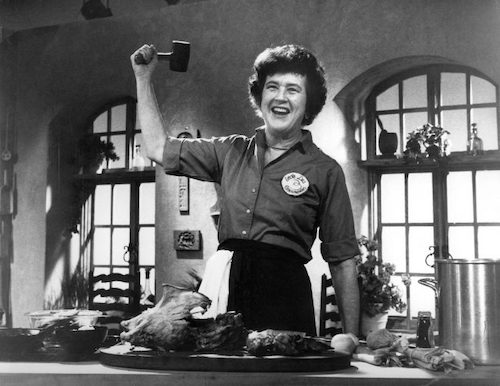
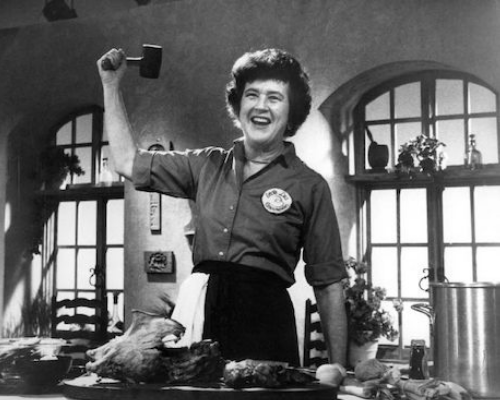
Julia Child presents....the Chicken Sisters!
This video compilation recommended by moi showcases Julia's dry, kinda corny but totally lovable sense of humor.
Julia reminds me to find the fun in the mundane, embrace failure and wield a knife with confidence (literally and metaphorically).
Other things I've learned from Julia:
“The egg can be your best friend if you just give it the right break.”
Lots and lots of butter makes everything better.
“There’s something terribly exciting about a whole suckling pig….what an elaborate way to serve an apple!”
And don’t forget the wine!

Weekly Female Founder Funding Update
We raised $22.5 million last week in the crypto, job services, coding, health/wellness and media/entertainment industries.
Amun, $4 million, Seed, Ophelia Synder, Co-Founder and Chief Product Officer
Switzerland-based Amun is a company that wants to make buying crypto as easy as stock. Investors can invest in crypto easily, safely, and in a regulated way on the SIX Swiss Exchange. Round led by BoostVC. (Website)
Fairy Godboss, $10 million Series A, Romy Newman, Georgene Huang, Co-Founders
New York-based, female-focused professional networking platform focused on gender equality. Round funded by Signal Peak Ventures, GSV AcceleraTE. (Website)
Girls Who Code, $3 million, Grant, Reshma Saujani, Founder and CEO
New York-based edtech non-profit organization working to close the gender gap in technology. Through its Summer Immersion Programs and Clubs, Girls Who Code seeks to provide computer science programming for girls in rural areas. Grant round led by Walmart. (Website)
OOVA, $1 million, Seed, Amy Divaraniya, Co-Founder and CEO
New York-based fertility diagnostic company spun out from Mount Sinai Hospital. Special Situations Life Sciences Innovation Fund led the round. (Website)
Serial Box, $4.5 million, Seed, Molly Barton, CEO and Co-Founder
NYC-based provider of serialized entertainment for readers and listeners. Investors include Forerunner Ventures, Boat Rocker Media and Uzabase. (Website)
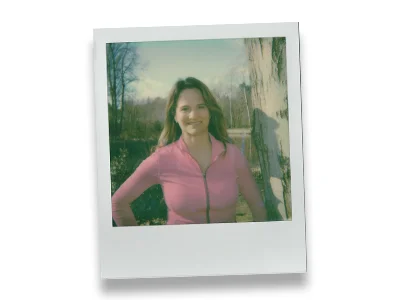
Michele Mehl: The Master of Startup Content Strategy
Michele Mehl, CEO and Founder of Excy, talks steady growth and instructs in how to use content strategy to sell, engage and get over yourself.

Michele Mehl, Founder and CEO of Excy
Ms. Mehl on...
Why she walked away from raising a million dollar seed round to focus on an intentional, steady growth trajectory
How to out-scrappy the competition and be more real with video—which led to nearly all Excy sales
Where to push content, and the tools to do it, to increase traffic, sales and brand loyalty
What 3 things help most for early-stage startup survival
Underwire: First off, tell us about Excy.
Michele Mehl: Excy is a multi-tasking portable exercise bike for anywhere cardio, strength training, and full body physical therapy cycling. We turn typical sedentary moments like watching TV, conference calls, reading a book, kid’s sport sidelines, and even time in bed, into opportunities to exercise.
Our customers tend to be active Baby Boomers and busy office workers with age-related injuries, disabilities, and health conditions, but also the rehab professionals who serve them.
Since the system folds for easy storage and transport and only weighs 14 pounds, it’s always ready when you are, wherever you go.
We also have a mobile coaching application with content for motivation, including videos from physical therapists.
Your videos are crazy inspiring, we’ll get to those later. Let’s start with what first attracted me to your story — the shift you made last year to an intentional growth strategy. You absolutely intend to grow a billion-dollar company, but it’s going to be on your terms. Go there. Please ;-)
For over 20 years, I have worked with or for venture-funded technology startups. I have seen the demands of raising capital. I’ve experienced the pace required to build a billion-dollar brand.
I’ve also been there as a friend and as a consultant in supporting entrepreneurs on their journeys to go from “obscurity to ubiquity,” a phrase used by Maveron founder Dan Levitan, who I had the privilege to learn from while running my previous company, Buzz Builders.
I have lived my entire life and career with a “go big or go home” mentality. There’s no doubt in my mind that we are sitting on a billion-dollar idea at Excy, but I have learned over my career that there is a lot more money out there than there are great entrepreneurs and big ideas.
So, I first set out to hit certain milestones to prove that our strategy would reasonably work in building a radically inclusive fitness brand that focused on including millions of people neglected and marginalized by the traditional fitness industry. Also, I wanted to prove to myself that I could be a good CEO of a hardware/software company. I felt like I had to prove it to myself first because I’ve never asked anyone for money in my life and I take it very seriously.
We initially spent 100% of our time building a minimum viable product, and then a promising product. We then designed our Kickstarter campaign to be intentionally small and learned everything we could about the people buying our product.
I worked full-time to fund the bootstrapping of the business, even bartering marketing services along the way to help Excy grow to reach certain milestones.
In September 2017, I went full-time on Excy. Once again, I was focused on hitting milestones with an intentional growth strategy but seeing if I could make it go faster by being all in, which would help make us a more attractive outside capital investment.
For the first three months, I had small panic attacks because I’ve always had a consistent paycheck. It absolutely freaked me out. All self-induced stress vs. coming from my husband, but I felt irresponsible, until it started working.
By February 2018, I felt really good about the milestones and started the process to raise a million dollar seed round to put us on a path for rapid investment and growth. It took me all of March and April to fully prepare.
So much work goes into preparing to raise money, from creating your forecasts, to your narrative, to your deck, to securing meetings, to travel, to follow up and more. It is more than a full-time job.
During this process, our sales volume went down because I didn’t hire someone to backfill me while I focused on the full-time job of raising money.
The impact of life (and death)
About seven meetings into the fundraising process, my brother Ronnie passed away unexpectedly. I took time off to attend the funeral and to do some self-reflecting and decided that 200 meetings with customers and prospects would help our business more than spending time raising money.
So, I spent the summer focused on meeting with customers and prospects and working with Mike Rector, our co-founder, to build our next product.
Getting Stanford Health Care as a customer was one happy result of this decision, as was the filing of our second patent for our new XCR 300 product. Sales started rebounding slowly.
From another angle, when my brother passed away, I had just turned 45. My former business partner sat me down and reminded me that in five short years, I would be 50 and my son would be 18. She challenged me to look at what I was trying to accomplish from a new lens; one that I would be tremendously proud of when I turn 50 and send my son off to college.
I sat down and jotted down responses to Who, What, Where, Why, and How. This has been my go-to methodology for creating corporate communications strategies for almost 25 years. This helped bring clarity in recognizing the power and limitations of time.
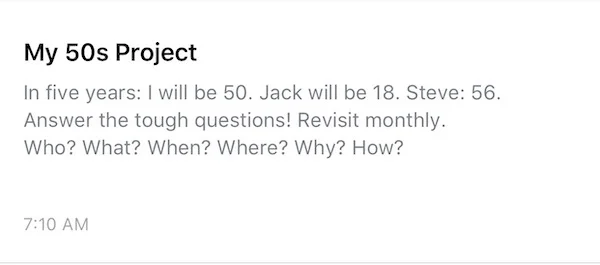
A note from Michele’s “50s Project” file.
After all that, what changed during this experience was that I no longer felt the self-imposed pressure to “go big or go home,” or that securing venture capital and growing a billion-dollar brand is the definition of success.
Don’t get me wrong, I have all intentions of building Excy into an amazing company and household brand, but I now find myself looking closely at brands like Tuft & Needle, MVMT and entrepreneurs like Rand Fishkin for an alternative blueprint for building a fast-growing company without VC.
You made a mindset shift to prioritize how you spend your time, especially with your family. You can still build a great company, but it requires you to re-think prioritization.
Shifting your mindset to time helps you understand what is realistically possible. To me, building a VC-scale business is a consistent commitment to 70+ hours a week to deliver the expected hyper growth (not including travel). I consistently put 70-hour workweeks in the first 10+ years of my career.
Now, I focus on what is possible with a 45 to 50-hour workweek, with the occasional need to go higher and to travel. There are a lot of people with super powers and a lot of support systems in place who can pull this off (a spouse who doesn’t work, grandparents, nanny, third-party services, etc.). My dad recently retired (my mom still works) and he helps out when I travel, but they don’t live close enough for spontaneous help.
At first, I felt like a failure for admitting that I just can’t do it and be the mom, wife, daughter, sister, friend, mentor, and even neighbor, that I want to be. I still fail at these things (typically many of them at the same time), which those who are close to me would tell you because I’m slammed, but I’m highly aware and working on it.
Also, I’m starting to plan on hiring the right team and getting the right investors who are on the same wavelength in establishing a realistic growth trajectory of our business.
What tradeoffs has this shift required of you?
It requires execution and not getting out in front of your skis. It also requires eliminating things that are not moving the business forward.
The smartest decision we’ve made so far is focusing on hardware first and nailing the design and usability. I was in a position to bootstrap the company through this point by working, using savings, sales, and good old sweat equity.
The second best decision was working hard to understand our customers' motives and barriers so that we can also design content that inspires for incremental behavior change. That brings results without asking for complete behavior modification.
Lastly, having a realistic growth trajectory and being very intentional in our growth requires a sustainable and creative marketing budget, realistic customer acquisition costs, and reinvesting the profits in the business to grow faster.
To determine marketing spend, I use revenue and profit-growth expectations to determine how much to spend. Business 101 stuff.
I’m a planner. I had a 5-year plan out of college. And then a 10-year plan. I’m ridiculously structured, sometimes to a fault, but there’s always a master plan. Getting caught up in the idea that building a VC-scale company was the definition of success was a total distraction from our intentional growth strategy.
We can continue to fund with revenue and profits but consider fueling with a smaller strategic investment. Cash is king after all, and while there is always a cost of bringing in outside money. The costs are different (also stressful) for alternative paths to VC. I am weighing those now.
You have a deep background in marketing and PR. How did you approach the marketing for Excy without the size of budget you were used to working with?
From the beginning I knew we could not compete with large consumer tech fitness marketing budgets and big, infomercial activity. Also, if I look at what traditional exercise companies do, it’s not fresh. It’s not new content to give people ideas and motivation.
So, my strategy has been to out scrappy them with content marketing that includes social, video, live streaming, and sharing customer testimonials.
I can compete on just going faster with authentic content, which means there’s no pressure to do things perfect. My customer base doesn’t feel perfect. I’m sure as hell not perfect. There is a craving for real people.
It was really hard for me to do video. I sat on it for a year. My entire career has been behind the scenes, so putting myself out there was very challenging.
When we did our Kickstarter, we had a great product with a well-built mobile app, but the future is in the content and being able to support and motivate people and make them feel a part of something. We started with six professional videos. I bartered, and in exchange I gave them PR services. Those early videos continue to be our most popular. Look at "Arm Candy," our most popular to date.

Excy’s most popular video. Watch it here.
Content strategy
So that six-video package launched your video empire. You are a video-producing machine, you must have over 100 videos, and you’re doing live streams. Talk about authentic—you are the brand and peddling-proof of the impact of your product. Video is the cornerstone of your strategy. What fueled that strategy?
My strategy with video is multi-faceted. First, I want to inspire our customer base to understand the power of what they bought and to put it to work. We didn’t build this device to be another dust collecting piece of exercise equipment. I feel like me rolling out of bed at 6:00 a.m. with no make-up or busting out a random workout outside on the go on demonstrates what’s possible.
Second, I want to extend our SEO footprint to increase traffic and decrease our customer acquisition costs. Google Search is our number one driver of traffic and sales. I put all our live videos to work on Facebook, YouTube and then push snippets to our website, email list, Twitter and Instagram.
Finally, with our paid professional videos, I want to showcase third-party credibility, teach customers how to properly use our device, and also capture that we are a professional company.
We put a very small amount of money into boosting Facebook Live videos on occasion for a decent ROI. I then do everything I can across all our channels to extend the longtail value of all the live content.
We haven’t paid for any YouTube subscribers or views and we’re well over 100,000 views organically. I do Facebook Live, YouTube Live and we capture the streams to our website. We use the top-level domain .LIVE (www.excy.live) to create a branded experience around our live content and to make it easy for our fans and customers to see what we are up to and to dive in to our vast library of content. We also make all the content easily discoverable in our mobile apps.

Excy’s Live page.
A lot of our customers are not on Facebook so we have to reach them where they are, including when they search the Web with a very specific exercise problem that we can help with. With video, they can easily determine if they can see themselves using our device.
Content production
What equipment do you use?
I have two iPhone 8 Plus smartphones, plus an iPad. I have a couple of tripod stands and use cases from Iographer to hold the phones. We recently started using Switcher Studio as our streaming platform to help brand our live streaming experience.
One of the challenges is that people don’t know we have a mobile-coaching app. Switcher Studio allows me to dual-screen and I can feature the mobile coaching app in action as my coach through all my workouts.
I do monthly challenges that customers can follow along with. Or I’m somewhere and I just go for it and pull out the Excy.
I love the video of you in New York across the bay from the Statue of Liberty. I felt like I was there with you, pals strolling the promenade. Oh hey girl, let’s get in some upper arm work while we marvel at this glorious representation of America at its most industrious. Does it come easy for you to do these videos?
At first, I was shy and embarrassed. Not because I was using Excy, but because of the setup with a tripod and talking to the camera as people were walking by. I’d find a quiet place. Now I don’t care. Well, maybe a little with looking like I am talking to myself, but now I just wave at people and answer their questions while on camera.
In my personal life, I have no problems riding Excy anywhere, including the sideline of my kid’s sports functions. Or in the airport. Wherever. I did have one man recently take a video of my using Excy on the sideline and he sent it to his wife. Her first reaction was “Great, an in-shape woman getting more in shape.” It can be hard to constantly remind people of my story and how I live with an injury, so this is why we also place a lot of emphasis on sharing customer stories.
Prior to Excy, maybe I took three selfies in my whole life. I was the mom who was never in the picture. I’d crop my head out. There was always something wrong with my body that I wasn’t happy with. I was that person. I’m not a photogenic person. When I have my photo taken it’s a struggle. It’s uncomfortable for me.
But now I’m more in touch with myself. My son will have more pictures of us because I give fewer fucks.
By the way, the Excy videos are also my workout. Those challenge videos are my real workouts. Or I workout while watching TV. I do weekend warrior stuff (skiing, biking), but I do Excy for 20 minutes, five to six days a week. And I go hard.
How have the videos contributed to sales?
I think the strategy led to nearly all our sales, including securing a relationship with Stanford Health Care. It also helps minimize returns. We’ve only had five returns. People understand how to use our system. As I mentioned earlier, it’s also helped with our SEO footprint.
I will say, I can’t watch the videos. It’s too hard for me.

Michele in action.
Well, please know that your videos are incredibly inspiring. They make me want to buy an Excy and get me some abs like yours. Damn, you can plank AND ride that freaking thing at the same time. I wanna see you Excying, in a plank, while Jeff Bezos meditates on your back. Ommmm...
I love Amazon and Jeff Bezos, but lately, I just keep envisioning him naked with all this dick pic stuff, so you just freaked me out.
I consistently hear from our customers that these live videos inspire them, so it’s why I keep doing them. I’ll be 46 next month. I’m working harder than ever and I’m close to being in the best shape of my life by mostly exercising and multi-tasking when I would otherwise be sedentary.
My next goal is to leverage video even more to drive engagement and extend our footprint since fewer people are paying attention to social media.
Sounds expensive. I know you’re thrifty and crafty with your spend. How is all this possible?
We recently kicked off a new effort called HealthYeah by Excy. It’s a risk to introduce another brand, but we are using it to build out more expert content in a very authentic way (everything is live). The goal is to inspire people, but also drive email signups, engagement, and a great SEO footprint. We are three interviews into it and I am beyond happy, so I booked us out through June.
We will continue to pay our professional videographer to capture video, but also barter for videos, too. For example, I don’t pay our physical therapists to do videos. They do it because they believe in what we are doing, so I give them an Excy for their clinic to work with patients. We will also continue to do live workouts, less than before, but still keep building the library.
Bartering and trade—that’s such a startup theme. You have to get really good at asking for help. Since video is so important to your marketing and product experience, talk about how you integrate it into the app.
The mobile piece is interesting. All videos are integrated into the mobile coaching app under our “more” tab. “Live” takes people to live workouts and training. “Videos” takes people to physical therapy instructions. “Learn the exercises” takes them to setup and tutorials. That helps the customers have a good experience within the mobile app and since everything is also multi-channel, we use the same content to create an SEO footprint.
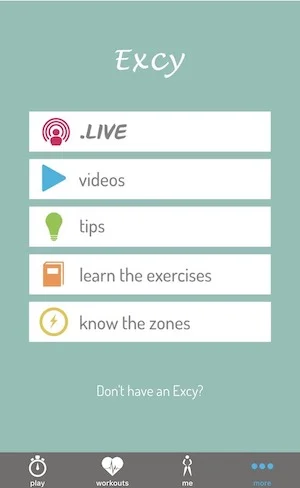
The Excy app.
When you’re an ecommerce company that’s both mobile and hardware, it’s a lot of products to manage. Social is a product, too. We are absolutely a content company.
From the beginning I wanted the hardware right. Then deliver the content. Over time it will be specific to injury and disease. There is a subscription model to be had in the mobile app. Peloton is spending tons of money doing this. They’ve closed almost $1 billion in funding. With my growth strategy, we will partner on the subscription front for the backend but drive the content ourselves with customers and experts.
Steady focus on sales, plow more into content marketing as you have the revenue—but you are profitable now, right?
We ebb and flow depending where we are in the inventory process. When we place an inventory order, which we just did, we’re not profitable until we start selling. Also, since I’m not paying myself, I technically don’t think you can consider yourself profitable until you’re paying yourself a salary. But we’ve made money every month since we launched. That’s hard to do.
There have been temptations to add sensors, or speed up my vision for the mobile app. We have to stay focused. It’s always tempting to do more. Our customers aren’t demanding it. Since I’m bootstrapping, I have time to listen to my customers.
Direct-to-consumer as a startup
Any lessons from your travels in direct-to-consumer land?
If I look at Peloton taking close to a billion dollars, or Mirror taking in $40 million-plus, it can be very easy to be demotivated knowing that D2C is extremely expensive. We are choosing to swim in blue waters ignored by the shark invested fitness market.
We’ve been able to work with health systems and physical therapists rather than celebrities. Another part of our strategy has been to build authentic relationships with opinion leaders who are our customers and have high credibility. That gives our core audience a level of confidence.
My photographer managed to talk me into one photo with a sports bra while planking. I prefer to just capture real life moments where fitness is possible without the production of perfection. It’s a very different strategy than other exercise companies.
I also don’t want Excy to be a fad. There is a tsunami of age-related issues. Exercise is a giant component of that. We can make a contribution to the long-term care of baby boomers and people battling diseases, including many preventable diseases. Now we have the device in place. We have a second product. We have two patents. We will change the nature of how people will take care of themselves.
If I had taken on money our mobile app strategy would’ve been different. We would’ve had to have subscription-based content already before I knew the customer.
Growth trajectory
Final question, who or what has impacted your trajectory the most?
Wanting to be there for my son as he pursues his own dreams and not wanting to miss it. My husband has a very demanding job and travels a lot. It’s hard for both parents to burn the candle from both ends, especially without extended family nearby readily available to help. In close coordination with my husband and my co-founder, we have crafted a realistic growth trajectory that allows my husband and I to raise a busy teenager.
Startup survival tips
Michele’s advice:
Be willing to get outside your comfort zone. Prior to starting Excy, I spent my career behind the scenes. Now, I am doing live training sessions. It’s so awkward, but it helps our business.
Avoid the peaks and valleys. The peaks are high and the valleys are low and lonely. The best way to avoid this is purposeful activity that drives the business. When you find yourself being inactive, do something, anything productive to keep motivated. Even better if it’s time on high-yielding sales efforts.
Don’t get caught only doing the things you are good at. This goes back to the first one of getting outside your comfort zone. Example, I am a better marketer than I am a sales person. But marketing alone doesn’t move the needle. You have to focus and do the things you aren’t as good at too. Or, hire people to help.
Weekly Female Founder Funding Update
The $105 million raised from March 4-11, and the other $325 million we missed since the start of 2019.
Crunchbase released an analysis that shows over $8 billion in funding internationally has gone to women-led companies since the start of 2019.
Here are the biggest deals:

The rundown:
Grab, $1.46 billion, Series H, Tan Hooi Ling, Co-Founder
Singapore-based ride-sharing service. SoftBank Vision Fund led the raise.
Horizon Robotics, $600 million, Series B, Annie Tao, Co-Founder, VP Operations
Beijing-based AI for robots. Investors include Morningside Venture Capital, Hill House Capital, Sequoia Capital, GSR Ventures, Linear Venture, Innovation Works, ZhenFund, Wu Capital, Tsing Capital, and Vertex Ventures.
DaDa, $255 million, Series D, Hui Zhi, Founder and CEO
Shinghai-based online English training institution for one-on-one online tutoring. Investors include Warburg Pincus, TAL Education Group and Yonghua Capital.
Zilingo, $226 million, Series, D, Ankiti Bose, Co-Founder and CEO
Singapore-based online fashion marketplace. Round investors include Temasek Holdings, Sofina, Sequoia Capital India, EDBI, Burda Principal Investments and Angel Capital Management.
Relex Solutions, $200 million, Series Unknown, Joanna Smaros, Founder and Director, Scandinavia
Finnish retail and supply chain system. Led by TCV.
From that same Crunchbase analysis, Underwire discovered three missed raises by U.S. companies:
Confluent, $125 million, Series D, Neha Narkhede, Co-Founder and CTO
Palo Alto-based streaming platform, backed by Sequoia. (Website)
Andela, $100 million, Series D, Christina Sass, Co-Founder and COO
New York-based distributed engineering teams with Africa’s top software developers, led by Generation Investment Management. (Website)
ImpactAlpha, $100 million, Zuleyma Bebell and Avary Kent, Co-Founders
Berkeley-based, investment news media organization. Led by Equilibrium Capital. (Website)
Funding update for week of March 11, 2019
KonMari Media, $40 million, Marie Kondo, Founder
Marie Kondo, the author, businesswoman, and personality behind the popular Netflix series “Tidying Up,” is reportedly in talks to raise up to $40 million in venture funding to scale her personal media brand, KonMari Media. Details undisclosed. (Website)
Kuli Kuli, $5 million Series B, Valerie Popelka, Anne Tsuei, Lisa Curtis, Co-Founders
Oakland-based superfood brand. Griffith Foods led the round, joined by eighteen94 capital, InvestEco, S2G Ventures, Authentic Ventures, VilCap Investments and Rocana Venture Partners. (Website)
Luminary Media, $60 million, Series Unknown, Lauren Perkins, Co-Founder, Head of Talent
New York-based podcast subscription service. Notably, they haven’t launched an actual product. Lead investor was New Enterprise Associates. Two male co-founders. (Website)
Max-Bone, Undisclosed, Parisa Fowles-Pazdro, Founder and CEO
Los Angeles and New York-based pet label, raised Series A funding of an undisclosed amount. Colle Capital led the round, joined by investors including Cooley LLP. (Website)
SheEO 2019 U.S. Finalists
SheEO offers another path to funding for majority woman-owned companies with at least $50,000 in revenue and mission to better humanity.
This year’s U.S. Finalists:
BioCellection
Farm From a Box
Tyga Systems
S.O.U.L. Sisters
Solstice
Learn more about SheEO and this year’s global ventures.

Series Launch: 42 Memory Lane Hail Mary
How far would you go to save your startup? Follow along with a consumer electronics startup as they use Facebook and Kickstarter to stay alive.

Game on
Welcome to the kick off of Underwire’s Hail Mary series with Lynne Hannah, Founder and CEO of 42 Memory Lane.
Over the coming months, Lynne and her team will document their Facebook and Kickstarter campaigns to fund their first product.
At stake? Oh, just the future of the company.
42 Memory Lane background
Problem
You have hard drives, cloud accounts, devices and boxes filled with pictures and videos. Yet there’s no easy way to secure, organize and view them at your command. It’s your family’s legacy. What happens if it vanishes?
Solution
Willa, the first digital family album. Willa lassoes every photo, video and document worth saving, makes it all editable into collections and keeps it safe AND viewable at any time in a gorgeous, dual-screen, leather-bound viewer that’s backed up to the cloud.
Want, right?
If only Lynne could get funding.
She’s talked with 187 investors and the world’s largest consumer electronic brands. Most of those convos were with men who said things like, “That’s what a tablet is for” and “Oh, my wife would love this.” Polite pass.
That didn’t stop Lynne.
A taste of her journey:
5+ years of R&D
200+ hundred interviews with the target audience
24 in-person user tests of software features
150 investors contacted (VC/Angel/Strategic)
37 VC pitches
Convos with executives at Sony, Amazon, Microsoft and Apple
2 trips to China
Key software features prototyped
First product model (built by an industrial design firm)
“From customer research to investors to manufacturing—there’s no rabbit hole I haven’t been down. I realize the optics. It looks like insanity. Either it’s the best hole-in-the-market story ever, or I’m smoking crack.”
Final huddle
Lynne and team are going direct to the people to prove market viability. First, they’ll launch a Facebook campaign to gather, at a minimum, 13,000 emails. Using Facebook ads, they’ll target moms and brides with ads that lead to a landing page.
Call to action: Coming soon—give us your email to learn more. Classic startup testing tactic.
When, IF, they get enough signatures, they’ll run a crowdsource campaign for Willa. With the expectation for 10% conversion, those initial emails are key for a successful Kickstarter launch.
One hitch, a set budget for the Facebook campaign. See below how touchy Facebook can be. We’ll see how that unfolds.
If this effort fails, Lynne shuts down the company.
Month One
Milestones:
Job Assignments. There are four of us, so we divvied up the work into buckets: Facebook Campaign, Kickstarter, Strategy and Assets, Photo-shopping and Editing.
Facebook markets defined
Ads completed
Landing pages completed
Website redesign from light-touch investor facing to consumer facing
Identified creative rewards for our Kickstarter

Facebook ad campaign mockups.
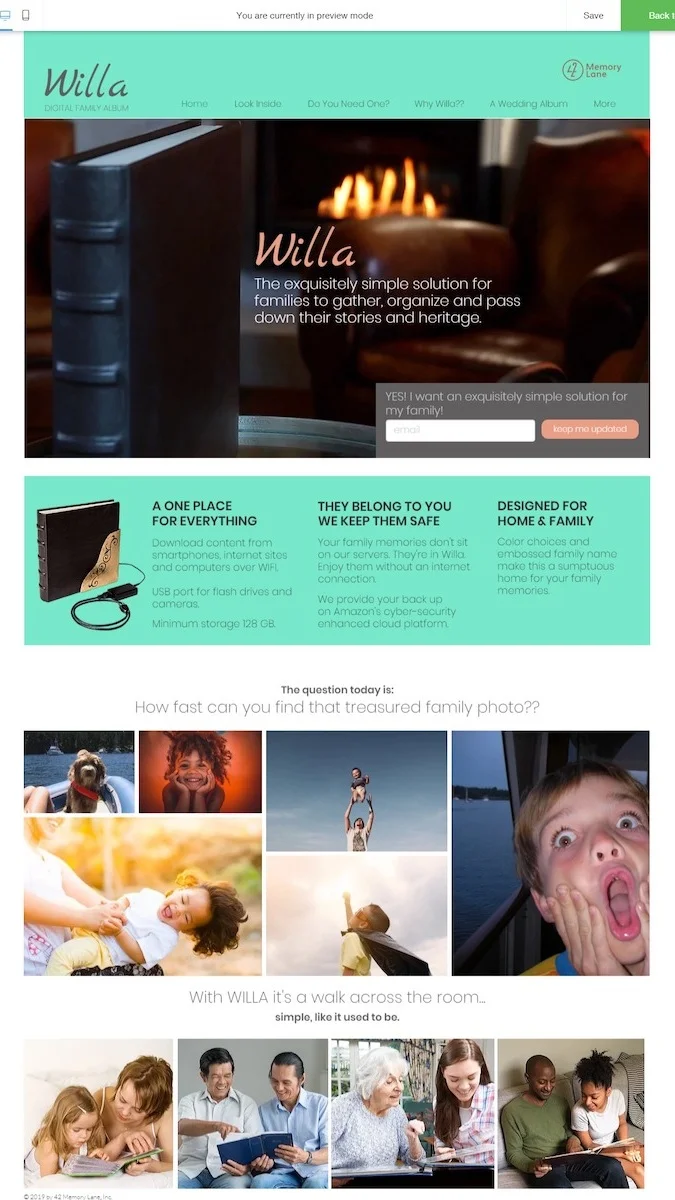
Work in progress home page.
Setbacks
It’s hard for me to think of anything along this journey as a setback as we’re on steep learning curves, and by definition there will stumbles. But we did miss our original, albeit very optimistic, Facebook Ad launch goal because of the following:
Facebook’s “Are you a bad guy algorithm?” threw us out of Creative Hub in a key meeting when we were reviewing and refining our ads. Our theory was the URL originating from the public library where we hold our meetings (hey, free parking, free meeting rooms) spooked the algorithm. (Maybe public libraries are used by nefarious people??) Literally it took a couple of days to get through their paranoia and back into Creative Hub.
Our website got some honest feedback resulting in a total redo (not really a setback, but time consuming).
Amazon miss-delivered a key technical item for our prototype three times (no delivery, no item, broken item) costing us two weeks.
Highly unusual snow in Seattle and the flu caused havoc for a couple of weeks.
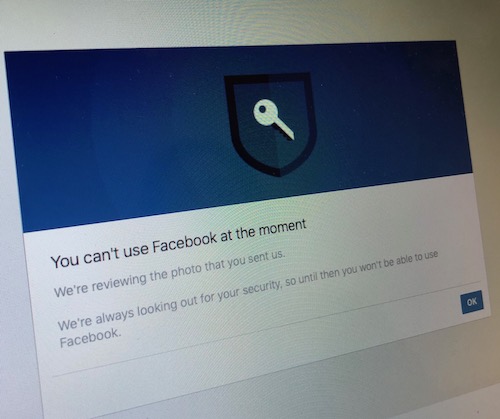
Facebook “protecting us.” Took days to resolve.
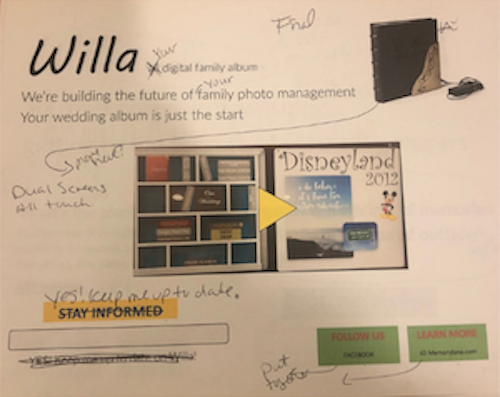
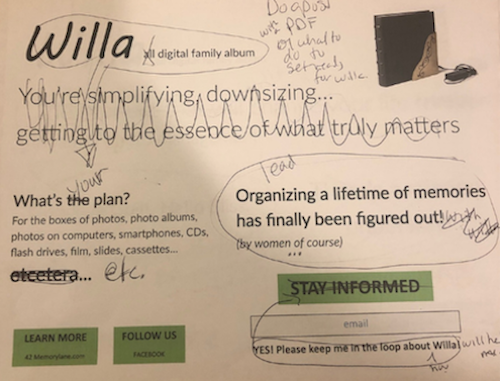
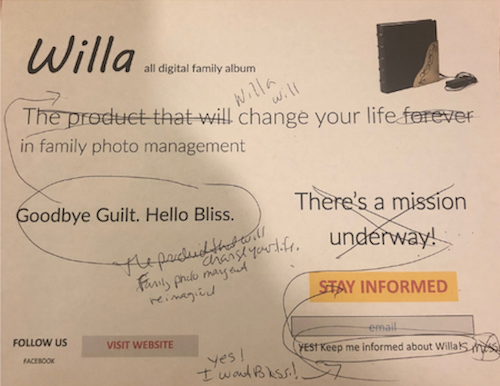
Landing page iterations for different audiences—brides, moms and grandmas. Constant tweaks to design and messaging.
Key Learnings
MESSAGING IS FREAKING HARD! This has been the most frustrating for me personally. We know our customers really well. I’ve talked to hundreds. We did a national survey last year. We know every big and nuanced pain point. They’ve told us what they want, and we have the solutions, and still....we struggle with condensing our Landing Page content to the most pertinent points. The landing pages are key, key, key to our success. Botching their effectiveness is a big fear.
It wasn't until I read Richa Prasad’s article on Underwire that it clicked for me what was happening. The way she defined Hot, Warm, and Cold customers helped me understand “why” our messaging wasn't clicking for us. Right around the corner from that insight was a “what” tool from a branding executive who provided us a messaging framework template. We filled that out in minutes and it’s been a beacon of direction for everything from the landing pages to the website. I’m confident we’ll come up with what we need and expect to learn even more when we launch and can test.
Be patient and compassionate with ourselves. Steep learning curves can feel vulnerable. Yes, we know we’re neophytes. Yes, we know we are sometimes reinventing a wheel that the experts use every day. But doing this ourselves is the tradeoff for a high burn rate and stress of a different kind. This team is filled with problem solvers. In the end we’ll get where we need to go.
Funding
Dipsea, $5.5 million Series A, Gina Gutierrez, Co-Founder and CEO, and Faye Keegan, Co-Founder and CTO
San Francisco-based developer of an audio platform for sexual wellbeing, raised $5.5 million in funding. Bedrock Capital and Thrive Capital co-led the round. Two female co-founders. (Website)
ELSA, $7 million Series A, Vu Van, Co-Founder and CEO
San Francisco-based mobile app using artificial intelligence and speech recognition technology to help language learners improve their English pronunciation. Investors include Gradient Ventures, Monk’s Hill Ventures and SOSV. Male co-founder. (Website)
Ikonopedia, $2 million Series C, Emily Crane, CEO
Richardson, Texas-based provider of a breast reporting and tracking system. Investors include Texas Women Ventures Capital. Three male co-founders. (Website)
Landit, $13 million Series A, Lisa Skeete Tatum, Co-Founder and CEO
New York-based platform designed to help women and underrepresented groups advance in the workplace. Round led by WeWork. Other investors include New Enterprise Associates, Workday, Valo Ventures, Cue Ball, XF, Female Founders Fund, GingerBread Capital, Uprising, Costanoa Ventures, Yard Ventures, Wavemaker Partners, Connectivity Ventures Fund, and Sofia Fund. African American CEO; two female founders. (Website)
Little Spoon, $7 million Series A, Angela Vranich, Lisa Barnett and Michelle Muller, Co-Founders
New-York based direct-to-consumer baby food company. Investors include Vaultier7, Kairos, Interplay Ventures and SoGal Ventures. Three female co-founders; one male co-founder and CEO. (Website)
Rockets of Awesome, $19.5 million Series C, Rachel Blumenthal, Founder and CEO
New York-based direct to consumer kids apparel. Foot Locker contributed a $12.5 million “minority investment.” The raise included participation from existing backers Angel Capital Management, August Capital, General Catalyst and Forerunner Ventures. Actress Gwyneth Paltrow also previously invested in the company. Single female founder. (Website)
ThirdLove, $55 million Series B, Heidi Zak, Co-Founder and Co-CEO
San Francisco-based direct-to-consumer women’s bra and underwear company. This financing reportedly sets a valuation of $750 million for the six-year-old company, putting the company on track to reach unicorn status when it raises again. The latest round brings total financing for the six-year-old company to $69 million, a somewhat low figure for a company worth three-quarters of a billion dollars. A long list of backers participated in the financing, including consumer-brand focused firm L. Catterton and investment bank Allen & Company. Individual investors in the round included Anne Wojcicki, CEO of genetic testing company 23andMe, Susan Wojcicki, CEO of YouTube, and journalist Katie Couric. Male co-founder and co-CEO. (Website)
Zum, $40 million Series C, Ritu Narayan, Founder and CEO
Silicon-Valley based service for shuttling children to school and activities. Led by BMW i Ventures. Other investors include NPG Capital, Spark Capital, Clearvision Ventures, Sequoia and Draper Nexus. Male co-founder. (Website)
Gender studies
More data on why it’s smart to invest in women, Greater Seattle founder resources and WaitWhat $4.3 million Series A details.
More proof that it’s smart to invest in women
Bra snap to two Seattle ladyballers who informed this issue: Rebecca Lovell and Janis Machala.
First up, a new report from The Center for American Entrepreneurship (CAE) and the National Center for Women & Information Technology: The Ascent of Women-Founded Venture-Backed Startups in the United States.
The CAE is a nonpartisan research, policy, and advocacy organization. Rebecca Lovell is the Chair of the CAE’s Board of Directors, as well as the Director of Create33 entrepreneur center in Seattle.
The team behind this report analyzed PitchBook data from 2005 to 2017 and produced 13 “first financing” cohorts (defined as those companies closest to "starting up"). Then, utilizing a PitchBook algorithm, they segmented the companies into “women-founded” (at least one female founder) and “non-women-founded.”
The number of first financings by founder gender were examined over time, by industry, and across U.S. metropolitan areas.
Download the full report.
What stood out
The percentage of venture capital flowing to women-founded companies still sucks but it's trending above the often cited 2%—over the 13-year period studied, 16% of VC funding went to companies with at least one female founder
If you can get VC in the first place, there's a good chance that you'll secure another round (which tells another potentially positive story about the role investors play in the ongoing success of female founders)
When there’s at least one woman in charge, the companies perform as well as, or slightly better than dude-only companies on KPIs (e.g. follow-on financing and exits via IPO or M&A)
Key findings
Women-founded startups represent a small but growing share of activity
Upside: From 2005 to 2017, venture funding of women-founded startups grew from 7% to 21%.
Downside: This growth accounts for just 16% of such activity over the 13-year period.

Source: CAE analysis of PitchBook data
Women-founded startups have similar rates of follow-on financing
Upside: 52% of women-founded startups raised a second round of capital within three years of a first financing and 37% raised a third round within five years. Those same figures for non-women-founded companies were 52% and 36%.
Downside: Nada, this chart is encouraging—we’re tracking tight, and some years leading the non-women-founded cohort.

Source: CAE analysis of PitchBook data
Women-founded startups have (mostly) similar rates of exit
Upside: Women-founded startups are near parity on IPOs (3.8% versus 3.9%).
Downside: Slightly lower acquisition rates (34% versus 38%).

Source: CAE analysis of PitchBook data
Women-founded startups are concentrated by industry
Upside: There's good representation in nearly every industry, with higher concentration in consumer goods and services and healthcare (that tracks with our Funding reports, especially that past six months).
Downside: Software/IT has the highest representation of women-founded companies but it’s not being funded equally to the industry average (there's that stubborn tech gap, again).

Source: CAE analysis of PitchBook data
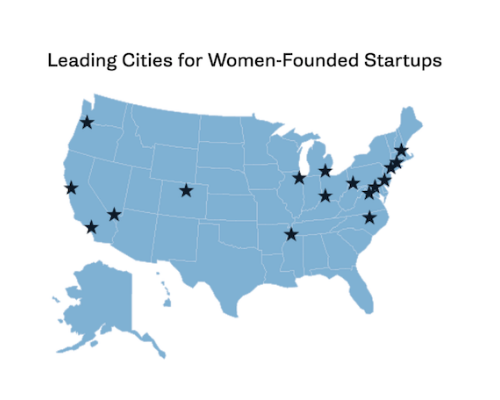
Women-founded startups are concentrated by geography
Upside: We flock together in the leading startup communities of San Francisco, New York, Boston and Los Angeles; Ann Arbor and Philadelphia stand out in the second tier (strong university entrepreneurial programs).
Downside: Seattle did not make this list (nor did Silicon Valley proper), coming in slightly below average, at 15% over the whole period (2005-17) versus 16% for the whole US for first financings to women-founded startups
Thanks to Rebecca for providing Seattle data that's not in the report. WTF, Seattle?!?

Source: CAE analysis of PitchBook data
Download the full report.
Greater Seattle innovation data
Janis Machala sent us the 2018 Greater Seattle Innovation Ecosystem Report, authored by Iinnovate in conjunction with the University of Washington. (Janis also consulted on the report, lending 20+ years of expertise working deep within this ecosystem.)
Now in its fourth year, this report snapshots Greater Seattle’s innovation economy and identifies the top investors, professionals, service providers, and community players that make up its ecosystem.
There is also a separate 2018 Greater Seattle Innovation Report Card and a History of the Seattle Tech Economy. The former evaluates the strengths and weakness of our region's innovation economy and lists organizations, individuals, and initiatives supporting technology, health and life sciences, government, and women in technology related fields.
All three reports available here.
What stood out
Upside: The Innovation Report is a phenomenal resource with lists of investors, advisors, accelerators, co-working spaces, professional services, meetups, etc. to save hours of research time.
Downside: Following the geographic findings from the CAE's report, there's heavy lifting to be done in the Greater Seattle area to support a well-funded female-founder community.
Key takeaways
2018 saw the largest growth in new, local tech venture capital firms in a decade
Last year saw shrinking amounts of money invested in early stage tech deals
7 out of 10 of the top office tenants are tech companies (the report lists co-working spaces, incubators, accelerators, and real-estate brokerage firms)
Greater Seattle has strengthened as a regional and global innovation center (access an index of major cross-sector initiatives and organizations)
Our region has become a global leader in cloud computing, machine learning, and next generation e-commerce
New tech jobs in Greater Seattle over the last few years have grown at double the rate of Silicon Valley, while over 80% of the tech talent in Washington State has come from out of state

This is an excellent home page with TIGHT messaging. Proof that you don't need a "hero image" if you choose meaningful words. Congrats to WaitWhat on this, and their raise.
Funding
WaitWhat, $4.3 million Series A, June Cohen, Co-Founder and CEO
New York-based content company and podcast creator. Cue Ball and Burda Principal Investments led the round. Also of note: WaitWhat reserved up to $1.5 million dollars of additional funding capacity specifically for women and minority led investment funds such as Victress Capital, Human Ventures, and Able Partners.
Hail to the Chieftesses
If women had won through the years. Oh, and we raised another $256 million.
Presidents Day
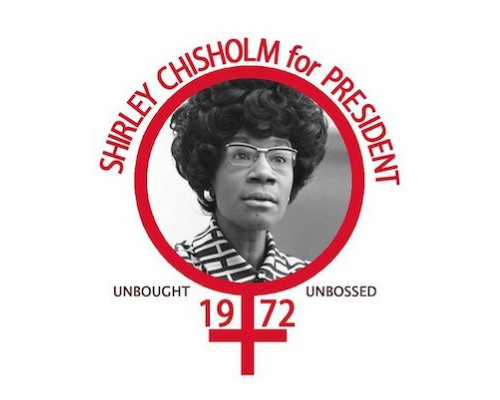
Hello, Shirley. Thank you for running, and for speaking the truth. We're still waiting for the unity you preached.

Hello, Victoria. One hundred years before Shirley, you lead the charge and locked arms with Frederick Douglass on your ticket. And thanks for starting one of the first female-founded newspapers and a brokerage house on Wall Street. And for believing in free love. I wish I could have dinner with you.

Photo by Lynsey Addario for New York Magazine
Hello, Hillary. Thank you for being one of the toughest, smartest and complicated of our candidates. You were the mirror for the double standard we face as women in politics, business and life. Robbed.

Funding
Haute Hijab, $2.3 million Seed, Melanie Elturk, CEO
New York-based ecommerce hijab brand. Cue Ball led the round, joined by Ludlow Ventures, Sinai Ventures, Maveron, Muse Capital, AngelList, and The Helm. Check out their team diversity.
Second Measure, $20 million Series A, Lillian Chou, COO and Co-Founder
San Mateo-based behavior analytics platform used by financial firms and corporate brands. Second Measure’s round was led by Bessemer Venture Partners and Goldman Sachs.
Skylar, $8 million Series A, Cat Chen, CEO and Founder
Los-Angeles-based natural beauty brand. Skylar’s round was led by FirstMark Capital, whose partner and managing director Beth Ferreira will join Skylar’s all-female board. Also participating in the round were Upfront Ventures, Amplify LA, Gingerbread Capital and several individual investors, including the Honest Company’s Brian Lee.
Zilingo, $226 million Series D, Ankiti Bose, CEO and Co-Founder
Singapore-based online fashion platform raised $226 million at a $970 million valuation. Zilingo investors include Sequoia Capital India, Sofina, Temasek Holdings, EDBI and Burda Principal Investments.
Exits
The Apothecarium, acquired for $118 million, Jamie Shira, Co-Founder
Medicinal cannabis dispensary with locations in San Francisco and Las Vegas acquired by TerrAscend. (Green Market Report)

February Ifs
Monthly must-reads, six cos. raise $163 million and three female-CEO exits

Illustrations by Blair Breitenstein / @blairz.
Hearts & Millions
I love this issue of the Ifs. Here’s why: Seven heart-centered must-reads, six fundings with over $163 million raised, and three exits (two at $100 million each). ❣️💪🏽💸
If flab has landed
Take this 3-question quiz to get your ass back. This is from Richa's article on how to grow without VC and a classic example of Frontend Bait in a customer-loving Value Ladder.
If objectivity eludes you
This is why thinking of your business as your baby could be stalling growth. Informed by Finnish research that confirms the emotional connection to your business mirrors your emotional connection to a child.
If buying chocolate and roses feels shallow
Go deep this Valentine's day. Buy nothing, reinvest in the relationship and finish what you started. Raptitude did this for a year and one million people read about it.

That orange blob is a chicken wing. Delivered by a drone. There’s a model for that, mockumentaried in the Crunchbase series "A Startup Takes Flight.”
If confused by funding lingo
In the five-part series, "A Startup Takes Flight," Crunchbase skewers the Valley’s lust for the next-big-thing while mockumenting a fictitious company’s growth from unpriced Seed round to acquisition. Along the way, you get clear examples of the legal and insider terminology used in deal-making (cap tables, deal terms, valuations, etc.), and more importantly, the mechanisms that VCs use to protect themselves in the deal. You know what happens when they know more than you. No excuses, ladyballers.
If Snapchat's in your mix
Here’s what it takes to put together world-class social content. A short-read overview of Vogue International's three Snapchat Discover channels, team resources required, and why they love Gen Z.

Bianca Valenti surfing the big waves at Maverick’s in December 2018. Photo by Dina Litovsky/Redux, for The New York Times.
If in need of a Fuck Yeah!
Read this outstanding article on the push for gender equality in big wave surfing. Read it for the lesson on how to harness coalitions and small government, such as land-use commissions, to demand change. Read it for the love of great writing. Read it for the role models, as per usual, a group of supremely talented women outworking and outwitting men for the right to compete and get paid equally. The best article of the year (so far).
If your teen has lusty Qs
Planned Parenthood's Roo chatbot answers with honesty, sensitivity and humor. Props for the gender inclusivity. This is an ingenious use of tech to reach Gen Z, their next gen of supporters.

Funding
Remarkably, $800,000 Seed, Erina Malarkey, CEO and Co-Founder; Anna-Lea Dieringer, Chief Product Officer
Seattle-based marketing analytics software for the real-estate industry. Round led by Pioneer Square Labs Ventures with angel investors in real estate and technology. Remarkably is the first all-women-led company to spin out of Pioneer Square Labs. (Via PSBJ)
PartySlate, $3 million Seed, Julie Roth Novack, CEO and Co-Founder
Chicago-based PartySlate is a digital platform designed for event professionals. Led by Hyde Park Venture Partners; other investors include Purple Arch Ventures, Hyde Park Angels, and InvestHER Ventures.
Ritual, $25 million Series B, Katerina Schneider, CEO and Founder
Los Angeles-based Ritual is a direct-to-consumer vitamin company. Previous investors Founders Fund, Norwest Venture Partners and Forerunner Ventures participated. Three-quarters of Ritual's board members are women and 60 percent of its 47 full-time employees are female.
Billie, $25 million Series A, Georgina Gooley, Co-Founder
Brooklyn-based wellness company Billie sells direct-to-consumer shaving supplies and body products for women. Round led by Goldman Sachs’ Private Capital Investing Group. Silverton Partners, Female Founders Fund, and Lakehouse Ventures also participated in the round. (Fortune)
Cuyana, $30 million, Series C, Karla Gallardo, CEO and Co-Founder; Shilpa Shah, Co-Founder
San Francisco-based direct-to-consumer fashion brand focused on responsibly sourced, high-end apparel and accessories. Cuyana was profitable in 2018. Backed by private equity firm H.I.G. Capital. (Business of Fashion)
FabFitFun, $80 million Series A, Katie Echevarria Rosen Kitchens, Co-founder, Editor in Chief
Los Angeles-based subscription-box service for beauty and wellness products. Led by Kleiner Perkins. FabFitFun financing follows a period of hockey-stick growth for the nine-year-old company, which topped $200 million in revenue last year.
Exits
Killer Infographics, acquired by Lieberman Research Worldwide, amount undisclosed, Amy Balliett, CEO and Founder
Seattle-based visual communication company known for stylized infographics and videos. Notably, they designed their own confidential information memorandum — CIM — for potential partners, instead of letting a brokerage firm do the work.
Read GeekWire's insightful Q&A with Amy with practical advice about bootstrapping. Hire a bookkeeper, have money in the bank before you start the company, network with the men, and this....
“For the first five years of this company, I tried to avoid conflict. I often would put emotions of other people above business needs. But then I started letting the needs of the business drive all decisions over my own emotions. I do think that’s something women aren’t taught to do or expected to do. Women are often vilified when they do that. But the fact is, when you have 25 families that rely on you for their source of income, you need to let the needs of the business drive decisions over emotion.
Ultimately, I had to learn to stop apologizing and I really had to learn to stop justifying the same decisions I’d make that a man would make. Women often have to justify logical decisions and emotionless decisions and it makes it pretty hard if you’re running a business. Women have to earn it far more.”

More exits
L., acquired by P&G for ~$100 million, Talia Frankel, Founder
San Francisco-based L. is a retailer of period products and prophylactics. Founder Talia Frenkel was a photojournalist before she started L. through Y Combinator.
Why this acquisition is important: According to TechCrunch, “For investors with knowledge of the company, the P&G acquisition is a harbinger of things to come. The combination of a non-technical, female founder operating in the consumer-packaged goods market with a mission-driven company was an anomaly in the Silicon Valley of four years ago, but Frenkel’s success shows what kind of opportunities exist in the market…’With this acquisition investors need to update their patterns,’ said one investor with knowledge of the company.” (TechCrunch)
To that end...
The Laundress, acquired by Unilever for $100 million, Gwen Whiting and Lindsey Boyd, Co-Founders
NYC-based The Laundress is a luxury eco-friendly home-cleaning products startup. The founders never took venture capital money and sell 85 products, from specialized detergents to dish soap. (Fast Company)

Richa Prasad: How to grow fast without VC funding
Richa Prasad, CEO and Co-Founder of Coach Viva on the strategic mindset shift that can help you drive profitability without venture capital.

Richa Prasad, CEO and Co-founder of Coach Viva, details how to shift your business model from growth to profitability and seven steps to grow fast without VC funding.
Editor’s Note:
This is not fast, snackable content. This is control-your-own-damn-destiny content.
Underwire is honored to feature the writing of Richa Prasad. A former AI engineer at Microsoft, Richa co-founded Coach Viva with Lucy Liang. This article details Richa's journey through early stage customer acquisition for her AI Health SaaS startup. The strategy and formula she details will work for most companies—digital products, ecommerce, professional services, etc.
With women-led businesses getting less than 3% of venture funding, no one is coming to save us. If you're serious about building a viable business, study this article and apply the lessons to your marketing mix.
I come from a deep product background. Electrical engineering. Computer science. Internship at Philips Semiconductors before they shut down. At Motorola before they got bought by Google. A full-time gig at Microsoft working first on Visual Studio and then Cortana.
I read widely about all aspects of tech. I dogeared the entire Lean Startup series and books of similar ilk that you’d find on top of Product Hunt Books. I subscribed to Y Combinator and the whole Silicon Valley advice engine, and at some point I began to believe that I understood what are all the pieces of running a business in breadth, even if not in depth.
I left Microsoft to fill a gap I see in the personal health and fitness market where coaches cost exorbitant amounts of money and yet aren’t available at the very moments when people need them the most - moments of failure like when you’re shame spiraling from eating far too much, moments of indecision when you’re standing in line to order your food and don’t know what’ll keep you perfectly on-track, and moments of exhaustion when the journey feels far too hard and you want to give up.
A year into running my company, Coach Viva, my cofounder Lucy and I ran into what we all grapple with - growth. Our word-of-mouth was solid but it was nowhere close to a viral coefficient of 1, the threshold beyond which you can be assured that your product will grow fast on referrals alone; no other marketing channels needed. We tried ads, partnerships with other businesses in the health niche, a tool to attract leads, a pilot with Amazon Benefits, an in-product feature to promote referrals, and much more, but still we struggled with getting a steady stream of incoming customers.
It was in the midst of Summer 2018 while I read, watched and listened to marketing advice from literally anyone who makes their entire living online when I stumbled upon this whole world of entrepreneurs creating 8+ figure businesses without VC funding. They said things that made me realize there is a whole other way of doing things outside of what Silicon Valley talks about.
This story is my distillation of what I have learned with emphasis on the parts that completely changed how I think about building a business.
I am very early in implementing what I’ve learned so you aren’t going to find a “it works for me, let me show you how it’ll work for you” story. My goal isn’t to give you proof. My intention is simply to expose you to a different way of building a business than what gets airtime in tech circles, and leave it to you to decide if it’s for you.
Part I: To fund or not to fund
When I tell someone I am a founder, their first question is, “What does your business do?” followed immediately by, “How much funding do you have?” Not a surprising question given that I see one month old tech companies circling funding events.
I have to admit funding is one piece where what made sense to me versus what I saw happen around me felt disconnected. Not so much in “Why one needs funding” but more in “When one needs funding.”
Lucy and I felt we were in a niche where at our early stage, VC money didn’t seem like a necessity to finding product/market fit or fighting off competitors. We also weren’t sure if we were ready to commit to growing at the crazy pace VCs expect. And lastly but most importantly, the process of getting funded seemed like a huge distraction from what we needed to focus on most - building traction.
This brought up the question of how do we grow fast enough that we don’t run out of our meager, bootstrapped runway?
As you may or may not know, SaaS businesses are notoriously slow going for the first 3-4 years. This is especially true for a B2C SaaS model like ours where each sale is in 2-3 figures, not the 4+ figures each B2B sale brings in. Add to this that we’re selling weight loss coaching where churn is naturally high due to customers’ life priority changes and meeting the goal they signed up for.
Searching for answers to these existential questions far and wide, I came across Russell Brunson, who grew his company ClickFunnels from 0 to 360M in 4 years without any VC funding. I started digging into how he did it and that’s when I learned what I’m about to share.
Part II: The foundation of profitability vs. fast growth
There are 3 foundational blocks to understand about his success. The first two blocks describe the business and mental sandbox you’ll be playing in should you choose to follow his approach. Use them to judge if this is the right path for you. The last block lays down the strategy to follow if you decide on this path.
Business sandbox: Constraints you agree to build your business within.
Mental sandbox: Silicon Valley mindsets you agree to discard.
Your strategy to growing fast without VC funding.
Business sandbox
Firstly, let’s talk about which businesses aren’t a fit for this path. If your company is in a commodity-like industry that doesn’t inherently have enough differentiation on day 1, then what I’m about to share won’t work for you.
Social networks and ride-hailing services are two examples of businesses that don’t fit this model. These types of businesses rely on lots of cash to grow fast and monopolize a market before their competitors, and that monopoly becomes their lifeline. They need VC funding to accomplish this.
Compare this to a service like Coach Viva where there is inherent differentiation in coaching services. You pay Tony Robbins a whole lot more than a life coach off Yelp even though they both provide the same service. In contrast, Lyft and Uber are largely interchangeable and rely on coverage and price wars to attract and keep customers.
Second, your focus is to build a profitable business, not a high valuation business. You can always decide later that reaching escape velocity has become critical to your business and you need to attract VCs, but when you’re in midst of pursuing the strategy I describe in foundational block #3, you’re primarily tracking profits, not pure growth.
For what it’s worth, if you choose to not pursue the VC path ever, it doesn’t mean you won’t have massive impact on the world. Perhaps the most famous example of such a person in the Silicon Valley bubble is Gary Vaynerchuk. He's funded many startups including Facebook, Twitter and Venmo to name a few, but his own company, Vayner Media, has never taken any VC money.
Lastly, non-VC backed companies grow fast - ClickFunnels and Vayner Media for example - but they aren’t going to grow as crazily fast as VC-backed companies because they don’t receive overnight millions of dollars to burn. Comparing the two is like comparing a natural bodybuilder to a steroid-fueled one.

Natural / Non-VC vs. Steroid / VC
Mental sandbox
All the mindset shifts I am about to list hinge upon the change in business model focus: profitability, not pure growth. If you’re going after pure growth, Silicon Valley advice is the perfect advice for you. However, if you’re following this fast bootstrapped path, then you will need to make the following mindset shifts.
The first mindset you’ll need to shift is your attachment to the narrow scope of the problem you’re trying to solve. Instead, try to serve your market in whatever way possible.
Let me explain.
When I first started Coach Viva, I was attached to making real-time weight loss coaching affordable for the masses. This is exactly the type of focused problem that startups get funded for.
But let’s be honest:
Not everyone who is trying to lose weight needs coaching.
This sort of business naturally has high churn because the point of coaching someone is to help them become independent.
If I poke my head up and look around beyond solving coaching, I see a whole slew of customers who'd pay for kick-ass DIY weight loss tools and courses. Bonus: I will become profitable, thereby extending my bootstrapped runway, far more quickly if I try to serve my market in whatever way possible like building the aforementioned tools and courses, and thus disconnecting my business’ success from sales of my coaching service alone.
This brings me to the second mindset you’ll need to shift: sell (almost) everything. Most VC-backed businesses are set up to revolve around one main paid solution with different pricing tiers while everything else gets distributed for free.
Now I’m not saying charge for content marketing. You need to have free relationship-building stuff out there, but don’t only charge for your main solution. For example, at Coach Viva, we sell courses and we’ll sell DIY tools soon, even though our “main” product is coaching.
I touched upon the third mindset briefly just now but to call it out explicitly, don’t marry yourself to selling only software. This is a product-person mindset trap. Sell whatever type of solution your audience needs. In our case it’s also courses and physical workbooks. You're seriously under-serving your market if you are married to only selling software.
And the last mindset you need to shift is thinking your product is not your offer. Those are two very different things, and to build your offer, the different solutions I’ve been talking about for you to create for your market play a critical role.
Here’s an example: let’s say my product is a cup. If I try to sell my cup on Amazon, I’m in a price race to the bottom. Now let’s say I decide that this cup is for folks drinking coffee who are busy and are fueling themselves throughout the day. Now I can create an offer that includes my cup + meditation practice tracks + a thermos + coffee recipes for energy, and price this offer whatever I want as no one else has my exact offer.
Ta-da! I’ve broken out of price wars and created a brand around my product in one fell swoop.
PART III: The strategy for growth - your prospect’s journey
If you are 100% comfortable with both the business and mental sandboxes you’ll be playing in, then welcome to the last foundational block - the strategy to nail for growing fast without VC funding.
Your strategy can be broken down into the 7 steps in your prospect’s journey.

Source: DotCom Secrets Book
For each step, I am going to lay down the principles you need to think through for your own business. The distillation from principles to tactics to experiments is your domain, as it’s subject to the needs of your business and wide open to your creativity in how you implement them.
Let’s dive into each step.
Step 1: Traffic Temperature
First, there is Hot traffic - these are the people who are actively exploring your direct competitors’ solutions. For example, if you’re selling Mud Run tickets, these are the people who’ve already done mud runs before or are looking for mud run events right now. They are the easiest people to sell to as they already believe in your worldview of “mud runs are awesome and important”. When you target these people, you’re ‘collecting’ customers.
Next, there is Warm traffic - these are runners who need convincing as to why mud runs are awesome. There is education you need to provide to bring them over to your worldview.
Last, there is Cold traffic - these are people who have never ran a race. They aren’t certain if running is something they’ll commit to, and mud runs are far from their sphere of understanding. When you target these people, you’re ‘creating’ customers. Converting these people into your customers is really hard.
As you can already guess, you want to first exhaust Hot traffic. Too often we start going after Cold traffic because we want to “change the world.” No. Go after the easiest niche you can think of.
In fact, divide your niche into sub-niches, and target the Hot traffic in each sub-niche. For example, for Coach Viva, the people exploring Noom and Weight Watchers are Hot traffic. We should go after them as they already believe in our worldview of “You need awesome coaching/accountability to make weight loss stick.” Once we exhaust that sub-niche, we could go after the Personal Trainer sub-niche. And so on.
For each sub-niche, you could in parallel go after Warm traffic. This happens through partnerships with shoulder sub-niche businesses, that is, businesses that target the same customers as you but sell something that’s not in competition with you. For example, athleisure shops are a shoulder sub-niche business for Coach Viva.
And lastly, Cold Traffic is where you’re literally trying to create a market - not collect people anymore. You’re telling people they have a problem and should want your solution. This is where building a public presence through blogging, YouTube, podcasts, books and social media is important since you won’t see returns on these investments for years due to two reasons: (a) organic channels like these rely on compounding effect which means time is essential for them to grow, and (b) the prospects who come through these channels require the longest education time into adopting your worldview.
Step 2: Pre-Frame Bridge
The Pre-Frame Bridge is the education you need to provide to your incoming prospects so they can shift into your worldview and be open to your offer. A Hot traffic person requires a shorter pre-frame bridge than a Warm person, who in turns needs a shorter bridge than a Cold person.
For example, Coach Viva gets Hot traffic from weight loss Facebook Groups where our existing clients refer us to members in the group who asked for a good coach to try. These members tend to click the “start free trial now” button on our landing page with the highest frequency.

A typical landing page
It’s a different story for Warm traffic from our Yelp page. Since Yelp is about in-person businesses, the prospects are in the frame of mind of wanting an in-person trainer. We need to first break that frame and persuade them into a new frame that tells them they can be just as successful with an online coach. So, the first page they see needs to be devoted to this reframing education. It can't be the typical landing page with a "start free trial now" button.
Finally, when Coach Viva gets Cold traffic from Google, the prospects mostly want to learn more about us. We need to first understand what they are looking for, do we have anything that helps them, and build trust by sharing our stories and knowledge before that landing page with the “start free trial now” button can be shown.

Coach Viva About Us: share stories to start building trust
The point I am trying to make is to think of your website like a salesperson, not a brochure. A salesperson speaks in context to where their prospect is at. She doesn't just hand over a 50 page brochure and sit back and wait for the prospect to decide.
Steps 3, 4 & 5: Frontend of your Value Ladder
Now that your prospects have gone through your pre-frame bridge and understand your worldview better, you are ready to make offers. The order in which you make your offers is important, and is collectively called the Frontend of your Value Ladder.
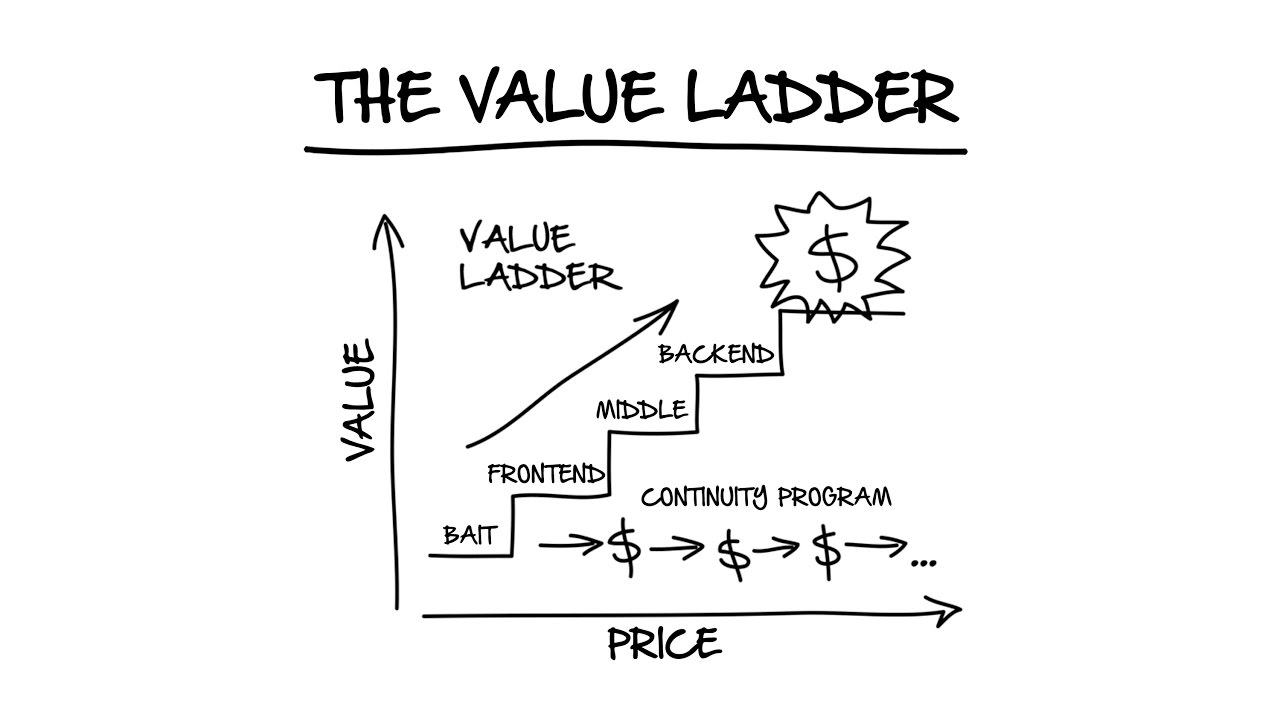
Source: DotCom Secrets Book
The first step in your Value Ladder is the Bait, as in the thing that causes them to pause and click on the link to your website. For example, our Yelp page reviews are a bait. If you do ads, those are baits. A bait is your content appearing on other platforms, hooking your prospects in by being intriguing, and then reeling them onto your website.

Bait to hook people and then reel them into Coach Viva’s Frontend
Once they are reeled onto your website, they proceed through the pre-frame bridge and then to the second step in your Value Ladder, called your Frontend. This is collectively Steps 3, 4 and 5 of the 7 steps, which happen in the same session, so you catch all the people who’re ready to buy.
3. Offer your prospect something of high-value (example: an e-guide on how to break weight loss plateaus) in exchange for their email / some way to connect with them without algorithms you don’t control getting in the way. The goal is to, at worst, have a way to continue building a relationship with them, and then point them to step 4 again if they didn’t buy the first time around.
4. Offer your prospect something of high value for cheap that builds upon your offer in Step 3 (example: a comprehensive book on how to DIY fitness for $5). The goal is to test the waters to see if this prospect is already bought into your worldview and ready to buy right now.
5. Offer your prospect something that's more expensive and makes your offer in step 4 faster, better, stronger (example: a personalized nutrition and exercise plan for $50 so they don’t have to spend time translating the book to actions in their life). You’re targeting buyers in heat - for example, I was one when I went to Amazon to buy one book to learn design, and ended up buying 3 design books because they all looked so helpful.
You can collapse steps 3 and 4 into one step (example: by selling a physical product that’s free as long as prospect covers shipping cost) or skip step 5 altogether at the beginning. Step 4 could also be someone else’s product with whom you split revenue.
There is a lot of flexibility in how you implement these steps as long as you satisfy the two goals of the Frontend:
A. Create offers that make your CAC = < Revenue from your Frontend.
B. Your Frontend converts your prospects’ beliefs into your worldview.
Let’s dive into A first as that’s the lynchpin of how you can grow fast without VC funding.
For the sake of easy CAC calculation, let’s say you’re using ads as the bait to drive traffic to your Frontend. We’ll assume that the ads are costing you $1.40 per click, which means it costs you $1,400 to drive 1000 prospects to your Frontend.
Now let’s say 38% of the prospects gave you their email in Step 3, which means you got 380 subscribers. Next, either when you showed Step 4 after Step 3 or through your relationship building sequence of communications leading them back to Step 4, 9% of subscribers bought your $37 product. Your total sale is $37 x 34 = $1258.
After that, let’s say 7% of your buyers also purchase your $197 offer in Step 5, which brings your total sale to $1,258 + (3 x $197) = $1,849. This equates to $1.85 earnings/click which is greater than your cost of $1.40/click. You have a winning campaign where you’re making a profit!
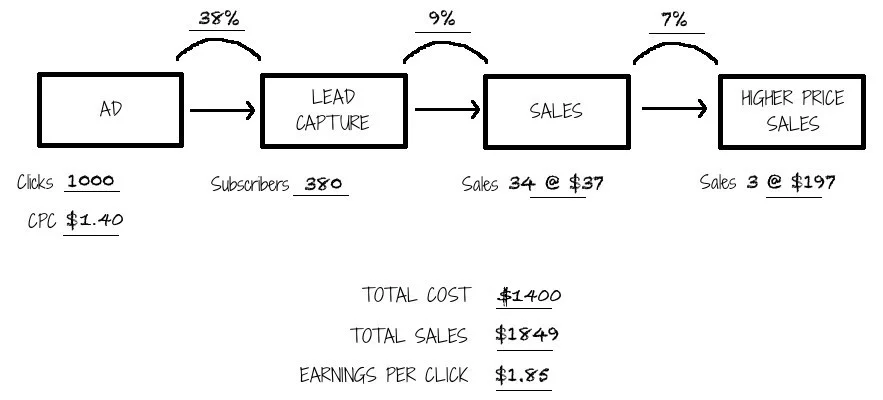
Source: Fill Your Funnel Secrets Book
Let me repeat the two important points from this example:
If you were only selling your first offer of $37, you’d be making a loss ($1.26 earning/click vs. $1.40 cost/click). It is the sequence of offers building on each other which helps you beat your ad costs. If you’ve read any negotiation book, you know that once you get the first Yes, it’s far easier to get subsequent Yes’ on bigger and bigger asks.
You’re getting paid to acquire customers. You can literally outspend anyone to get customers. You see now how you can grow fast without VC money?
Now let’s talk about goal B (your Frontend converts your prospects’ beliefs into your worldview) which compounds your growth and profits created by goal A.
The actual offers you make in your Frontend must make your customers your huge fans. This means two things:
They cannot believe how much value you delivered for how little you charged them.
The value you gave educates them thoroughly into believing your worldview.
That last bullet is especially important when we get to Step 6, where you multiply your Frontend profits while having $0 CAC.
Step 6: Age & Ascend the Relationship
At the end of your Frontend, you have a customer, that is, someone who has already bought from you and helped you acquire other customers at profit.
At this point you pause on the sales and nurture your relationship with them by sending them high-value emails / whatever direct communication channel you choose to deliver them entertainment + value. You tell them stories about yourself, share what you’ve learned, what you’re doing, your failures and successes, and essentially get them to know you better.
Once you feel they’ve been nurtured well, you now ascend them to the Middle of your Value Ladder. This is the natural next thing they need in order to make use of your Frontend.
For example, Coach Viva’s Frontend are courses which teach people the science and DIY methods of how to lose weight. A natural next thing they need are the tools which make implementing said methods easy and quick.
Frontend course of Coach Viva
If your Frontend did a good job of converting their beliefs into your worldview, these customers will be primed for your Middle Value Ladder, and guess what, selling it to them costs you $0! It’s pure profit from here on out as you age and ascend your customers up your Value Ladder.
Your Middle Value Ladder could be one offer or many. For example, at Coach Viva, our tools are our first Middle offer while coaching is our second Middle offer.

Frontend course nudges students to review what they learned by taking a quiz hosted by Coach Viva, which then seamlessly leads into offering the Coaching Middle offer
At least one of your Middle offers must have a continuity revenue model, that is, be a recurring source of revenue. For Coach Viva, we plan to have both Coaching and Tools have a continuity revenue model.
Also, remember the mindset shifts we talked about: this could be not just software, but a membership site or information product subscriptions like magazines.
Step 7: Change the Selling Environment
Throughout Step 6 you’re nurturing your audience with email / other communication methods, and at some point those who bought your Middle offer(s) will be ready for your Backend offer. This is generally a high-ticket offer in the 4+ figure range, which is why you need to change the selling environment into a phone call or some such 1:1 communication to make the sale.
Just like there can be multiple Middle offers, there can also be multiple Backend offers. These are generally offers where you are "physically present,” like a consultation or retreat or mastermind. In fact, as you gain fans, you could start putting together virtual or in-person Backend offers, and see who bites. You don't have to wait until your Frontend and Middle is profitable before experimenting with this.
Last note
It's okay for prospects to jump directly into Middle or Backend if they are ready. Not everyone needs to go through the Bait to Backend in sequence.
However, it’s interesting to note that both Russell Brunson on his podcast and Rand Fishkin of Moz in his book have remarked how the customers who go through the education journey from Bait to Backend tend to be on average the highest LTV customers.
Where we are at with Coach VIva
We are still in the process of figuring out our Frontend that meets the two A and B goals mentioned above as well as setting up our public presence, that is, the Cold traffic sources.
One of our frustrations with 2018 was we set goals that aren't directly in our control, like revenue or customers.
In 2019, we have set a goal to do 100 needle moving experiments (50 by me, 50 by Lucy). All must be “skateboards” in Spotify MVP language, and they must target whatever happens to be our bottleneck in the 7 step customer journey at the time of the experiment. As a byproduct of this consistency, we hope to see the out-of-our-direct-control goals move in the right direction.

A gift for you
When we first started, ironically despite being a health business, both Lucy and I stopped exercising, sleeping or eating right.
In the past 6 months, we have reversed a lot of our slips as they were causing noticeable drops in our energy levels and mind clarity.
We know that you, like us, are super busy running your business, and don’t always have time to do the prep work (meal planning, workout program creation, building systems for self-accountability) that’s required to upkeep your health and fitness.
That’s why we’ve created a short quiz that asks you 3 quick questions to first understand, then offer the kind of help you need most right now to make keeping your health and fitness up easier.
That’s it from me for now. I hope this has gotten your brain whirling with possibilities. I’d love to hear your thoughts! You can reach me here.

Build, baby build: Lessons from MLK Jr.
Three rhetorical techniques from Martin Luther King Jr. to give a rousing pitch.

Build baby, build.
Learn baby, learn.
So that we can
Earn baby, earn.– Martin Luther King, Jr.
The man we honor today delivered that rally cry near the end of a speech to the student body of Barratt Junior High School in Philadelphia, PA. on October 26, 1967.
The speech was entitled, What Is Your Life's Blueprint?
In business and life, you will be called to use your voice. You can do no better than to borrow from the template of this great man.
How to deliver like MLK
Here are four enduring lessons in speech-making from this 20-minute video:
1. Lead with a question
After a preamble, this speech starts at minute 3:20, when MLK pauses, tilts his head back, looks up the heavens and says...
I'm going to ask you a question, and that is...
What is in your life’s blueprint?
It all unfurls from there.
2. Shape your thesis with a three-prong approach
The three prongs of this speech:
You must have a deep belief in your own dignity, your own worth, and your own somebody-ness.
You must have the determination to achieve excellence in your various fields of endeavor…your life’s work.
You must make a commitment to the eternal principles of beauty, love and justice.
Each prong has an anchor word or concept that becomes the structure for a story or example that reinforces the point.
3. Use rhetorical devices for memorability—threes within threes and repetition
Within each prong, MLK uses threesomes and rhetorical repetition for memorability.
When expounding on "somebody-ness," he uses this structure to convey emotion:
Always feel that you count.
Always feel that you have worth.
Always feel that your life has ultimate significance.
He uses this set-up pattern throughout the speech.
Later, on the topic of excellence, he uses the phrase "sweep streets" to imprint the idea that all work has dignity if you do it to the best of your ability.
If it falls your lot to be a street sweeper...
Sweep streets like Michelangelo painted pictures
Sweep streets like Beethoven composed music
Sweep streets like Leontyne Price sings before the Metropolitan Opera
Sweep streets like Shakespeare wrote poetry
Sweep streets so well that all the hosts of heaven and earth will have to pause and say, “Here lived a great street sweeper who swept his job well.”
Notice his sharp enunciation of "sweep streets." It's a hard phrase to say. Yet he delivers it precisely and with swelling intensity as the section crescendos. He knows the power that this humble phrase will have on his young audience.
Lastly….
Own your power with a calm, deliberate cadence
Slow down. Make the audience lean forward in their seats, waiting for what’s next.
As you watch MLK's delivery, notice where he slows, and how he employs the empty spaces to make eye contact or raise a hand to reinforce key phrases.
He also channels his energy, never rising to anger.
More than anything, even if you don't watch the speech, please use this day to remind yourself that in the ongoing struggle for freedom, equality and justice, a single voice does make a difference.

Dani Cone: Bricks, clicks & kicks
Dani Cone, CEO and Founder of Cone & Steiner General and Fuel Cofffee on e-comm expansion, self-care fails and shit-tons of money.
The CEO and Founder of Cone & Steiner General and Fuel Coffee on e-comm expansion, self-care fails and shit-tons of money.

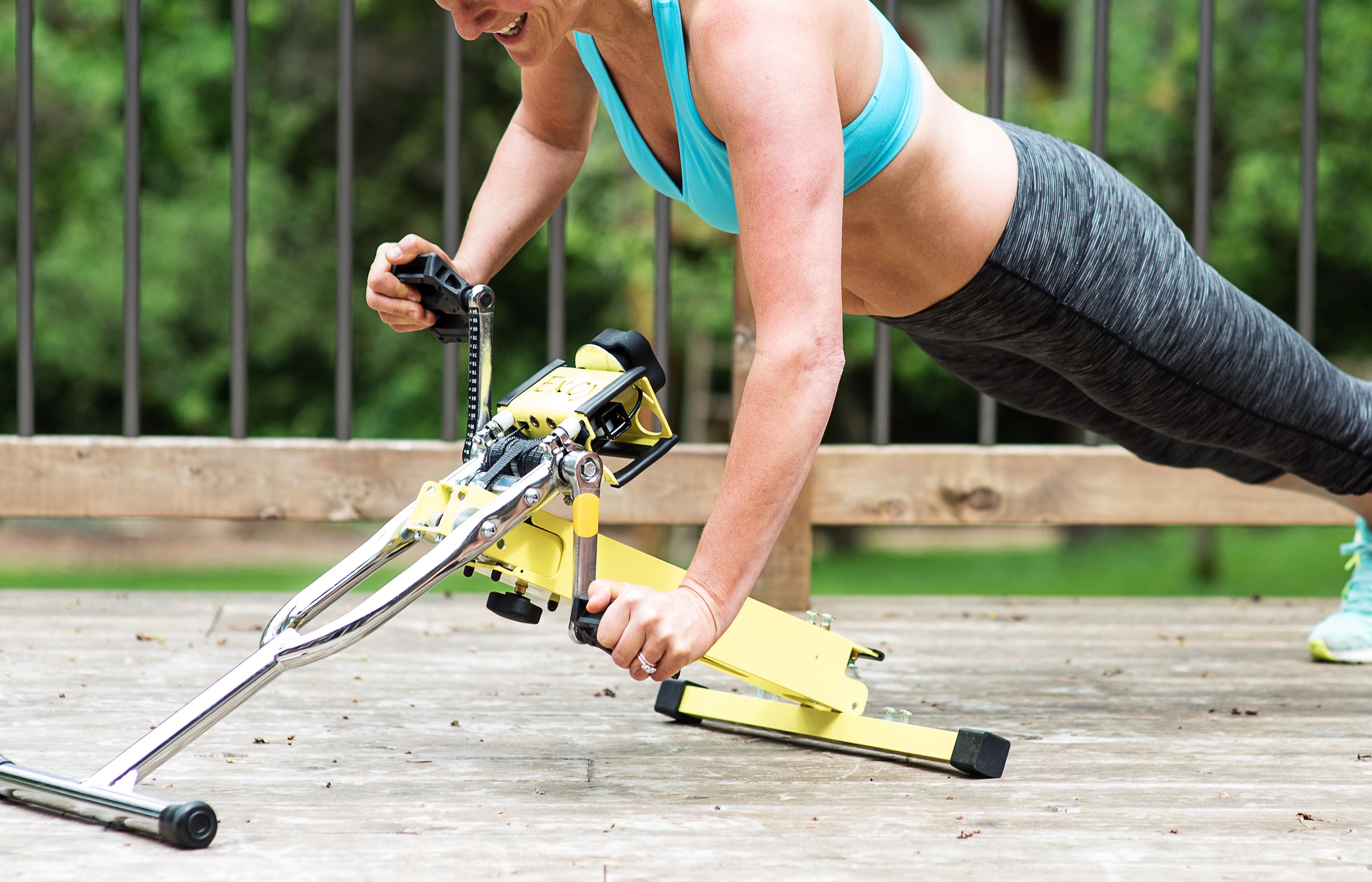
Dani Cone, outside the Cone & Steiner General downtown Seattle location.
Dani Cone oversees six brick-and-mortar operations — three Cone & Steiner General stores and three Fuel Coffee shops. The idea behind her empire is simple — take care of people with good food, drinks and staples.
To support the growth of Cone & Steiner General, Dani raised money to launch an e-commerce platform and delivery service. It’s in beta while the team works out product assortment and logistics.
Dani built her companies on a tried-and-true retail business models. She uses city data and trends analysis to inform where she sites locations. The e-commerce and delivery service grew out of customer feedback. The team stocks high-quality specialty and local brands, democratizing shelf space in a time when we want our SKUs to tell a story.
Some founders fit a classic archetypal character. Dani is an Everywoman. To the core of her being, she is the good neighbor. Grounded, unselfish and friendly, her brand embodies a place of deep comfort where all are welcome.
In our conversation, we talk about:
Near-term focus on adding revenue with e-comm and delivery, and how that widened the investor pool
What a $1.5 million Seed round funds in retail
Trends in retail, food and beverage
Justifying the cost of getting pro help, be it financial, coaching, etc.
Dreams of big exits and what money might buy
Underwire: What’s been going on since we talked in the summer of 2017?
Dani Cone: For starters, we opened the downtown Cone & Steiner (1012 1st Avenue) at the end of July in 2017. When we were talking, the plan was to open store three. I had done an initial capital raise to open that store and build out our internal infrastructure. That’s what that small $650,0000 raise was allocated to.
We built out the management team and buyers, opened store three, and then the plan was we’ll go from store three to then pursuing the Series A round for the larger expansion of multiple units to reach scale.
What I noticed in being the data nerd that I am and really digging into the business models, store performance and marketplace trends, was that instead of jumping to a much larger Series A round and reaching a significant economy of scale across five units, what we really needed to do was accelerate our plans to do delivery and e-commerce.
That’s what people are wanting, that’s what we’re getting inquiries for, and of course the worst thing in customer service that you can say is “No,” especially in this downtown location where there’s a dense urban daytime population, twice that of what we have at the Pioneer Square store.
People call all the time and they say, “I want to order lunch for the office, 30 sandwiches.” I say, “Outstanding, when would you like to pick that up?” I always hear the same response, “Oh, you don’t deliver? I don’t have anybody who can come pick it up, we can’t leave.”
There are only so many times I can pack the bag and run up the street. I thought, okay we’ve got to accelerate delivery and e-commerce.
All of that to say instead of jumping from a small capital round and store three to a big Series A round, I inserted this smaller round of $1.5 million to do two more stores, which gets us to that five-unit economy scale, again for our model, and launching the delivery and e-commerce platform. Right now, we’re at about $850–900,000 raised of that round.
Is that considered another seed round?
On the advice of my attorney it has been titled a Series Seed. Or second seed. But he mentioned that sometimes if you say “second seed” that sounds like maybe something didn’t go right with the first seed or we didn’t reach our goals and instead it’s just we’re trying to message it appropriately to say we’re adding this in intentionally before going to a Series A, otherwise it’d be a very small. It’s just not at Series A level.
With us being new and proving out the concept with this store, we’re still too early to attract the institutional investors that you would typically find in a Series A, or in a venture-capital raise. We’re a bit too early for venture.
How’s the e-commerce site build going?
I feel like a dinosaur trying to enter a whole new world. We’re starting out small and based out of the downtown store for the pilot.
We have a small radius and the offerings online aren’t the 3,500 items that we have in the store, but rather a very curated version of those. We have the top-performing categories that we think will translate digitally, similar to the experience that you would have when you come into the physical store.
Hopefully when you walk in the door it feels good, if it feels like neighborhood and community and anything you pick off the shelf is gonna be good.
You wouldn’t necessarily walk in and upon first glance of the store think, “Oh, I bet they have 25 kinds of ketchup.” We don’t and we’re not going to. Where do you draw that line between should I have three kinds of those, or just two? Why do I just keep the two?
There’s a lot of conversation and editing. Certainly many of those options are informed by sales data, what sells best, how often, etc. It also has to be that the feel is representative of the overall brand experience. Those are the conversations we had as we whittled down to about 200 items available online.
Will delivery be limited to certain times a day?
To start out with, yes. It will also have our house-made and prepared food items so you can order your office lunch of sandwiches or other people’s sandwiches. Or order ahead for catering, pastries, coffee, and things like that.
One unique thing I was able to do after many hours spent on the phone with the Washington State Liquor Control Board is get the licenses to deliver beer and wine.
Happy hour! That’s huge.
It is huge. Especially because beer and wine are one of our top three categories.
Across the street from the downtown store is a tower of residential units. If someone living there says, “You know what, I just want some great wine and cheese to celebrate,” we can do that. We do a couple of gift packs and a happy hour pack. Just add friends and there you go.
What was the spark for expansion into e-commerce and delivery?
A couple of very simple yet big things. One was the actual direct demand from customers, getting emails and phone calls of, “Can I order this online? Can you deliver this? How can I …? When can I …?”
And then parallel to that are the trends across e-commerce, and especially in food. Some of the statistics behind the trend are that online food sales are growing 35% year over year, and that’s just in gross rate.
When you add on top of that people ordering food to be delivered from Uber Eats or anybody really, Caviar, etc., it’s the way that people are shopping, eating and drinking. That’s also very aligned with our whole model in terms of being a modern-day convenience store.
It means something different than it did when convenience stores started. 7-Eleven, that started 70 years ago. It was convenient because as people were spreading out into the suburbs, they were driving cars and they needed something along the way. Now as people are moving back into the cities, we’re placing ourselves in these dense daytime population locations to be where the people are.
This is the new face and location of convenience, and also reflected not just in the location but answering the question, “What do modern consumers want? How do they want to eat and drink and shop? What are they looking for?”
There’s always a time and a place to have a Coke, nothing wrong with that, I love a Coke. But sometimes you want something else, or you want to show up to a party with something different or unique, or something just branded. Story is certainly a new form of currency.
Let’s go back to the money dance. It takes outside support to grow in the way you want to grow. Between that initial seed and this new round, what have you learned?
Oh my God. What have I learned without swearing?
You can swear. We swear on Underwire.
I’ve learned so much. During that first round, with it being my first foray into a world of raising capital, it was bananas, absolute bananas.
I felt more equipped going into this round because I knew more of what to expect. That said, fundraising is difficult on so many levels. There’s difficulty in our concept being brick and mortar, retail, food and beverage. I was very successful at stacking the odds as high as possible against me. Even by adding in the delivery and e-commerce piece, which is just this thinnest skim of tech that opens me up to a few other investors, but not as much as an app or something straight up tech, that’s a lot more appealing to folks in this city.
Then there’s the level of difficulty with the business model itself. A lot of folks in our investor community come from tech. When you see our numbers and our model, it does look very different from tech. Yes it scales, yes there’s a great return, yes there’s a market for it. All of those things, but yet it’s a different timeline. Like I said, the delivery and e-commerce does open us up to other folks who really get e-commerce and delivery.
Other things that I’ve learned about fundraising, as everybody always says, truly it is about reaching out to your network and then their network and their network.
You just have to keep talking about it to everybody you see at any time of day, even if you think there’s no way this person would be interested in even hearing about what I’m doing. You just keep blathering on about it because you never know. You just talk about it constantly, you tell everybody, you throw yourself out there shamelessly and say, “I’m raising money here, I’m raising money, guess what? I’m raising money.”
I think in any sort of business that you launch, you have to leave ego way far behind. That cannot be a part of it, especially in fundraising.
How does that feel to be in the state of constant talking about yourself and the business?
It’s mixed. I love what I do, and so I do love talking about the business and what we’re doing. Sometimes those conversations go great, and you get to meet amazing people and you start feeding off each other. I leave those meetings even more excited and energized about my own business than before, which is saying a lot because this is all I do and all I think about. That’s when I’m so grateful to this sort of process, because that’s how we make connections.
Then there are many other meetings that are like, oh just my gosh, you hear so many “No’s.” You get so much pushback. You hear that that will never work and all of these negative comments, and you just feel shredded, just shredded. It’s hard to keep up.
I know what we’re doing, I know its place, I know that personally, I know it in my gut. But I also know it is based on data and market and industry trends. I see what else is going on in the world and how this fits in.
I can really dig into that, but at the same time there are days when that gets really hard, it’s like, I’m so fucking tired of trying to tap in to my own depleted reserves to be the person trying to convince everybody that I know what I’m talking about.
I do know what I’m talking about, but of course I doubt that after many meetings where people are like, “That just doesn’t work right now” or, “If you really wanted to make a go of it, you’d be making ten times what you’re making now.”
How do you refill the well?
I very much fail at that. As my mom will tell you, I am just not good at that. I guess I just try and keep moving. This week has in so many ways just brought me to my knees. What do I do?
This morning I was talking to my dad, Gary Cone. He checks in every Friday on his way to work and has for 14 years since I started a business. It’s amazing. Just 15 minutes, he stops by on his way to work, whatever store I’m at. We have these little business and catch-up chats.
We’re sitting at the end of the bar this morning and I’m near tears and I was telling him all these things that happened this week. I don’t even know what steps to take. Usually I can think of something. You get scrappy, you get creative when backed into a corner, you just come out swinging. This is one of those times that even I feel just stumped, like holy shit.
Do you think that maybe it’s as much exhaustion as the business situation?
Absolutely. I’m tired, sure. I have the worst sleep schedule. I sleep and eat terribly…all of these things. I know it’s terrible. I keep going, as we all do, knowing how to own and run a business, there’s no option, you just keep going.
There’s got to be something in your day that recharges you.
There is. Absolutely, I couldn’t work this hard or do that if there weren’t those good days. I’m gonna put out a big alert here, super cheesy alert, watch it, it’s coming, but I mean it. As cheesy as it is, I totally mean it, it’s those moments when I walk in a store on a bad day. Like I said, this week’s been super shitty. When I walk in and see somebody sitting there and enjoying something to eat or drink and I think, “Okay. That’s pretty neat, they came in and they’re enjoying themselves for this moment here. This is a place for that.”
I look around at some of the products on the shelf and I think about the Seattle-made stuff. I think about how I know those vendors are just starting their company and they’re at the farmer’s market but they’re trying to get into a store. They’re way too small to get into Whole Foods, but Cone & Steiner can give them a yes and say, “You know what, I’ll try out a case of that.” I can look around and see I know those people, I know the story behind their product, how they started.
Then I get to sit here and talk to amazing business people like you, and for some reason that I honestly still cannot figure out, you want to hear what I have to say. That’s crazy, but that says somewhere along the way there’s something of interest or maybe something about a crazy, bad, or great experience that I’ve had would help somebody else out there who’s doing what all of us do feel a little bit less like it’s me against the world, amazing, let’s do it.
We all have terrible times and go through so much, and that’s what recharges me because I know what we’re doing here. By having this space, this is creating actual space to have conversations like this. It connects people. That is what this is all about. This is how we build community, and that is how things happen. That’s what keeps me going.
One of the things that I don’t think is well represented in business media coverage is the value that’s created by female business owners. You’re hiring employees and they are paid a living wage and given a supportive place to work. You’re also giving a kick-start to new vendors, and the network effect that will have on their businesses. And, of course, there’s the community for the workers and residents of the neighborhoods where you have stores. Not all of that has a metric, but it’s all valuable.
It’s crazy that it’s such a simple thing. Which again, my strength is in simplicity. I’m not a creative person. I’m not innovative. I don’t create new things, it’s just these basic things. This place being modeled after my great grandfather, Sam Cone, an immigrant.
There were stores like his 100 years ago. There will be stores like this forever, it’s just tweaking the offerings and the way we do it to reflect what people want now. Those basic things of food and drink and conversation and a nice place to have that. That’s it. Simple things.
What’s your involvement with Fuel Coffee these days?
We’re very close. Myself and the three store managers meet once a week. We text throughout the week. They are a very strong management team. A lot of that is due to the wonderful people, they work really hard. Together the four of us have great communication and a great working relationship.
That’s also come about after so many years of building Fuel into that, and it being a much more simple business model in a lot of ways. There aren’t as many moving parts as there are with Cone & Steiner, whether it’s categories, inventory, all the things we make, sandwiches, coffee, ice cream, etc.. We don’t roast coffee, Fuel is just a coffee shop and we sell pastries. It’s more straightforward.
You’ve talked about hiring in the past, I’ve read some articles about how you’re willing to give people a chance. You hire for the person. That’s hard for startup founders to take that leap. We often hire more for skill to offset the risk of a bad hire.
We do have experience that we require on some level. It’s something that I think a lot about these days, especially as we’re growing here. I do love being able to cultivate or help to support somebody’s potential. That’s another thing that really charges me up each day, it’s like, “Wow, this person is so smart, we’re totally under-utilizing them, what can they do? What are they interested in? How can we help be a means to their end?”
Creating opportunity is one of our core values, and I love the thought of being able to do that. That’s something that compelled me to start a business in the first place. Especially in service-industry jobs and entry-level jobs, even if the pay is what it is, I feel like you should always have some ability to grow, or some opportunity.
As a smaller company, we pay a lot less than all of the big guys and some of the smaller guys too, but one thing we can offer is opportunity. What is it that you’re interested in? Great, as we grow, I wonder how I can be a means to your end? That is really important to me.
At the same time as we’re growing, balancing out that desire with my responsibility to also bring on people who know more than I do and can help get us to that next level, too. It’s an interesting balance, for sure.
I know you’re a data nerd and obsessed with trends and dynamics in the marketplace. Where do you get your info?
I don’t have a go-to site, I just try and go down a wormhole into the vastness of the internet. All the time, like 3:00 AM at the gym I’m like, okay what’s going on? In food and beverage, and recently over the past few months, even in this new idea of the modern convenience store, there have been a lot of articles touting it as the new thing. I’m thinking, “Yes, I’ve been here for four and a half years. This is definitely a thing.”
There’s no one source, I just keep weeding through and finding articles, usual publications or sites or what have you. I’m such a dork, I love digging into the data reports from the city that you can get about traffic flows, demographics, growth trends and construction, what’s being built and where and on what timeline and what are the density projections for whatever given radius. That data is just amazing. Being in a business that’s all about location, location, location, those are all super key sources for us.
You mentioned the gym — at 3:00 AM. Yikes. You’re working out, that’s recharging, isn’t it?
It should be. I don’t enjoy that part. I don’t find it recharging. I also go at a horrible time of the morning or night and nobody’s there and the lights are too bright. It’s just really gross.
Why do you do it?
It’s supposed to be good for you, right? I’m thinking it offsets all of my horrible sleeping and diet.
It sounds like it’s all work and no play, Dani.
Which is true.
No play?
No, not really. I have a very boring life. I really love what I do, and I’m around people all day too. It’s different. I’ve never in my life had an office job so I don’t really know what that’s like, but I imagine that at times it could maybe be kind of isolating.
My job is isolating in that I don’t have business partners. That’s hard enough. Even though it can be isolating, I am around people all day, whether it’s my team or staff or customers or something, or certainly talking to investors.
You’ve worked with local business coaches, right?
Janis Machala, yes.
You were also working with Mike Cadigan, he’s not a traditional executive coach, rather a business adviser.
He was more financial.
How did working with them help you as an entrepreneur?
A lot. I met Mike through my attorney. He was helping to build a financial model, and that was pretty straightforward.
We built our model and started that initial capital raise a couple years ago. That’s pretty direct, but what it evolved into is that Mike is somebody I can call and just talk about whatever and he has seen it and done it and just has so much expertise and also a different perspective.
As a solo business owner, I don’t have partners to bounce ideas off of. I know what my own ideas are and I’m tired of them. I need somebody else’s ideas, I need somebody to say, “That’s horrible, don’t do that. No!” Otherwise I will just run with things, and that is not always the best thing.
Janis Machala has been helpful in so many ways. I first reconnected with her in 2016 and she was telling me about CEO Roundtable group that she leads for female CEOs. I had heard of an executive coach but I don’t really know what that meant and what to do.
We chatted a couple times and Janis said, “Have you thought about engaging with an executive coach?” It sounds good but I don’t get it. What am I supposed to do? I need things spelled out. I need an agenda, I need goals, I need a timeline. This is how we do things, and so the first time I met with her I’m like, “What is my homework and what am I supposed to do? What should I be asking you? What do we do here?”
She says, “This is your time, it’s whatever you want. What would be helpful to you?” I’m like, “What’s the goal? What am I getting to? How long will it take me to get there? How can I do this in the best possible way?”
Now it’s been a couple years of working with her and I’m still trying to figure out, Am I doing this right? I’ve actually asked her that. She’s amazingly patient as I ask her these ridiculous questions.
So many times I go into a meeting with her and I’m not quite sure of myself. I get back in my loop of, what am I supposed to ask? What should I be doing? What’s the best question I should be asking? How should I make this also worth her time and beneficial to her, too? What do I do here?
I don’t know, and I feel like I flounder my way through a meeting with her, but I always leave feeling better than when I walked in. Granted I also try and recap much of our meetings with notes and set an agenda for the next meeting and send notes in advance with a summary of what’s going on, but that’s because I’m totally type A.
Many of us struggle with getting help, whether in the form of a therapist or a coach. It comes with a cost of money and time that can be hard to justify in a startup.
That’s definitely something I have struggled with and still do. It’s a cost, so how do I justify that if there’s not a goal and a direct calculable return on investment that I can measure, how on earth can I justify X dollars a month? What the hell am I doing? Who do I think I am doing that? I struggle with that all the time.
What’s your experience been with coaching and stuff? Do you find that you struggle with it?
I regularly question my involvement in Janis’ CEO Roundtable group. It’s crazy, I don’t know why I even debate that with myself because Underwire might not exist without that group. I do have imposter syndrome — I’m not good enough to be here. I’m not doing enough. That comparison with others. Which is bullshit and I quickly get over it when I’m with the group. I’m learning to not listen to that particular voice in my head.
There’s also the time commitment. The group is two hours on a Friday once a month, and a small bit of prep work in advance, which doesn’t sound like a big deal but it’s massive when you’re running a startup.
But I will say that Janis’ CEO Roundtable got me through a really tough time in my former business. The women in that group helped me birth this new idea for Underwire. I’m immensely grateful for that.
I was so deeply raw and vulnerable, and that group supported me through that. That’s what made me realize there’s so much going on below the surface of female founders that needs to be talked about.
That’s another conversation in itself, this has been a true journey into the heart of the emotional life of female founders. I’m finding that, like myself, women are reticent to talk about themselves unless they’re perceived as successful.
“I’ll tell you more when I get funded….I’ll go on the record when I sell.” I hear that a lot. We’ve got to crack that open. We’ve got to talk about the dark parts of the journey.
The dirty underbelly of it all.
You have talked about “be good, do well,” and how everything you’re doing at Cone & Steiner is bringing that idea to life. I would say that’s your vision, you’re doing it through community and through the fundamentals of food and drink. How do you use your vision to support the growth of Cone & Steiner?
That’s a question to chew on, but here’s my off-the-cuff answer. I feel like it is a closely related combination, and here’s why. I do have a goal in mind. I have a business plan and we want to hit this amount and this day and perceive this way, and this is how I want this to be big. I know that it can be, and I want to get it there. That is the direction that I’m pointed in.
At the same time that can’t happen without the boots on the ground, living that Cone & Steiner vision each day, living the values that inform that vision each day. This is the goal: I want to have 15 stores in five years and a robust delivery and e-commerce platform. It will be worth $30 million.
All of those numbers and hard data and projections are built on this right here (the physical store), and every inch of this is created with the value piece of that vision in mind. That’s why we’re here. Be good, do well.
That’s also a big part of why I think we can get to that goal is because at the end of the day, this is a very basic idea that does pull a lot of style. Because people need a place to connect with each other, and people come together with good food and drink. They’re very integral for me. Because that is an idea that is tried-and-true and it’s very basic and it feels good. That’s how we can grow, too.
You have one wish, one magic wand, what would you wish for?
Of course, I would wish for health and happiness for my family and loved ones, but really…I’m gonna have to have two wishes. This might not sound good, but I will say money, and just a fucking shit ton of it. I grew up and my mom always told me there’s nothing wrong with wanting money, there’s no shame in that. I absolutely want it. It gives you choices.
Money gives you freedom, it gives you choices, and it doesn’t mean you have to be an asshole, you’re gonna lord it over people and all of a sudden become whatever. It means that you can make the choices that you want to make.
I know how I want to spend my money. I know what I want to do when I grow this company and have a great exit. I want to start an incubator or accelerator for other entrepreneurs at my level to help them, especially in the food industry. There is no accelerator for businesses like this or for people who don’t have as much access to resources to start businesses.
There are so many people that feel like they can’t start a business because of fill in the blank. I got very lucky and grew up in a family of business owners, so I saw that regular Joe Shmo people can do this. I want other people to know that, too.
So yes, I would wish for a bunch of money because I could do things like that and not maybe have to worry about, “How is that going to happen?” It still would have to pay for itself, but how would that not have to be the driving force of that model? How could we just do it for the sake of it should be done? There should be more accessibility and resources in so many aspects. That’s just one of many ways to use the money, of course.
This article is based on Underwire Issue #19. Sign up here to support the cause and get each week’s issue in your in-box. More about why Underwire.