
Legendary
A epic week: $1.1. billion in funding for women-led companies and the passing of Cokie Roberts.
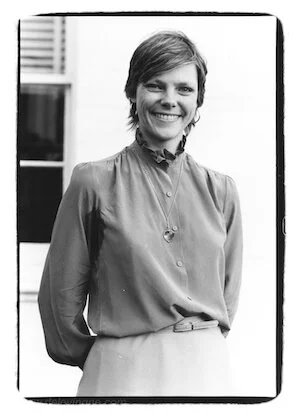
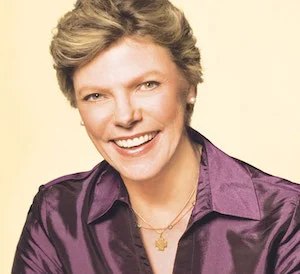
Cokie Roberts. Photo by Lionel Delavigne.
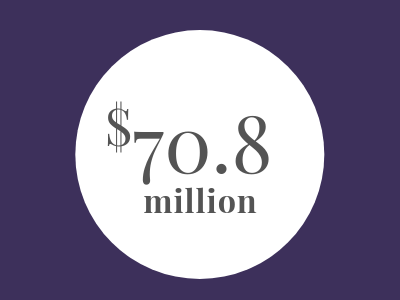
Last week 17 women founders raised over $1 billion dollars for their companies. Precisely, $1,165,715,000.
Also notable, four companies raised $100 million and above:
Reshma Shetty at Gingko Bioworks
Eva Shang at Legalist
Jennifer Parke at Fair
J. Jean Cui at Turning Point Therapeutics
Deal flow is following growth opportunities in artificial intelligence, biotechnology, software as a service, and consumer food, health and beauty. The past two weeks have also seen investments in value-based health care technology. View the week’s funding update. And be sure to sign up for Underwire’s weekly newsletter to get deeper insights into the funding founders and companies.
Last week also brought news of the death of Cokie Roberts, journalist, author, political correspondent and commentator. Her deep, raspy voice comforted me for as long as I've been paying attention to news and politics. Her commentary was always objective, no-nonsense and illuminating.
I first heard it in a blip on NPR. Cokie Roberts had died from breast cancer. I was in my car, driving to catch an early train. My chest and sinuses tightened. Tears welled in my eyes. Done in by the boobs.
Cokie Roberts was among my circle of Baba Yagas, wise women who've seen shit and know the way the world works. Women like Nina Totenberg, Terry Gross and Krista Tippett. These are a few of the high-profile women who help me process events and better understand humans.
In reading quotes from The Washington Post and The New York Times obituaries, I saw how Cokie's journey through politics and media paralleled that of other professional women, myself included.
Cokie was a lifelong mentor to female journalists. "Duck and file," she advised aspiring female reporters. "Just do your work and get it on the air."
Cokie worked for competing new organizations ABC News and NPR at the same time. She was a true professional, avoiding stories where there might be a conflict of interest. When The Post asked her about this in 1993 she said, "I think it's a woman's talent. Being able to do two things at once."
In 1992, on record for The Los Angeles Times, Cokie talked about the impact of sexism in the workplace:
"We had people tell us all along the way that we weren't qualified to deliver the news, that we weren't authoritative enough. We would have meetings with men in high positions and find their hands on our knees. We would have invitations from those people to hotel rooms. All kinds of propositions. Insults they didn't consider insults."
She added, and this is what's still true today, "Those assaults make a difference in terms of how you think about yourself. Maybe they're right, you begin to think. Maybe I'm not authoritative. Maybe I'm not smart enough. And then you say to yourself, 'God, I went to the same schools as those guys. I have the same education as they do. What's the problem? Why am I asked how many words a minute I can type when the guy next to me can't type at all?'"
That was 27 years ago. At that time, I was a young woman in advertising. My boss used to come into my cubicle without asking and massage my shoulders while I worked at my desk. On more than one occasion he asked if I'd like to go camping with him. Or would I like for him to teach me how to fly-fish? Another male superior, my creative director, once mentioned in a hallway conversation that I should wear a tight turtleneck to the next creative review so my ideas would be taken more seriously.
I never reported those incidents. Like Cokie said, you begin to think. My ideas aren't good enough. I don't deserve to ask for more. Or for improvements to the way we work.
Fortunately, I didn't let these bastards grind me down. I found a better job in a new city. But that early experience did contribute to an ongoing battle with anxiety.
So, legends. Rest in peace, Mary Martha Corinne Morrison Claiborne Boggs Roberts. What a glorious name. What an epic role model.
Duck and keep doing the work.
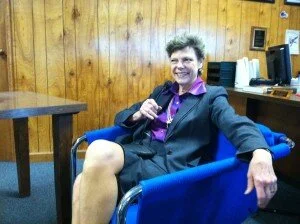
Shoulders open, firm grip on the microphone. Cokie Roberts owns the room.
Also legendary...
If you're in the Seattle area, block out the evening of October 17.
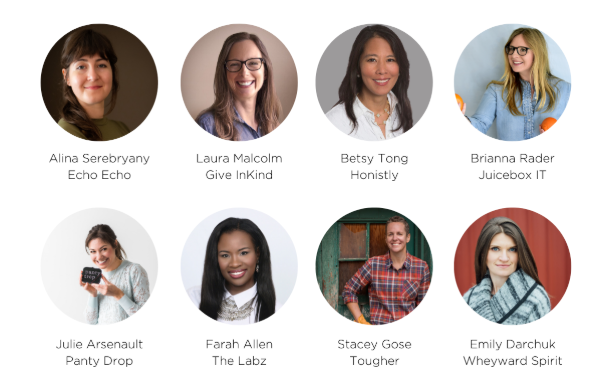
Onstage at Seattle Center's PACCAR IMAX Theater, you can witness a beautiful thing: an entire accelerator cohort of women-led companies. Brought to you by the Female Founders Alliance and their Ready Set Raise national startup accelerator.
This is a fun event where you get to see eight women or non-binary founders pitch their business models to a sold out crowd. How often does that happen?!? Don't be shy, last year's event featured an open, friendly crowd and great food.
Here's the 2019 lineup:

It's time
You see that stick figure yogini above? She's doing a balance pose. I don't know the name of it. I just know that it rattles my confidence unless I'm totally grounded and in the moment. It's not easy to stand on one leg, hold the other leg up in the air, out to the side, and keep your balance. Kinda like how I feel right now about the Fall yoga retreat.
I'll be real, I'm wobbly. We're one month out. Sign ups so far are making me go hmmmm. It could be that I suck at event promotion. Which I do. I'm not on Facebook and barely on Instagram.
So I'm asking for help. Use this link to share the event on your socials. If you're planning to come, please sign up now.
This is the real deal. Awesome yoga teacher, food, location. All women, so you can skip the makeup. Throw you hair in a ponytail and pull on your rattiest yoga pants. Just come and be the real you. Let's make this happen. Hugs and love.
Fall Female Founders Yoga Retreat
Sunday, Oct. 20, 2019
8:30 am - 5 pm
How to Be a Good Client
Rachel Lazar from Lazar Marketing Consulting offers 5 ways to get the most from your flexible workforce and not suck at being a client.

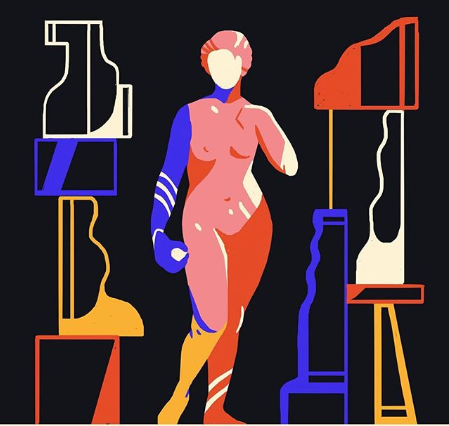
Illustration by Petra Eriksson.
This is a guest post by Rachel Lazar, a seasoned consultant and marketing expert who's worked with hundreds of clients. For a complementary article, read A Scope of Work Template to CYA with Vendors.
Get the Most from Your Flexible Workforce & Not Suck at Clienting
As the workforce continues to evolve and move towards greater flexibility for both employees and companies’ needs, it’s imperative to focus on how best to maximize this new team of workers. No doubt, you will hire contractors and outside vendors at various points in the lifecycle of your business.
Being a pleaser and a workhorse myself, it’s taken time, and many engagements with clients as an outside vendor, to gain clarity into what is truly important in the client-consultant relationship.
Like anything in life or business, it’s ultimately about finding the right people. Whether they be in-house or contract, the right people will care deeply about growing your business. Their business is your business. As such, people who are committed to and engaged in their work want to be all in—informed, working from complete context, collaborating with your team members, and ultimately, confident that they are doing good work.
As all consultants can attest, there are both incredibly wonderful and incredibly challenging clients. Interestingly, it’s rarely the actual work that determines how an engagement will go. The best clients take the time to bring contractors truly into the fold, an endeavor that often takes way more time than you think it will. Putting in this effort to educate on the business, the market, internal team dynamics, and the challenges and objectives, complements your contractors' expertise and allows them to do their best work for you.
On the flip side, the clients who lob bits of information across the fence, or don’t communicate well or provide timely insights and updates, make it more challenging to ensure contractors can focus on the most impactful efforts. Speaking from experience, when you have a team of seasoned marketers who go deep into each marketing channel to drive new customers and revenue, we don’t need a lot of hand holding but it’s always surprising when we learn that we haven’t been given the full picture.
Nine years into my consulting practice, we are working with our favorite client ever. Yes, I know we’re not supposed to pick favorites, but we do. With this client, we are truly embedded with the team, including being invited to their holiday party and team offsites. We have visibility into all aspects of the business, and with that perspective we can provide support in a number of areas, and ultimately, to help them scale their marketing and revenue significantly.
The gist is that the more you treat your flexible work-force similar to how you treat internal full-time employees, the more effective and efficient your contractors will be. As the lines blur between these two types of staff, this will only become increasingly more important.
Good Client Cheat Sheet
Acknowledge that you can’t do it all yourself
This is the biggest hurdle to being a good client. If you’re gripping the reins, it’s likely for financial or control reasons. Remember, you hire outside expertise to push your business and brand goals forward in ways that you cannot do alone or with the resources you currently have in-house.
To get your control-freak self over this hurdle, you must distance yourself from the assignment emotionally. It’s business. Prioritize the skill sets you need to hire for, establish a reasonable budget, write a specific and actionable scope of work, and commit to the project (more on that below).
If hiring for marketing, recognize that there is no longer one marketer that can do everything well. Both performance and brand marketing require niche expertise if you want them done well.
Understand that the performance marketing landscape is especially nuanced. Bring in expertise for the channels that will most impact your business, from PPC/searc to social media to email marketing.
Really let contractors/vendors do their job
Establish clear expectations. This includes defining a single key objective, project KPIs, a budget, and timeframe for success. Consider writing a project plan or creative brief to document all of these requirements.
Set regular check-ins that map to the project timeline and deliverables.
Don’t micromanage contractors. You are paying them well to do their job. They will move mountains for you if you demonstrate trust early.
Be a true leader. With a clear scope of work you can confidently assume they’ll do their job, so get out of their way.
Provide full disclosure, especially when times are tough
Be 100% open about the state of your business. If you’re holding back information, it likely goes back to control issues. Over-communicate, especially when the working relationship is new.
Your contractors are part of your team, so connect them with all of the necessary internal and external stakeholders necessary to move the work forward. Too much visibility is preferred to not enough.
Communicate early and often if changes occur that impact the contractors’ scope of work.
Pay invoices on time
This is a small but mighty touchpoint in your contractor relationship, especially if the talent is early in their career and establishing a business. They depend on your payment to meet their payroll.
Paying on time, and early if you can, goes a long way to create trust and loyalty. This is an unspoken gesture that says you’re looking out for them and value their work. Tracking down late payments distracts from the work and drags down contractor morale.
Give referrals generously
At the end of a project engagement, show that you appreciate your contractors by writing a LinkedIn review and sharing out your work in social channels. They will do the same.
Talk up your contractors in your business networks. Referring them to other good clients is the third best thing you can do to make them love you (after trusting them to do their jobs and paying your bills on time).
Rachel Lazar is the Principal of Lazar Marketing Consulting. Her team provides full-service marketing strategy and execution, as well as management for Google Adwords, PPC and SEO. Rachel also co-founded Impact West Seattle, a local women’s giving group, and advises startups.
Molly Goodson: The Go-to-Market Genius
Meet Molly Goodson, CEO of The Assembly, a two time start-up founder and former VP of Content who’s masterfully leveraging her background to build a better women’s clubhouse.

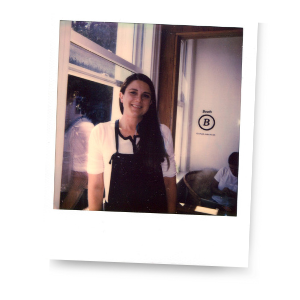
Molly Goodson, CEO and Co-Founder of The Assembly in San Franscisco
Ms. Goodson on...
Her untraditional path to an $800,000 seed round
Leveraging network effects for a successful go-to-market launch
The design trade-offs that create a more human experience
How to staff a team to run a thriving hospitality brand
The importance of brand guidelines to inspire your team's best work
This conversation took place on April 12, 2019 at The Assembly in San Francisco’s Mission District. It has been edited for brevity and clarity.
Underwire: Tell me about your journey to The Assembly. You came out of content world as the VP of Content at POPSUGAR and then co-founded a startup called Spright.
I left my job at POPSUGAR at the end of 2014 and I didn't know what I wanted to do, but I knew that I needed a break from the constant content creation world that we live in. I was helping to manage a team of 70 women creating 500 pieces of content a day. The world had changed a lot from 2007 when I started there and 2004 when I started writing online and I didn't quite realize how burnt out I was.
I really wanted to think about health and wellness because what I saw was that women, especially those who are leaders in all things, were really seeking different ways of being talked to about their own self care, health, and wellness. They were thinking about it differently, and that the way that they were being messaged to wasn't really keeping up with the reality.
I knew that there was something there, but I didn't know what it was. At that time I had been approached by two guys, one of whom I'd sort of known and one of whom I was a complete stranger to. And they were like, "Hey, we're fundraising for a health and wellness content startup. We know we need a content person. Do you want to come be our third co-founder?"
The two other co-founders had started down a fundraising path already. They both were well connected to the fundraising world and had a main investor lined up. They just needed the last puzzle, which was me. So my first experience with fundraising was coming along to meetings and answering a couple questions about content strategy and how to think about it, but the legwork had already been done.
Was that for a seed round?
Yes. I was brought in fairly late in the process. I knew going in that I was getting much less equity than they were.
For two years, myself and the co-founders, along with a small team, we built a health and wellness app called Spright. It was in the app store. It was like The Assembly in app form. It was small group conversations. It was trying to make coaching and other sorts of health and wellness type things accessible to groups.
Eventually we decided to wind that down. And we made the decision to shut that down at noon on election day in 2016 when the world felt a little different than it did even that evening.
So we went back to the investors and said, "We still have some money in the bank, but we just don't think...this is not the thing. We'd like to let the team go, give them severance and then there's still some money in the bank which we can give back to you."
And they said, "How about you do the first two things, let the team go, give the severance, and then go take a break. Go walk around for a couple weeks. Think about this, and if you feel like you guys have another thing in you, together, and you want to do it, come back to me and pitch it, and we can talk out it. And if not, sure, let's call it.”
So it was right after the presidential election, and I spent about six weeks thinking this is a wake-up call for a lot of people in this country, myself included, and it coincides with me reckoning what felt like a huge failure. And it was, Spright was a failure. I thought, what does that mean for myself? What does that mean for me as leader? And what does that mean for me as an entrepreneur?
When I was wandering around, I was seeing that there’s a whole world of women moving throughout this city just trying to figure out where they're supposed to be going in the middle of the day.
Women are at coffee shops. I would talk to women who would sit outside their own homes in their cars for hours on end because the kid's inside with the nanny and she can't go inside because the moment she goes inside she can't get any work done. Or there are women who would rent motel rooms for the day just for themselves to have one business call.
I would ask, “Why wouldn't you join a coworking space?” They're like, "That's not for me. I don't need that. I'm a designer, I just have a couple interior design clients. I don't need a space, but I do need a place to get some work done."
And I realized, whatever narrative's existing is not talking to these women, myself included. I went to WeWork, I was like, this is not for me.
And the places where people felt really happy, the yoga studio or Soul Cycle, but those business models are not made for you to stay and hang out there afterwards. They're like a revenue per square foot, butt on bikes kind of thing, like how many people can we cycle through this place within one day?
And so I started thinking, is there a business I could do that brings these things together? Can I do it in a way that feels really good, that's nonjudgmental, that is all the things I dream that a health and wellness space could be, and have a business model that appeals to the woman who just needs a place to go and get stuff done for a couple hours?
So, I went to my co-founder from Spright and said, "I think this is it. I have this vision for this thing and this place." He said, " If you feel that way so strongly you know this better than anybody. You're the customer and you know how to market to women. You know how to do this. Let's do it."
So we went back to the investor and told him we wanted to open a physical building. He said, "That's outside of our purview but you can use this money to get yourself started. We're going to drop our shares to common shares so that you can fundraise more easily in the future. We're not coming in again. We're not giving you more money, but we'll maintain a small ownership in this, and you can use the money for your new thing."
Who was that original investor?
Gus Tai, from Trinity Ventures, which is a big VC firm.
So we used that money to sign a commercial lease. We had no background in commercial leases. We are not people that landlords want to sign a commercial lease. And as far as the landlord to this building saw, he's like, "I see you yahoos over here who have never opened a physical space before, and you're coming off of a failed business. Why would I ever rent this place to you?"
So with the money that we had from Trinity, we paid for a whole year of rent up front.
I bet that was scary.
That was the largest check I've ever written in my life by far.
We signed a three year lease. We paid for a year and he gave us 14 months for the cost of 12. And then all of a sudden we had this building. And it was July of 2017 and we had no money to do the rest.
At the time, the deal that my co-founder, Carnet Williams, and I made was that our partners, my husband and his wife, supported us enough over the past two years and we didn’t want to put in our own money. So we decided to go out and try to raise money elsewhere.
Over the next eight months we raised another $800,000 on the same terms, because technically it's the same entity that we raised for in 2015.
Is that unique? The situation with Trinity letting you keep the money sounds rare.
It is unique. Which is why I told the whole backstory about fundraising. Thankfully the things that Trinity did made it easier for us. Although most companies, when they're at our stage, are doing price rounds.
So, we raised $800,00. That was a mix of one really lovely, supportive micro VC, Charles Hudson, who’s firm is Precursor, and then a lot of hustling from angels. It was me out trying to pitch this dream, to get into an angel community. I was not hyper connected, even though I've been here in San Francisco for a long time.
Pitching to angels
What did you learn about pitching to angels?
I know this is controversial to say... and I completely understand why it is... but when I was going out first pitching to angels, and more seasoned investors, I was told by many people that you're going to have a harder time with women than with men. And I have seen that to be true.
For women I think they're so worried about the standard that they're even being held to that I think that they are, in some ways, more risk averse than men. I've met women who don't want to do consumer stocks because they don't want to be seen as, all women do consumer only, and who just want to stick to really tight guidelines of what they invest in.
Since we've been open that's shifted a little bit. We actually have a probably 10 or 11 members who've become angel investors just because they love what they have here and they believe in it. I think they're inspired by seeing the other female entrepreneurs in this space and thinking about us breaking down the barriers of what you need to do to be an angel investor. You don't need to be anything to invest. You can just be someone who is passionate about an entrepreneur that you meet.
We have work to do on supporting each other, especially when asking another woman for money. What have you noticed about the female-to-female dynamic?
There was one meeting in particular, and, again, I still am very new at this. I still work on my own confidence in these conversations, work on my own abilities to say with a straight face, "This is a billion-dollar company." That's hard for me. At a point about a year ago in an investor meeting, when a question came up about the financials, I let my male co-founder answer. I'm the CEO and I know the answers as well as he does, I sometimes defer to him in those things. Because in our dynamic, yes, he is the one who is sort of managing the financial model. Not that I don't know it in and out, but, you know, that is something that he's doing.
And I got a call from that investor who was like, "I was going to invest in you, but you deferred to your male co-founder on all the financial questions." And she walked.
How did that make you feel?
It made me feel terrible. It reinforced my insecurities in a lot of ways. It made me feel like both, yes, that's a great learning moment, I should be better about that. Since then I've made a point to not bring my co-founder along to a lot of my initial meetings. Not because we don't have a great relationship but because I need to not have a crutch. And as a first time CEO I need to be able to answer those questions. And I can, and I could then too, I just didn't in that moment.
It taught me a lesson about how fragile any of these things are and also that you have to be able to move on. You can't dwell on that stuff. It stung and it was painful, and it's someone who I still have a relationship with.
Why do we feel that imposter syndrome?
It just is so hard to verbalize that billion-dollar thing because I'm so practical and real. I've got a real business that is working and makes, and yet, just getting the words out of my mouth is impossible. I don't know if guys are just conditioned to be slightly better bullshitters or they just don’t worry as much about those things. We'll go into meetings together and he'll be like, "Come on, let's get amped up. It's going to be amazing." And I'm always over here having an anxiety attack.
Because you’re attuned to the practical side of things…
Yeah, totally. And knowing full well that I am running a healthy business. It’s still, to this day, a real challenge to do that sort of big picture thing. Even though I see it and I want it and I can tell you the pieces of it, but still.
Did you open The Assembly while you were still raising?
No, we closed that round before we opened because we felt this place would have more value as soon as we opened, so let's at least give investors some advantage to having gotten in early. We closed the round in the very early days of January 2018 and we opened two weeks after that.
Go-to-market strategy
That is an interesting segue into your launch. The Assembly is a thoughtful, carefully designed place to work, exercise, connect, heal or just hang out. Like the best ever women’s clubhouse. You’ve done a phenomenal job of marketing this business. Did you have a clear plan of attack for your go-to-market strategy?
Thank you. Yeah, I knew that our launch plan was centered around two main pieces.
One was the fitness, health, and wellness part of it. I think that instructors and teachers are incredibly valuable, and even if they don't have giant “followings,” they have an incredibly loyal local group of people.
That was a strategy that no one else was looking at. So I knew if we had strong classes being taught by strong teachers it would bring people to the building. When people come into the building, they will want to stay in the building. That I know.
And then similarly with the artists, the second piece is that we chose to work with women to create artwork for the space, and they in turn shared along the way.
Having it centered around the wellness and the space, that was my strategy to create early buzz, not leading with the co-working.
That is wicked smart to get contributors to share out organically. That’s the benefit of having a content and brand marketing background.
A lot of our earliest press led with coworking because people are going to lead with whatever framework is trendy or feels like it's on point, but I wanted to be sure those other messages were getting out there.
In our social media presence, we knew that Instagram was going to be our main lever from the beginning. We made sure the images were an equal division of community people, beautiful space design, and movement. The design here definitely brings a lot of people to the door. And it’s important to see all sorts of bodies moving. We keep those three drum beats going.
I also knew there was going to be a newsletter that came from me that was going to have my own voice and vulnerability to it. It is very real and personable and relatable. That is something that has resonated a lot with folks. It's increasingly challenging to get myself to write it, but as, you know, newsletters…
Content marketing
All too well, that makes me ache, it's so time-consuming to do a newsletter. Way more than you think it will be. You have to carve out big chunks of time to write.
Yeah, exactly. But that was a big piece of it. And just thinking of the programming or every event we have here, that's the storytelling part of it, not me out there telling people what we are. Because we are not what we say we are, we're what people experience when they come in here and go out and tell other people. Your brand is not what you say it is, it is what other people say it is.
So how do we take a month of programming and think of it a magazine? What is your cover story? What is your editor's letter? What are the different pieces of it that tie in?
Some of them are recurring features that you have every month. You have this, this, and this, and then there's the other exciting things that you put in. So coming at it from that mindset is also different.
I've been in a lot of coworking spaces and hearing your background and how you're treating it like a magazine is really fascinating. I think that's a lesson that a lot of women could use. Even if a tech company were to think about their marketing in that way.
I talk to a lot of women who open coworking spaces and the work part is fantastic but it more of a byproduct for me. I love that people are building their businesses here, or just working here, or having meetings and all of that stuff. But the actual product is really the design, the feelings, and the experiences of The Assembly.

The entrance to the The Assembly's main room, with original stained glass.
Investment in design
Hallelujah! We human crave structure, utility and beauty, the essence of good design. I’m so glad you created this and think of the experience in this way. I wish more startups would invest in design. What trade-offs did you have to make, because I know it's not cheap to create a space like this?
We did a lot of it ourselves. The trade-offs that we made, primarily, were we did not try to cram as many seats in here as humanly possible to get as much money out of people as humanly possible. I think most spaces that are work centric, their goal is to get as many people working in there as possible.
It’s hard now that the space is full, until we get our second space open, that people come in and they wonder, "Why don't you just put more tables in the middle of this room?” Well, we're not going to put more tables in the room. That's been a struggle in trying to get people to understand and it's definitely a trade-off.
It also is a delicate space. Stuff breaks. People knock over the tiny cactus plants every single day. One of our big, very well-funded competitors, well, all the plants in their space are fake.
I get it. When your business is churning these things out as quickly as possible to get an Instagram worthy vibe, but not have to staff up as much, right? I mean, that's my assumption.
It's a pain in the ass to have literally hundreds of living plants in this place, but I believe that being around living plants is incredibly important and makes people feel healthier. You breathe easier and you feel lighter, and you know, no one else has to take care of them. You don't have to have as many plants in your home. We'll have all the plants here and you can spend time with them.
You were building out the space before you closed your seed round. How did you pay for it?
We had a lot of money on credit cards.
That's how we do it. We juggle. And hold our breath.
Juggling, yeah. A lot of money on credit cards, we deferred some payments on those. Definitely by the skin of our teeth.
Thankfully we had a design team that knew how to make things look nice even if they're not expensive things. The main area is a mixture of things from World Market and others completely made by women artisans in San Francisco. It's a real mixture of things.

The Assembly's main hall. The bar on right was designed and built by a female artist.
Team structure
This is a vibrant, busy space. There's a full schedule of classes in the downstairs studio. There's a kitchen with helpers. There's an outdoor patio. There's the main space. And I know you do a ton of events. With so much going on, how is your team organized?
Realistically, we are running three different business here in a pretty robust way. We have a fully running fitness studio, we've got a coworking space, and then we have an event business. So it takes a lot of bodies.
We think a ton about hospitality. When we originally made our financial model, we had some assumptions about how much staff we would need in the space, and we definitely have way more people than we thought we would.
Team structure is probably my biggest day-to-day thought exercise. We've experimented with a couple different things over the past year to figure out what's right, and what both sets us up for growth but is also reasonable for us at the current time. We’re running a seven day a week, twelve hour a day operation, and we put on thousands of events last year, literally almost two thousand, including our classes.
So for the operations of the building, we have a general manager who sits at the top. Below her there are four assistant managers, and then there's hourly staff. That team manages everything that happens in the building. That's scheduling the maintenance guy, making sure it's set up for events, all the different pieces of it. Getting the studio ready between classes. We have a cleaning service that comes at night that for day-to-day maintenance of the space.
That's the team that's probably way bigger than we thought it was going to be. They also give tours. They’re also close to the members. So they also do the selling, basically.
That is a switch that we made halfway through since those are the folks that are having the most front-line interaction. If we arm them with the information to give all the tours and take people who are walking in off the street and all that stuff, they can they be the ones to take it all the way over the finish line. That's the operational side of things.
On the other side of, I've got myself and my-founder, so technically there's really the CEO, COO, and we have a woman who's our chief people officer. She does all the HR kinds of things. She comes from that background but also membership. Like health of the membership. What does attrition look like? What are people saying? What's going on?
Then we have a programming team. There are a couple women who are programming. One is more centered on fitness, one is more centered on the health and wellness side of things, and one is more focused on anything that comes in that feels like a partnership.
And there's another person who focuses on food and beverage in events or in the kitchen, the snacks, and then any sort of like catering that needs to happen for events. We bring in a ton of food for different things. And also event execution.
We also have one engineer, because we built our entire digital system ourselves. So our booking, our member portal, the sign in you signed in when you came in here, that was all built in house. And we have a product manager who's in Seattle and works remotely.
What about marketing?
We have one woman who just came back from maternity leave who is content with me. She and I worked together in the past. So that's, what is our social voice? What is our newsletter voice? What do the signs say in the building?
We don't have anyone who's squarely on marketing, which is definitely a hole in our business. In the beginning I was thinking I can handle some of this. It's something that as we think about the future, it's definitely about who is the right hire? Is it somebody who is really growth-marketing centric? Is it somebody who's more on the creative side? I'm still figuring that out.
The importance of brand guidelines
And you’re setting the vision and the voice?
Yes. We've got a pretty intense style guide. Like everything, the more guardrails you put up the more that frees people to play in the middle, and the power people feel when they know they're not going to mess it up because they're all staying within guidelines. I tell that to people a lot.
I learned that from my content days. If you give people a lot of freedom and then you constantly tell them that they're doing it wrong, it's a really messed up dynamic. Because yes, I have a very clear and precise editorial vision, and it only is detrimental to everyone if I don't express it as much as I possibly can. In a kind and encouraging way of course, but people want the guidelines.
That explains why The Assembly’s brand it so solid from the physical to digital to intangibles. I'm a brand marketer and I preach the power of brand guidelines. That is a discipline I wish more startup founders would embrace.
Totally. You know, we had a guy who sort of helped us build our website and do some initial branding concept where he made the logo for us and things like that, but we didn't go hire some big branding agency.
You don't need it early stage IF you come from a background like yours. Look at what you've created with just your vision and expertise in content.
Yeah. Sometimes I feel like when I'm listening to other people's stories I'm like, “Oh is that the way to make anything work? You just hire some big branding agency?”
I used to run a branding agency. Even when we would work with startups we would try to find a way to do it bare bones, but to shape the bigger vision of the brand. It’s often hard for founders to link their vision to a higher order purpose, like you have with the emphasis on hospitality. For instance, when I walked in, a lovely woman made me feel welcome by asking in a genuine way about how my day was going. She asked an open-ended question. She embodied The Assembly brand.
And fortunately we have enough people to do that. We prioritize that. It's in the way that we train, it's having enough people so that someone can walk around and literally touch tables and say, "Hey, do you need a refill?" or whatever it is, to have that feeling of being taken care of.
It's not a luxury country club, but what we've seen is that when the folks here, members or nonmembers or visitors, when they feel like they have that little bit of humanity from us, they treat the space with human dignity. People put their own dishes in the dishwasher. They don't leave stuff on tables. They do treat it nicely because they are free to, like you're walking into someone's home.
Solidifying our brand of hospitality has been our biggest secret advantage. We don't have a front desk of a woman just sitting on her phone just checking you in. But there's the ask, "How are you?” or "How's your kid?"
I also think that the way you're pulling people into the space from downstairs is revelatory. Frank Lloyd Wright believed that you use architecture to evoke feeling. His spaces were notorious for compression and decompression. Upon entry, he used low ceilings to compress the breathing and help you transition from the outside. Then he’d lead you into a high-ceiled living space that’s open and light for an emotional expansion. You have that going on downstairs at The Assembly. It's a little bit dark, but a lovely neon sign pulls the eyes up, then you wind up the stairs and the space expands. I felt my neck and shoulders release when I walked into the main hall.

The entryway to The Assembly with custom neon design by a local female artist.
Yeah, you know it's interesting. That was a definite design challenge when we came to the space. We knew that the upstairs was going to be that focal point, that magical moment, but we thought, okay how to we get someone in off the street? There's no place for a desk down there, no one's getting checked in downstairs. They're alone, right? Like, you're alone for a minute there, and you're going to ring a doorbell.
It's a building that you're confused by when you walk in and you walked by it a million times and you've never noticed it and it doesn't have a big sign out front, and so just that experience of sort of like, okay, when they walk in and they're alone for a second, how do we make that a calming moment and not an anxious moment? And how do we gently guide them upstairs, and have them figure out what to do?
And if you choose to linger or pause, you notice little details. That attention to detail often gets skipped in a startup budget.
There are little affirmations written in secret places downstairs too, if you look close enough.

Our convo ends with the first thing you see at the entry to The Assembly.
Visit The Assembly’s website to learn more about this unique place.

A Scope of Work Template to CYA with Vendors
A tool for startup founders inspired by Underwire’s own mother, Mary Beth Stromberg, and an update from Nancie Weston, CEO of Raiin.

The beautiful madre of the mother of Underwire in 1971 (left) and 2017 (right).
Scope of Work
Happy Mother’s Day, Mary Beth Stromberg!
MB is my original boss lady role model.
One of the best pieces of advice she gave me is this—
“Don’t get yourself into a situation you can’t get out of. “
At the time of the imparting, I was in college and I think she meant a situation with a guy. As in, don’t drink too much at a party and pass out and have something horrible happened to you. Or don't get into some rando handsome guy's car just because he's got a broken arm (she came of age in the Ted Bundy years).
Practical advice that's served me well. So practical that it also applies to business.
A few weeks back I shared a conversation with Nancie Weston about her Kickstarter campaign for the Raiin water pitcher.
Nancie launched her campaign on Earth day. It was going well, a bit slower than anticipated, but chugging along with pledges.
And then her team that supported her launch — the college-age team that said they’d do the work for free because they wanted to build their portfolio — they did something cruel that I have not heard of in my 25+ year career.
Nancie’s "team" extorted her. A few days into the campaign, they demanded—by text message—to be paid an exorbitant amount or they would yank Nancie’s content from the Kickstarter.
Nancie didn’t have a signed agreement with the team stating the project terms or deliverables. Feeling that she had no other recourse, she closed the Kickstarter.
You can imagine how she feels.
When we have vendors or contractors do work for our companies, even when they do a trade or gratis engagement, you need to lock down the terms, process and deliverables in writing. To make that easy, I’m giving you access to the Underwire template for a Scope of Work.

Click through the see the full SOW template. Or click here.
This is a standard SOW that's been reviewed by an attorney for use with creative services firms. You can adapt the language to your specific project.
Nancie told me that, "Even with a contract they could have asked for more. It’s all about greed and what they thought they were worth rather than standing by their word. I won’t do 'free' again. If I had been able to afford an agency they would have stood by their word to protect their reputation."
That team has some serious karma heading its way.

On the topic of setting fire to that which doesn't serve us....
Applications now open for Ready Set Raise
Female Founders Alliance opened applications for their second cohort of the Ready Set Raise accelerator. This is a national six-week startup accelerator, consciously created by and for women and non-binary founders. Finally.
Here is what's conscious about Ready Set Raise:
FFA's cut is all non-dilutive. They do not take participant equity but request an option to participate in future rounds of fundraising.
The program is six weeks and structured for family flexibility; the first and last week are immersive in Seattle, the four weeks in between are remote.
Childcare is provided for participants during the immersion weeks in Seattle.
Investors invited to the demo day showcase are vetted and have demonstrated track records of investing in women and non-binary founders.
Program details, applications and info about last year's cohort on the Female Founders Alliance website.

The inaugural cohort of the Ready Set Raise accelerator. A powerful sight.

Techstars Accelerator
Learn more about Techstars Accelerator program and meet two female-identifying CEOs from the 2019 Seattle program.
One way to take your company to the next level of development is to join a startup accelerator. These organizations, with mentor networks and financial contributions, help young companies leverage initial successes, fine tune business models, and demo their products for potential investors.
If you’re considering an accelerator, here’s a helpful tool for understanding your options:
Seed Accelerator Rankings Project
Also known as SARP, this group is led by researchers from Rice University, the MIT Innovation Initiative Lab for Innovation Science and the University of Richmond. They track quantitative and qualitative factors like startup outcomes and founder interviews with the intent to encourage research about the seed accelerator phenomenon, its effects, and its prospects for the future.
Encouragingly, SARP is led by two women—Yael Hochberg and Susan Cohen.
One of the top accelerators on SARP’s list is Techstars. Samantha Bell from the Techstars Seattle team wrote the article below, and conducted a short Q&A with two female founders in the 2019 Techstars Seattle class— Surbhi Rathore of rammer.ai and M.H. Lines of Automaton.
Read about their Techstars experiences here:
Techstars Seattle x Underwire
Comprehensive support. Investor access. Accelerated knowledge. These are the three main reasons why startups choose to exchange 6% equity of their company (issued as common stock) for $20,000 when joining a Techstars accelerator. Upon acceptance, every company is offered a $100,000 convertible note.
To date, out of the 3,315 individuals who have gone through a Techstars Accelerator and self-selected their gender as male or female, 477 of those individuals, or 14%, identified their gender as female.
Though today’s startup ecosystem is predominantly male, research shows that companies with female founders often outperform their male peers. Through its network of hundreds of companies and startup programs worldwide, Techstars hopes to influence this on a large scale.
In 2015, Techstars launched the Techstars Foundation, a non-profit created to improve opportunities for women and underrepresented minorities in tech. So far the foundation has supported 15 non-profit organizations and hundreds of underrepresented entrepreneurs.
Roots of Techstars accelerator programs
Techstars is the worldwide network that helps entrepreneurs succeed. Since its founding in Boulder, Colorado in 2006, Techstars has expanded to 150+ countries with 10,000+ mentors in its network. To date, Techstars has invested in 1,700+ companies and has raised nearly $7 billion in funding. With the addition of the Techstars Starburst Space Accelerator, Techstars now has 46 accelerators to consider when applying.
Do more faster: In 3 months
Techstars helps startups do more faster, every day, by surrounding them with people who will mentor, inspire, and challenge them. Within the first month of the three-month accelerator, startups begin growing their network during Mentor Madness week. From these hundreds of interactions, companies select three to five lead mentors who help with product development, market fit, and provide valuable introductions.
In addition to working with their lead mentors, startups work with the Techstars Managing Directors to hit their milestones and gain traction. Over the course of the program, startups will determine their fundraising strategy and prepare to meet with investors, allowing them to accelerate their business.
So what does all this hard work lead to? At the end of the program, companies can show how much progress they made at a culminating demo day. The startups spend the last month of the program crafting and perfecting their five-minute pitch to investors, family and friends to present at this celebration.
Techstars doesn’t stop once the program ends. Companies can leverage the network post program through events and access to a deep well of resources for life.
Want to submit your startup to Techstars?
Application periods vary for Techstars’ different accelerator programs. Information around what programs are accepting applications, and when, can be found on the Techstars website.
After applications close, each program spends about seven weeks getting to know more about the applicants’ ideas, teams, and market progress. The final group of companies accepted into each accelerator is typically notified within eight weeks from the application closing date.
Make sure you pick a program in a location that will give you the best opportunity to build the right network with the right mentors. Who knows - you may end up relocating your company there once the program ends!
For a full list of programs, click here.
For tips from Techstars’ Managing Directors, click here.
Preview application questions here.
Techstars Seattle Accelerator
Techstars launched Techstars Seattle Accelerator in 2010 with ten companies, five of which went on to be acquired. Of the Techstars top 50 companies, six went through the Seattle Accelerator, including Zipline, Outreach, Remitly, Leanplum, Realty Mogul, and Skilljar, with the latter two having women CEOs.
Combined, Techstars Seattle Accelerator alumni have raised nearly $900 million, and now employ thousands of people in the Pacific Northwest and around the world.
The Techstars Seattle Accelerator receives hundreds of applications based on the opportunity to build the right network with the right mentors, and female founders are highly encouraged to apply. There have been 29 founders who identified their gender as female that have come out of Techstars Seattle.

Techstars x Underwire: Surbhi Rathore
Meet Surbhi Rathore. She’s using AI to connect conversations with better business outcomes.
Surbhi Rathore is the CEO and Co-Founder of Rammer.ai, a technology company focused on conversational AI and business outcomes. Surbhi was a participant in the 2019 Techstars Seattle class.
This Q&A was conducted with the help of Samantha Bell from the Techstars Seattle team and has been edited for brevity.

Surbhi Rathore, CEO and Co-Founder of Rammer.ai and 2019 Techstars Seattle participant
In what ways did the program differ from your expectations? What did you have to change and adapt to get through this?
The Techstars program is a milestone in my journey as a founder. I knew that the program would help us fill in the gaps, but it has been so much more than that. In the past two months it feels like we’ve built our own founder/mentor family who are, and will, continue to support us beyond the program.
We have a team in India, so I was overseeing a lot of decisions until now. With the schedule of the program, I am taking a step back on day-to-day activities, and I think that has really helped everyone on the team step up and own the territory of their roles.
What have been your top 3 highlights of Techstars Seattle?
The Techstars network effect is phenomenal. We’ve been able to access a network of mentors, alumni, investors, customers, and partners that would have been extremely difficult to access outside of the program. This has helped accelerate our company faster than we could do on our own.
I always look forward to “Mentor Thursdays,” where we spend the whole day with our lead mentors.
Connecting with the other startups and the Techstars staff. I always look forward to “Highs and Lows” on Fridays. It’s where we literally talk about anything and everything from the week over drinks and snacks. I also loved the Founders Retreat, where we spent three days in a remote location focusing on leadership workshops and connecting with our peers.
What experiences have you seen that set female founders or CEOs apart from their male counterparts?
I think women look at work differently than men. In addition to being great at understanding and handling finances, we connect with the customers and our team on a different level. Not that male founders don't, but I have seen this connection in a lot of female founders throughout my journey so far.
What gets you excited about the start-up scene around Seattle?
We are headquartered in San Jose, so we’ve experienced the startup scene in the Bay Area. Seattle has been amazing. The people here, especially Techstars alumni and mentors, have a give-first attitude towards the new community that I love. It’s great to feel like we are a part of this big startup family here in Seattle.
Why did you apply for this particular accelerator program?
Seattle is the center of technology, and there are super successful companies that have come out of here, especially in the space we operate in—AI in conversations.
Plus, after talking to Chris Devore and Aviel Ginzburg, the program's Managing Directors, we were convinced the Techstars Seattle Accelerator was where we wanted to be. Those two are amazing! They’re always around and have such deep insight into what we do. Working with them has been just phenomenal.
Thanks to the Techstars’ Diversity and Inclusion team for supporting this collaboration. Learn more about the Techstars program.
Techstars x Underwire: M.H. Lines
Meet M.H. Lines. She’s using dev ops tools to automate the sales and marketing stack.
M.H. Lines is the CEO of Automaton, a development ops platform for marketing technology. She was a participant in the 2019 Techstars Seattle class.
This Q&A was conducted with the help of Samantha Bell from the Techstars Seattle team and has been edited for brevity.

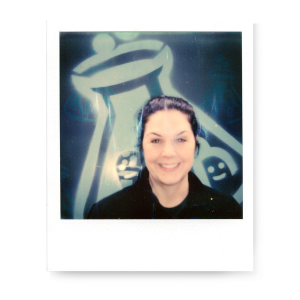
M.H. Lines, CEO of Automaton and 2019 Techstars Seattle participant
In what ways did the program differ from your expectations? What did you have to change and adapt to get through this?
Honestly, I didn't have many expectations. Of the programs I've really found value in, from getting my MBA to Women in Cloud, I've been able to really just let go and trust the program. That’s the same way I approached Techstars.
Throughout this program I learned that I can’t show if I’m having a bad day or even a bad moment, since it has a lasting negative implications on our business. I remember after one meeting feeling defeated and I whined to Aviel Ginzberg one of Techstars’ Managing Directors, “So I don’t get to have bad days anymore?” He responded, “No, you don’t.”
What have been your top 3 highlights of Techstars Seattle?
By far the people in the 2019 class. They're truly A-players. That kind of lovely and giving but hard-charging environment really gets you through.
The mentors. These are people I would never have access to before who have been critical in helping to figure out what we are doing.
The forcing function of a compact time period. Let's be honest, I'm running a venture backed startup, so the time crunch is my daily life, but having everyone exposed to it is helpful.
Any "oh crap, that didn't go how I expected" moments?
I didn’t take advantage of Chris Devore and Aviel Ginzberg, our Managing Directors, as much as I should have. I only saw them during structured hours, and they individually don't have as much of our backstory as other mentors or investors. Towards the end of program I worked to spend more time with them.
What experiences have you seen set female founders/CEOs apart from their male counterparts?
In this environment I don't think there is a major difference with the exception of women being better at multitasking, which is so critical for a startup and has positive and negative implications.
I think multitasking is a superpower of mine, more even than most women. I understand switching costs and when the rubber really hits the road, I give myself the gift of focus.
We are getting to a place where I can only focus on fundraising, marketing, sales, and general leadership and direction. I'm not saying that in an ironic way, either. I've got amazing, smart leaders who have taken other major things off my plate, and that list does feel focused.
There were a few male mentors who obviously had some unconscious bias issues (but surprisingly good intentions). With that exception, I'm just a person doing something exceptionally hard in the company of exceptionally smart, hardworking individuals.
What gets you excited about the start-up scene around Seattle?
Coming from the South/East Coast, I'm just really excited there is a startup scene here, and that it is as “buzz-y” as it is. The access to brilliant investors looking to write deals is amazing.
Why did you apply for this particular accelerator program?
Techstars Seattle, by global reputation, is a top accelerator. Being selected to participate alone was traction in and of itself.
I like that Techstars is a measured way to focus on what matters most and get super important work done rapidly.
You are married with three little ones at home. It must be hard to leave your family every morning. How are you able to take care of yourself over the course of such a demanding, fast-paced accelerator?
It’s easy to forget to take care of yourself in this environment. When I start to get tired, or things get really hard, all I want is to go cuddle up on the couch with my people. There are times I don’t feel like I have the luxury of doing anything other than simply pushing forward, both at work and in my private life.
My husband does more than any other father I've known—he participates, he cleans, he does laundry. He pays all our bills and sets up the college-savings accounts. But the mental work is still primarily mine. I book activities and camps, I get the Easter eggs, and I schedule the au pair and sitters.
On my desk sits a candle that reads, "Girl, you need to calm the f down." That pretty much sums up my life.
Thanks to the Techstars’ Diversity and Inclusion team for supporting this collaboration. Learn more about the Techstars program.
Weekly Female Founder Funding Update
The investments flow into two health and wellness companies, a childcare platform and a beloved Seattle brick-and-mortar children’s clothing reseller going online.
Carrot Fertility, $11.5 million, Series A, Tammy Sun, Co-Founder & CEO, Dr. Asima Ahmad, Co-Founder, Medicine, and Juli Insinger, Co-Founder, GrowthSan-Francisco-based provider of fertility health plans to companies. CRV led the round. (Website, Crunchbase)
EverlyWell, $50 million, Series A, Julia Cheek, CEO & Co-Founder
Austin-based digital health platform that provides at-home health tests and lab results. Investors include, Goodwater Capital, Highland Capital Partners, Next Coast Ventures, NextGen Venture Partners, and SoGal Ventures. They also announced a partnership with Target to roll out its tests in more than 1,600 stores. (Website, Crunchbase)
Kids on 45th, $3.3 million, Seed, Elise Worthy, CEO
Seattle-based e-commerce reseller of gently used children’s clothing. Interesting, the company originated as a beloved brick-and-mortar store in Seattle’s Wallingford neighborhood. Two years ago it was purchased by Elise Worthy, who also founded Ada Academy. Investors include YesVC, an early-stage firm co-founded by Flickr co-founder Caterina Fake; Maveron, SoGal Ventures, Sesame Street Ventures, Collaborative Fund, Liquid 2 VC, and Brand Foundry Ventures. (Website, Crunchbase)
MyVillage, $6 million, Seed, Erica Mackey, CEO & Co-Founder, and Elizabeth Szymanski, Co-Founder and CFO
Bozeman, Montana-based childcare system that works with a community of in-home childcare programs. Investors include Red Sea Ventures, Acumen, Better Ventures, and Kairos. (Website, Crunchbase)

Psychic Sidekicks
From lepidolite to black tourmaline, here’s your boss guide to the psychic secret weapons of the business world. You’re welcome!
This article was curated by Lady Stardust, Underwire’s patron saint of Earthly delights.
Good riddance, mercury in retrograde. 🖕
Today’s the day we turn to Earth's atomic particles for business guidance. The Universe will step in if you let it.
Here are Lady Stardust’s secret weapons for the startup grind….
Communicating

When you need to tap into your most badass self—you know the one, that chin up, shoulders back hot shit with the confidence to sell in anything—Lapis Lazuli is your linchpin. It taps into your self expression without compromise, calms the butterflies in your stomach and harnesses the power of the throat chakra so you speak with clarity and authenticity.

All your direct reports want a piece of you today and it’s only 9:00 a.m. Tuck a piece of Kyanite in your bra and get to it. Kyanite bridges communication between people and allows ideas to flow. It keeps you grounded and allows your energies to vibrate on a higher frequency so you can be present for your team.
Concentrating

Concentration and productivity are the keys to the queendom. Hematite keeps you on track and brings strength to your beliefs. It also wards off those negative energies so you can tackle that presentation, dive into those financials, and keep ticking off the to-do list.

Need more fire in the belly? Malachite breaks those habitual patterns—the social-media distractions, that 10:00 a.m. snack break, the procrastination of the monthly KPI report. This green beauty accentuates the vibrational equivalent of luck, keeping your mind on track and the heart engaged in finding new ways through the daily muck.
Manifesting

No doubt, we need a lot of help. Pro tip: your manifestation cheat sheet always starts with Smoky Quartz. Use it in conjunction with…

Pyrite in your pocket attracts the big money and helps you set up your superpower shield to keep the money leaks to a minimum.

You need that strategic partnership to lift your business to the next level. Spirit Quartz puts you in the center of the collaboration nation and lets you pick the highest and best relationship to suit your needs.

You know your business soulmate is out there. That person who just “gets” your vision, who adds to it, making it bigger, better, stronger. Apophylite helps you harness your joy, gets the universe to bless it, and brings you your person.

You need customers and social media interns and sponsors and spreadsheet wizards—damn, you need bodies! Argonite is the stone of community. By letting you find your shine, it helps light the way for the right people to find you.

Your product hit the market and the timing was spot on. The peoples are clamoring for more. Keep the abundance flowing and the competition at bay. Citrine is your inner sunshine and solar-plexus friend. Trust your gut.
Celebrating
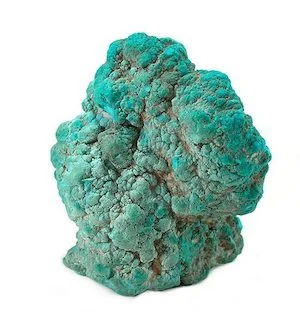
Pop that cork! When you hit those quarterly revenue goals early, you take the team out to make some noise. Turquoise amplifies the satisfaction of a job well done. After all, it’s the stone of extroverts and influence, making you the most fun person at celebratory happy hour.

Funded your Kickstarter? Check. Lined up manufacturing? Check. Pregnant? Whoops. And...check!!! Congratulations! Emerald keeps your heart open and magnifies your joy so you can bask in that pregnancy glow.
Sleeping

Maybe it was that after-dinner espresso but more likely it’s the endless to-do list that wakes you at 3:00 a.m. A girl has got to get her sleep. So under that silk pillowcase (true fact, your hair will look great in the morning) slip a piece of Danburite. It’s a shiny glossy chisel that will chip away at the anxiety that is keeping you up and bring a sense of peace so you can get the sleep you need. It’s also great for migraines.

A wand of Selenite to keep you vertically aligned and help you get your serenity back when you need it. It’s also great at keeping a safe and peaceful home environment.
Doubting
Trauma happens. Sadness is part of life. Suffering is human. Big feelings are deep teachers. We know these lessons. That said, when your runway is ending next month and last month your entire family had the flu, you need a bit of soothing. This duo offers first aid...

Rose Quartz is a classic healer and amplifier of goodness. It works broadly to cover all the bases —heart, mind, body, environment. Place an orb in your home or office to attract some of that universal river of love and help heal your tired heart. Slip a point in your pocket and unpack your feelings of fear and guilt. In the immortal words of Queer Eye, Jonathan Van Ness, “Self-care is non-negotiable.”

Glittery and pink purple, Lepidolite works to relieve emotional suffering so you can feel what you need to feel and come out the other side intact. For the rock nerds and the geologists: lepidolite is a form of mica, and is the most abundant lithium-bearing mineral on earth. Why is this interesting? Because lithium is used in some mood stabilizing drugs. This one you may want to make into jewelry and wear 24/7.
What the F’ing?!?
When the psychic vampires arrive, you need tools to get your positive energy flowing. You may not make payroll, but you will have the strength to communicate why, and the way forward. Bring in these heavyweights.

Fluorite for working through thorny, complex issues and stirring creativity to bring a higher state of mental achievement. Kick that instability to the curb. With fluorite in your purse you're open to net new information.

Your spouse threatens to leave if you spend one more weekend working. Get out the Black Tourmaline. A force field protector and negative energy releaser, it is the best grounding agent in town. Everyone needs this.

Call the shaman. Five employees left last quarter. Labradorite has got your back. The stone of mystics and the North (once thought to be the frozen light of aurora borealis), a seer stone that amplifies focus, allowing clear outlines to emerge and you to find the best path forward. Bonus, Labradorite is a powerful protector and a stone of adventure. Running a successful business is nothing if not an adventure.
Lady Stardust Minerals is the side hustle for Erica Goldsmith, a brand consultant and business strategy guide for creatives. Need a rock? Want a consult? DM her through Insta.

February Ifs
Monthly must-reads, six cos. raise $163 million and three female-CEO exits

Illustrations by Blair Breitenstein / @blairz.
Hearts & Millions
I love this issue of the Ifs. Here’s why: Seven heart-centered must-reads, six fundings with over $163 million raised, and three exits (two at $100 million each). ❣️💪🏽💸
If flab has landed
Take this 3-question quiz to get your ass back. This is from Richa's article on how to grow without VC and a classic example of Frontend Bait in a customer-loving Value Ladder.
If objectivity eludes you
This is why thinking of your business as your baby could be stalling growth. Informed by Finnish research that confirms the emotional connection to your business mirrors your emotional connection to a child.
If buying chocolate and roses feels shallow
Go deep this Valentine's day. Buy nothing, reinvest in the relationship and finish what you started. Raptitude did this for a year and one million people read about it.

That orange blob is a chicken wing. Delivered by a drone. There’s a model for that, mockumentaried in the Crunchbase series "A Startup Takes Flight.”
If confused by funding lingo
In the five-part series, "A Startup Takes Flight," Crunchbase skewers the Valley’s lust for the next-big-thing while mockumenting a fictitious company’s growth from unpriced Seed round to acquisition. Along the way, you get clear examples of the legal and insider terminology used in deal-making (cap tables, deal terms, valuations, etc.), and more importantly, the mechanisms that VCs use to protect themselves in the deal. You know what happens when they know more than you. No excuses, ladyballers.
If Snapchat's in your mix
Here’s what it takes to put together world-class social content. A short-read overview of Vogue International's three Snapchat Discover channels, team resources required, and why they love Gen Z.

Bianca Valenti surfing the big waves at Maverick’s in December 2018. Photo by Dina Litovsky/Redux, for The New York Times.
If in need of a Fuck Yeah!
Read this outstanding article on the push for gender equality in big wave surfing. Read it for the lesson on how to harness coalitions and small government, such as land-use commissions, to demand change. Read it for the love of great writing. Read it for the role models, as per usual, a group of supremely talented women outworking and outwitting men for the right to compete and get paid equally. The best article of the year (so far).
If your teen has lusty Qs
Planned Parenthood's Roo chatbot answers with honesty, sensitivity and humor. Props for the gender inclusivity. This is an ingenious use of tech to reach Gen Z, their next gen of supporters.

Funding
Remarkably, $800,000 Seed, Erina Malarkey, CEO and Co-Founder; Anna-Lea Dieringer, Chief Product Officer
Seattle-based marketing analytics software for the real-estate industry. Round led by Pioneer Square Labs Ventures with angel investors in real estate and technology. Remarkably is the first all-women-led company to spin out of Pioneer Square Labs. (Via PSBJ)
PartySlate, $3 million Seed, Julie Roth Novack, CEO and Co-Founder
Chicago-based PartySlate is a digital platform designed for event professionals. Led by Hyde Park Venture Partners; other investors include Purple Arch Ventures, Hyde Park Angels, and InvestHER Ventures.
Ritual, $25 million Series B, Katerina Schneider, CEO and Founder
Los Angeles-based Ritual is a direct-to-consumer vitamin company. Previous investors Founders Fund, Norwest Venture Partners and Forerunner Ventures participated. Three-quarters of Ritual's board members are women and 60 percent of its 47 full-time employees are female.
Billie, $25 million Series A, Georgina Gooley, Co-Founder
Brooklyn-based wellness company Billie sells direct-to-consumer shaving supplies and body products for women. Round led by Goldman Sachs’ Private Capital Investing Group. Silverton Partners, Female Founders Fund, and Lakehouse Ventures also participated in the round. (Fortune)
Cuyana, $30 million, Series C, Karla Gallardo, CEO and Co-Founder; Shilpa Shah, Co-Founder
San Francisco-based direct-to-consumer fashion brand focused on responsibly sourced, high-end apparel and accessories. Cuyana was profitable in 2018. Backed by private equity firm H.I.G. Capital. (Business of Fashion)
FabFitFun, $80 million Series A, Katie Echevarria Rosen Kitchens, Co-founder, Editor in Chief
Los Angeles-based subscription-box service for beauty and wellness products. Led by Kleiner Perkins. FabFitFun financing follows a period of hockey-stick growth for the nine-year-old company, which topped $200 million in revenue last year.
Exits
Killer Infographics, acquired by Lieberman Research Worldwide, amount undisclosed, Amy Balliett, CEO and Founder
Seattle-based visual communication company known for stylized infographics and videos. Notably, they designed their own confidential information memorandum — CIM — for potential partners, instead of letting a brokerage firm do the work.
Read GeekWire's insightful Q&A with Amy with practical advice about bootstrapping. Hire a bookkeeper, have money in the bank before you start the company, network with the men, and this....
“For the first five years of this company, I tried to avoid conflict. I often would put emotions of other people above business needs. But then I started letting the needs of the business drive all decisions over my own emotions. I do think that’s something women aren’t taught to do or expected to do. Women are often vilified when they do that. But the fact is, when you have 25 families that rely on you for their source of income, you need to let the needs of the business drive decisions over emotion.
Ultimately, I had to learn to stop apologizing and I really had to learn to stop justifying the same decisions I’d make that a man would make. Women often have to justify logical decisions and emotionless decisions and it makes it pretty hard if you’re running a business. Women have to earn it far more.”

More exits
L., acquired by P&G for ~$100 million, Talia Frankel, Founder
San Francisco-based L. is a retailer of period products and prophylactics. Founder Talia Frenkel was a photojournalist before she started L. through Y Combinator.
Why this acquisition is important: According to TechCrunch, “For investors with knowledge of the company, the P&G acquisition is a harbinger of things to come. The combination of a non-technical, female founder operating in the consumer-packaged goods market with a mission-driven company was an anomaly in the Silicon Valley of four years ago, but Frenkel’s success shows what kind of opportunities exist in the market…’With this acquisition investors need to update their patterns,’ said one investor with knowledge of the company.” (TechCrunch)
To that end...
The Laundress, acquired by Unilever for $100 million, Gwen Whiting and Lindsey Boyd, Co-Founders
NYC-based The Laundress is a luxury eco-friendly home-cleaning products startup. The founders never took venture capital money and sell 85 products, from specialized detergents to dish soap. (Fast Company)

Richa Prasad: How to grow fast without VC funding
Richa Prasad, CEO and Co-Founder of Coach Viva on the strategic mindset shift that can help you drive profitability without venture capital.

Richa Prasad, CEO and Co-founder of Coach Viva, details how to shift your business model from growth to profitability and seven steps to grow fast without VC funding.
Editor’s Note:
This is not fast, snackable content. This is control-your-own-damn-destiny content.
Underwire is honored to feature the writing of Richa Prasad. A former AI engineer at Microsoft, Richa co-founded Coach Viva with Lucy Liang. This article details Richa's journey through early stage customer acquisition for her AI Health SaaS startup. The strategy and formula she details will work for most companies—digital products, ecommerce, professional services, etc.
With women-led businesses getting less than 3% of venture funding, no one is coming to save us. If you're serious about building a viable business, study this article and apply the lessons to your marketing mix.
I come from a deep product background. Electrical engineering. Computer science. Internship at Philips Semiconductors before they shut down. At Motorola before they got bought by Google. A full-time gig at Microsoft working first on Visual Studio and then Cortana.
I read widely about all aspects of tech. I dogeared the entire Lean Startup series and books of similar ilk that you’d find on top of Product Hunt Books. I subscribed to Y Combinator and the whole Silicon Valley advice engine, and at some point I began to believe that I understood what are all the pieces of running a business in breadth, even if not in depth.
I left Microsoft to fill a gap I see in the personal health and fitness market where coaches cost exorbitant amounts of money and yet aren’t available at the very moments when people need them the most - moments of failure like when you’re shame spiraling from eating far too much, moments of indecision when you’re standing in line to order your food and don’t know what’ll keep you perfectly on-track, and moments of exhaustion when the journey feels far too hard and you want to give up.
A year into running my company, Coach Viva, my cofounder Lucy and I ran into what we all grapple with - growth. Our word-of-mouth was solid but it was nowhere close to a viral coefficient of 1, the threshold beyond which you can be assured that your product will grow fast on referrals alone; no other marketing channels needed. We tried ads, partnerships with other businesses in the health niche, a tool to attract leads, a pilot with Amazon Benefits, an in-product feature to promote referrals, and much more, but still we struggled with getting a steady stream of incoming customers.
It was in the midst of Summer 2018 while I read, watched and listened to marketing advice from literally anyone who makes their entire living online when I stumbled upon this whole world of entrepreneurs creating 8+ figure businesses without VC funding. They said things that made me realize there is a whole other way of doing things outside of what Silicon Valley talks about.
This story is my distillation of what I have learned with emphasis on the parts that completely changed how I think about building a business.
I am very early in implementing what I’ve learned so you aren’t going to find a “it works for me, let me show you how it’ll work for you” story. My goal isn’t to give you proof. My intention is simply to expose you to a different way of building a business than what gets airtime in tech circles, and leave it to you to decide if it’s for you.
Part I: To fund or not to fund
When I tell someone I am a founder, their first question is, “What does your business do?” followed immediately by, “How much funding do you have?” Not a surprising question given that I see one month old tech companies circling funding events.
I have to admit funding is one piece where what made sense to me versus what I saw happen around me felt disconnected. Not so much in “Why one needs funding” but more in “When one needs funding.”
Lucy and I felt we were in a niche where at our early stage, VC money didn’t seem like a necessity to finding product/market fit or fighting off competitors. We also weren’t sure if we were ready to commit to growing at the crazy pace VCs expect. And lastly but most importantly, the process of getting funded seemed like a huge distraction from what we needed to focus on most - building traction.
This brought up the question of how do we grow fast enough that we don’t run out of our meager, bootstrapped runway?
As you may or may not know, SaaS businesses are notoriously slow going for the first 3-4 years. This is especially true for a B2C SaaS model like ours where each sale is in 2-3 figures, not the 4+ figures each B2B sale brings in. Add to this that we’re selling weight loss coaching where churn is naturally high due to customers’ life priority changes and meeting the goal they signed up for.
Searching for answers to these existential questions far and wide, I came across Russell Brunson, who grew his company ClickFunnels from 0 to 360M in 4 years without any VC funding. I started digging into how he did it and that’s when I learned what I’m about to share.
Part II: The foundation of profitability vs. fast growth
There are 3 foundational blocks to understand about his success. The first two blocks describe the business and mental sandbox you’ll be playing in should you choose to follow his approach. Use them to judge if this is the right path for you. The last block lays down the strategy to follow if you decide on this path.
Business sandbox: Constraints you agree to build your business within.
Mental sandbox: Silicon Valley mindsets you agree to discard.
Your strategy to growing fast without VC funding.
Business sandbox
Firstly, let’s talk about which businesses aren’t a fit for this path. If your company is in a commodity-like industry that doesn’t inherently have enough differentiation on day 1, then what I’m about to share won’t work for you.
Social networks and ride-hailing services are two examples of businesses that don’t fit this model. These types of businesses rely on lots of cash to grow fast and monopolize a market before their competitors, and that monopoly becomes their lifeline. They need VC funding to accomplish this.
Compare this to a service like Coach Viva where there is inherent differentiation in coaching services. You pay Tony Robbins a whole lot more than a life coach off Yelp even though they both provide the same service. In contrast, Lyft and Uber are largely interchangeable and rely on coverage and price wars to attract and keep customers.
Second, your focus is to build a profitable business, not a high valuation business. You can always decide later that reaching escape velocity has become critical to your business and you need to attract VCs, but when you’re in midst of pursuing the strategy I describe in foundational block #3, you’re primarily tracking profits, not pure growth.
For what it’s worth, if you choose to not pursue the VC path ever, it doesn’t mean you won’t have massive impact on the world. Perhaps the most famous example of such a person in the Silicon Valley bubble is Gary Vaynerchuk. He's funded many startups including Facebook, Twitter and Venmo to name a few, but his own company, Vayner Media, has never taken any VC money.
Lastly, non-VC backed companies grow fast - ClickFunnels and Vayner Media for example - but they aren’t going to grow as crazily fast as VC-backed companies because they don’t receive overnight millions of dollars to burn. Comparing the two is like comparing a natural bodybuilder to a steroid-fueled one.

Natural / Non-VC vs. Steroid / VC
Mental sandbox
All the mindset shifts I am about to list hinge upon the change in business model focus: profitability, not pure growth. If you’re going after pure growth, Silicon Valley advice is the perfect advice for you. However, if you’re following this fast bootstrapped path, then you will need to make the following mindset shifts.
The first mindset you’ll need to shift is your attachment to the narrow scope of the problem you’re trying to solve. Instead, try to serve your market in whatever way possible.
Let me explain.
When I first started Coach Viva, I was attached to making real-time weight loss coaching affordable for the masses. This is exactly the type of focused problem that startups get funded for.
But let’s be honest:
Not everyone who is trying to lose weight needs coaching.
This sort of business naturally has high churn because the point of coaching someone is to help them become independent.
If I poke my head up and look around beyond solving coaching, I see a whole slew of customers who'd pay for kick-ass DIY weight loss tools and courses. Bonus: I will become profitable, thereby extending my bootstrapped runway, far more quickly if I try to serve my market in whatever way possible like building the aforementioned tools and courses, and thus disconnecting my business’ success from sales of my coaching service alone.
This brings me to the second mindset you’ll need to shift: sell (almost) everything. Most VC-backed businesses are set up to revolve around one main paid solution with different pricing tiers while everything else gets distributed for free.
Now I’m not saying charge for content marketing. You need to have free relationship-building stuff out there, but don’t only charge for your main solution. For example, at Coach Viva, we sell courses and we’ll sell DIY tools soon, even though our “main” product is coaching.
I touched upon the third mindset briefly just now but to call it out explicitly, don’t marry yourself to selling only software. This is a product-person mindset trap. Sell whatever type of solution your audience needs. In our case it’s also courses and physical workbooks. You're seriously under-serving your market if you are married to only selling software.
And the last mindset you need to shift is thinking your product is not your offer. Those are two very different things, and to build your offer, the different solutions I’ve been talking about for you to create for your market play a critical role.
Here’s an example: let’s say my product is a cup. If I try to sell my cup on Amazon, I’m in a price race to the bottom. Now let’s say I decide that this cup is for folks drinking coffee who are busy and are fueling themselves throughout the day. Now I can create an offer that includes my cup + meditation practice tracks + a thermos + coffee recipes for energy, and price this offer whatever I want as no one else has my exact offer.
Ta-da! I’ve broken out of price wars and created a brand around my product in one fell swoop.
PART III: The strategy for growth - your prospect’s journey
If you are 100% comfortable with both the business and mental sandboxes you’ll be playing in, then welcome to the last foundational block - the strategy to nail for growing fast without VC funding.
Your strategy can be broken down into the 7 steps in your prospect’s journey.

Source: DotCom Secrets Book
For each step, I am going to lay down the principles you need to think through for your own business. The distillation from principles to tactics to experiments is your domain, as it’s subject to the needs of your business and wide open to your creativity in how you implement them.
Let’s dive into each step.
Step 1: Traffic Temperature
First, there is Hot traffic - these are the people who are actively exploring your direct competitors’ solutions. For example, if you’re selling Mud Run tickets, these are the people who’ve already done mud runs before or are looking for mud run events right now. They are the easiest people to sell to as they already believe in your worldview of “mud runs are awesome and important”. When you target these people, you’re ‘collecting’ customers.
Next, there is Warm traffic - these are runners who need convincing as to why mud runs are awesome. There is education you need to provide to bring them over to your worldview.
Last, there is Cold traffic - these are people who have never ran a race. They aren’t certain if running is something they’ll commit to, and mud runs are far from their sphere of understanding. When you target these people, you’re ‘creating’ customers. Converting these people into your customers is really hard.
As you can already guess, you want to first exhaust Hot traffic. Too often we start going after Cold traffic because we want to “change the world.” No. Go after the easiest niche you can think of.
In fact, divide your niche into sub-niches, and target the Hot traffic in each sub-niche. For example, for Coach Viva, the people exploring Noom and Weight Watchers are Hot traffic. We should go after them as they already believe in our worldview of “You need awesome coaching/accountability to make weight loss stick.” Once we exhaust that sub-niche, we could go after the Personal Trainer sub-niche. And so on.
For each sub-niche, you could in parallel go after Warm traffic. This happens through partnerships with shoulder sub-niche businesses, that is, businesses that target the same customers as you but sell something that’s not in competition with you. For example, athleisure shops are a shoulder sub-niche business for Coach Viva.
And lastly, Cold Traffic is where you’re literally trying to create a market - not collect people anymore. You’re telling people they have a problem and should want your solution. This is where building a public presence through blogging, YouTube, podcasts, books and social media is important since you won’t see returns on these investments for years due to two reasons: (a) organic channels like these rely on compounding effect which means time is essential for them to grow, and (b) the prospects who come through these channels require the longest education time into adopting your worldview.
Step 2: Pre-Frame Bridge
The Pre-Frame Bridge is the education you need to provide to your incoming prospects so they can shift into your worldview and be open to your offer. A Hot traffic person requires a shorter pre-frame bridge than a Warm person, who in turns needs a shorter bridge than a Cold person.
For example, Coach Viva gets Hot traffic from weight loss Facebook Groups where our existing clients refer us to members in the group who asked for a good coach to try. These members tend to click the “start free trial now” button on our landing page with the highest frequency.

A typical landing page
It’s a different story for Warm traffic from our Yelp page. Since Yelp is about in-person businesses, the prospects are in the frame of mind of wanting an in-person trainer. We need to first break that frame and persuade them into a new frame that tells them they can be just as successful with an online coach. So, the first page they see needs to be devoted to this reframing education. It can't be the typical landing page with a "start free trial now" button.
Finally, when Coach Viva gets Cold traffic from Google, the prospects mostly want to learn more about us. We need to first understand what they are looking for, do we have anything that helps them, and build trust by sharing our stories and knowledge before that landing page with the “start free trial now” button can be shown.

Coach Viva About Us: share stories to start building trust
The point I am trying to make is to think of your website like a salesperson, not a brochure. A salesperson speaks in context to where their prospect is at. She doesn't just hand over a 50 page brochure and sit back and wait for the prospect to decide.
Steps 3, 4 & 5: Frontend of your Value Ladder
Now that your prospects have gone through your pre-frame bridge and understand your worldview better, you are ready to make offers. The order in which you make your offers is important, and is collectively called the Frontend of your Value Ladder.
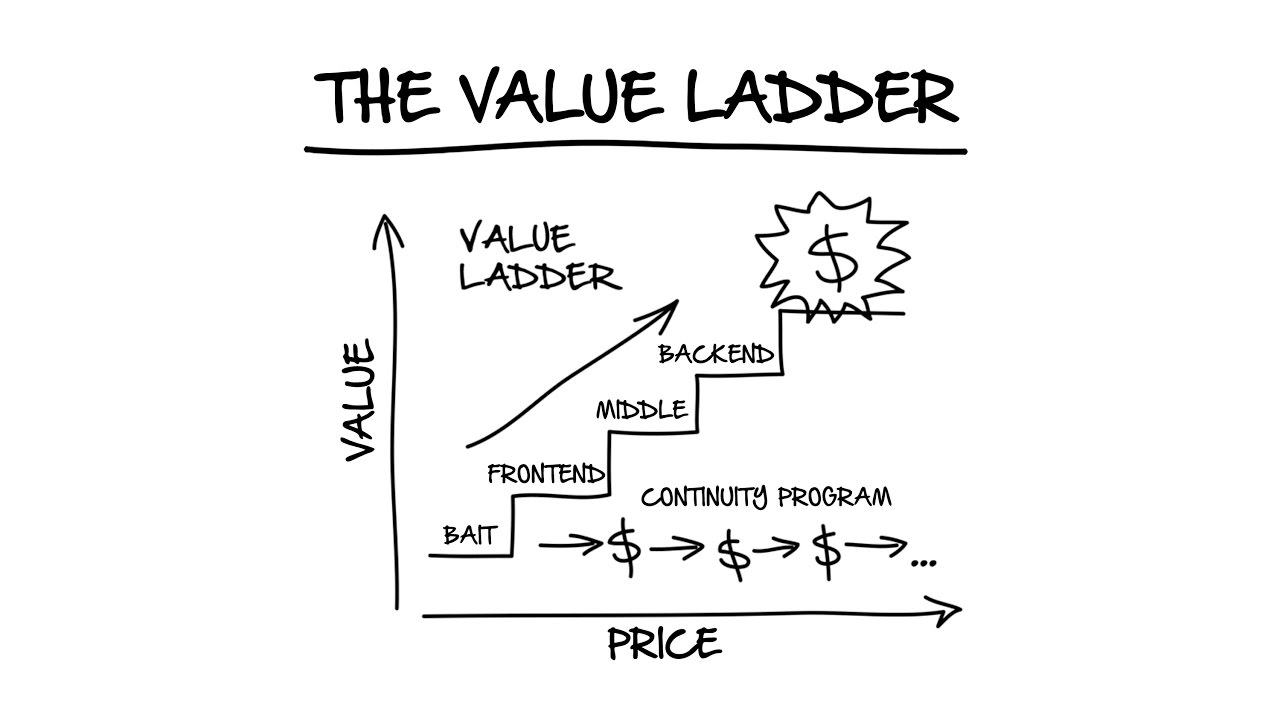
Source: DotCom Secrets Book
The first step in your Value Ladder is the Bait, as in the thing that causes them to pause and click on the link to your website. For example, our Yelp page reviews are a bait. If you do ads, those are baits. A bait is your content appearing on other platforms, hooking your prospects in by being intriguing, and then reeling them onto your website.

Bait to hook people and then reel them into Coach Viva’s Frontend
Once they are reeled onto your website, they proceed through the pre-frame bridge and then to the second step in your Value Ladder, called your Frontend. This is collectively Steps 3, 4 and 5 of the 7 steps, which happen in the same session, so you catch all the people who’re ready to buy.
3. Offer your prospect something of high-value (example: an e-guide on how to break weight loss plateaus) in exchange for their email / some way to connect with them without algorithms you don’t control getting in the way. The goal is to, at worst, have a way to continue building a relationship with them, and then point them to step 4 again if they didn’t buy the first time around.
4. Offer your prospect something of high value for cheap that builds upon your offer in Step 3 (example: a comprehensive book on how to DIY fitness for $5). The goal is to test the waters to see if this prospect is already bought into your worldview and ready to buy right now.
5. Offer your prospect something that's more expensive and makes your offer in step 4 faster, better, stronger (example: a personalized nutrition and exercise plan for $50 so they don’t have to spend time translating the book to actions in their life). You’re targeting buyers in heat - for example, I was one when I went to Amazon to buy one book to learn design, and ended up buying 3 design books because they all looked so helpful.
You can collapse steps 3 and 4 into one step (example: by selling a physical product that’s free as long as prospect covers shipping cost) or skip step 5 altogether at the beginning. Step 4 could also be someone else’s product with whom you split revenue.
There is a lot of flexibility in how you implement these steps as long as you satisfy the two goals of the Frontend:
A. Create offers that make your CAC = < Revenue from your Frontend.
B. Your Frontend converts your prospects’ beliefs into your worldview.
Let’s dive into A first as that’s the lynchpin of how you can grow fast without VC funding.
For the sake of easy CAC calculation, let’s say you’re using ads as the bait to drive traffic to your Frontend. We’ll assume that the ads are costing you $1.40 per click, which means it costs you $1,400 to drive 1000 prospects to your Frontend.
Now let’s say 38% of the prospects gave you their email in Step 3, which means you got 380 subscribers. Next, either when you showed Step 4 after Step 3 or through your relationship building sequence of communications leading them back to Step 4, 9% of subscribers bought your $37 product. Your total sale is $37 x 34 = $1258.
After that, let’s say 7% of your buyers also purchase your $197 offer in Step 5, which brings your total sale to $1,258 + (3 x $197) = $1,849. This equates to $1.85 earnings/click which is greater than your cost of $1.40/click. You have a winning campaign where you’re making a profit!
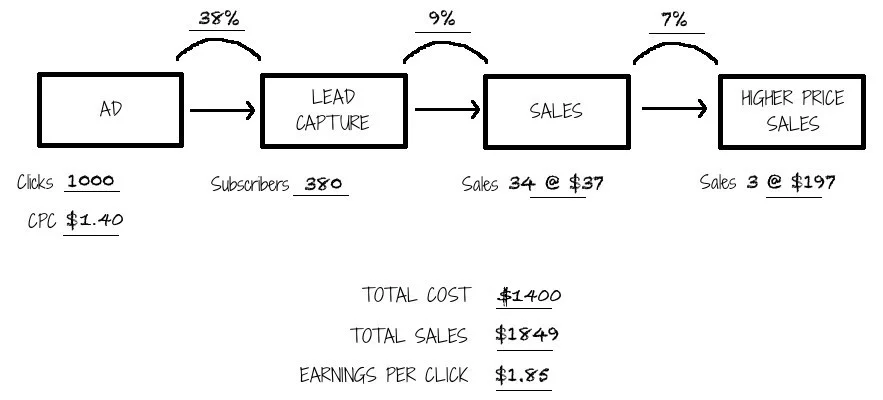
Source: Fill Your Funnel Secrets Book
Let me repeat the two important points from this example:
If you were only selling your first offer of $37, you’d be making a loss ($1.26 earning/click vs. $1.40 cost/click). It is the sequence of offers building on each other which helps you beat your ad costs. If you’ve read any negotiation book, you know that once you get the first Yes, it’s far easier to get subsequent Yes’ on bigger and bigger asks.
You’re getting paid to acquire customers. You can literally outspend anyone to get customers. You see now how you can grow fast without VC money?
Now let’s talk about goal B (your Frontend converts your prospects’ beliefs into your worldview) which compounds your growth and profits created by goal A.
The actual offers you make in your Frontend must make your customers your huge fans. This means two things:
They cannot believe how much value you delivered for how little you charged them.
The value you gave educates them thoroughly into believing your worldview.
That last bullet is especially important when we get to Step 6, where you multiply your Frontend profits while having $0 CAC.
Step 6: Age & Ascend the Relationship
At the end of your Frontend, you have a customer, that is, someone who has already bought from you and helped you acquire other customers at profit.
At this point you pause on the sales and nurture your relationship with them by sending them high-value emails / whatever direct communication channel you choose to deliver them entertainment + value. You tell them stories about yourself, share what you’ve learned, what you’re doing, your failures and successes, and essentially get them to know you better.
Once you feel they’ve been nurtured well, you now ascend them to the Middle of your Value Ladder. This is the natural next thing they need in order to make use of your Frontend.
For example, Coach Viva’s Frontend are courses which teach people the science and DIY methods of how to lose weight. A natural next thing they need are the tools which make implementing said methods easy and quick.
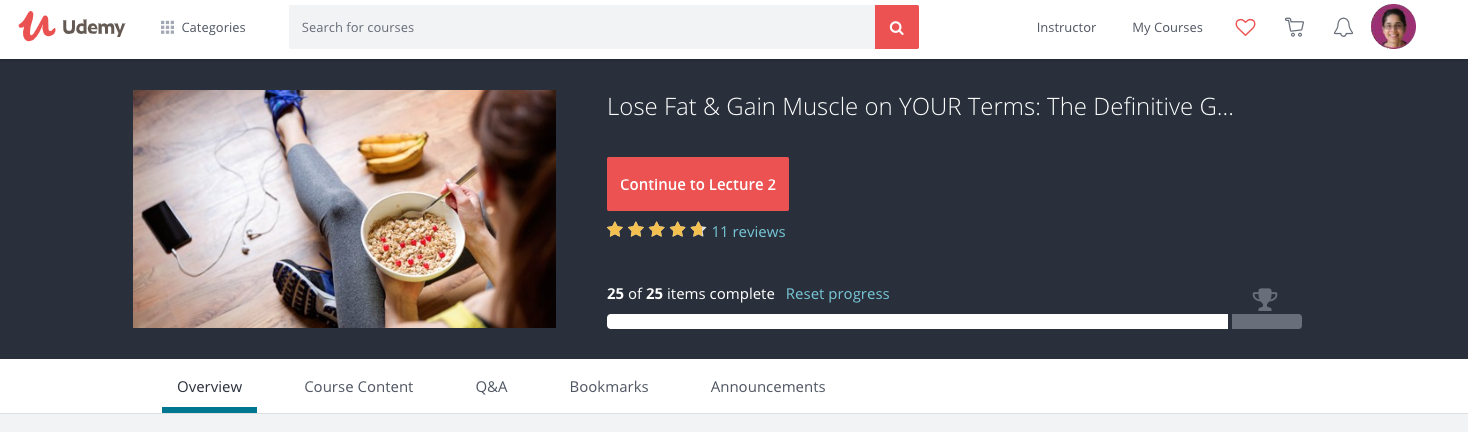
Frontend course of Coach Viva
If your Frontend did a good job of converting their beliefs into your worldview, these customers will be primed for your Middle Value Ladder, and guess what, selling it to them costs you $0! It’s pure profit from here on out as you age and ascend your customers up your Value Ladder.
Your Middle Value Ladder could be one offer or many. For example, at Coach Viva, our tools are our first Middle offer while coaching is our second Middle offer.

Frontend course nudges students to review what they learned by taking a quiz hosted by Coach Viva, which then seamlessly leads into offering the Coaching Middle offer
At least one of your Middle offers must have a continuity revenue model, that is, be a recurring source of revenue. For Coach Viva, we plan to have both Coaching and Tools have a continuity revenue model.
Also, remember the mindset shifts we talked about: this could be not just software, but a membership site or information product subscriptions like magazines.
Step 7: Change the Selling Environment
Throughout Step 6 you’re nurturing your audience with email / other communication methods, and at some point those who bought your Middle offer(s) will be ready for your Backend offer. This is generally a high-ticket offer in the 4+ figure range, which is why you need to change the selling environment into a phone call or some such 1:1 communication to make the sale.
Just like there can be multiple Middle offers, there can also be multiple Backend offers. These are generally offers where you are "physically present,” like a consultation or retreat or mastermind. In fact, as you gain fans, you could start putting together virtual or in-person Backend offers, and see who bites. You don't have to wait until your Frontend and Middle is profitable before experimenting with this.
Last note
It's okay for prospects to jump directly into Middle or Backend if they are ready. Not everyone needs to go through the Bait to Backend in sequence.
However, it’s interesting to note that both Russell Brunson on his podcast and Rand Fishkin of Moz in his book have remarked how the customers who go through the education journey from Bait to Backend tend to be on average the highest LTV customers.
Where we are at with Coach VIva
We are still in the process of figuring out our Frontend that meets the two A and B goals mentioned above as well as setting up our public presence, that is, the Cold traffic sources.
One of our frustrations with 2018 was we set goals that aren't directly in our control, like revenue or customers.
In 2019, we have set a goal to do 100 needle moving experiments (50 by me, 50 by Lucy). All must be “skateboards” in Spotify MVP language, and they must target whatever happens to be our bottleneck in the 7 step customer journey at the time of the experiment. As a byproduct of this consistency, we hope to see the out-of-our-direct-control goals move in the right direction.

A gift for you
When we first started, ironically despite being a health business, both Lucy and I stopped exercising, sleeping or eating right.
In the past 6 months, we have reversed a lot of our slips as they were causing noticeable drops in our energy levels and mind clarity.
We know that you, like us, are super busy running your business, and don’t always have time to do the prep work (meal planning, workout program creation, building systems for self-accountability) that’s required to upkeep your health and fitness.
That’s why we’ve created a short quiz that asks you 3 quick questions to first understand, then offer the kind of help you need most right now to make keeping your health and fitness up easier.
That’s it from me for now. I hope this has gotten your brain whirling with possibilities. I’d love to hear your thoughts! You can reach me here.