

Techstars x Underwire: Surbhi Rathore
Meet Surbhi Rathore. She’s using AI to connect conversations with better business outcomes.
Surbhi Rathore is the CEO and Co-Founder of Rammer.ai, a technology company focused on conversational AI and business outcomes. Surbhi was a participant in the 2019 Techstars Seattle class.
This Q&A was conducted with the help of Samantha Bell from the Techstars Seattle team and has been edited for brevity.

Surbhi Rathore, CEO and Co-Founder of Rammer.ai and 2019 Techstars Seattle participant
In what ways did the program differ from your expectations? What did you have to change and adapt to get through this?
The Techstars program is a milestone in my journey as a founder. I knew that the program would help us fill in the gaps, but it has been so much more than that. In the past two months it feels like we’ve built our own founder/mentor family who are, and will, continue to support us beyond the program.
We have a team in India, so I was overseeing a lot of decisions until now. With the schedule of the program, I am taking a step back on day-to-day activities, and I think that has really helped everyone on the team step up and own the territory of their roles.
What have been your top 3 highlights of Techstars Seattle?
The Techstars network effect is phenomenal. We’ve been able to access a network of mentors, alumni, investors, customers, and partners that would have been extremely difficult to access outside of the program. This has helped accelerate our company faster than we could do on our own.
I always look forward to “Mentor Thursdays,” where we spend the whole day with our lead mentors.
Connecting with the other startups and the Techstars staff. I always look forward to “Highs and Lows” on Fridays. It’s where we literally talk about anything and everything from the week over drinks and snacks. I also loved the Founders Retreat, where we spent three days in a remote location focusing on leadership workshops and connecting with our peers.
What experiences have you seen that set female founders or CEOs apart from their male counterparts?
I think women look at work differently than men. In addition to being great at understanding and handling finances, we connect with the customers and our team on a different level. Not that male founders don't, but I have seen this connection in a lot of female founders throughout my journey so far.
What gets you excited about the start-up scene around Seattle?
We are headquartered in San Jose, so we’ve experienced the startup scene in the Bay Area. Seattle has been amazing. The people here, especially Techstars alumni and mentors, have a give-first attitude towards the new community that I love. It’s great to feel like we are a part of this big startup family here in Seattle.
Why did you apply for this particular accelerator program?
Seattle is the center of technology, and there are super successful companies that have come out of here, especially in the space we operate in—AI in conversations.
Plus, after talking to Chris Devore and Aviel Ginzburg, the program's Managing Directors, we were convinced the Techstars Seattle Accelerator was where we wanted to be. Those two are amazing! They’re always around and have such deep insight into what we do. Working with them has been just phenomenal.
Thanks to the Techstars’ Diversity and Inclusion team for supporting this collaboration. Learn more about the Techstars program.
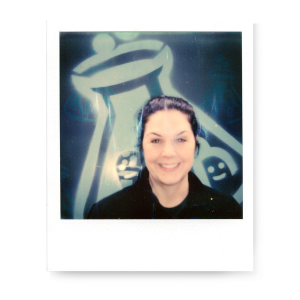
Techstars x Underwire: M.H. Lines
Meet M.H. Lines. She’s using dev ops tools to automate the sales and marketing stack.
M.H. Lines is the CEO of Automaton, a development ops platform for marketing technology. She was a participant in the 2019 Techstars Seattle class.
This Q&A was conducted with the help of Samantha Bell from the Techstars Seattle team and has been edited for brevity.

M.H. Lines, CEO of Automaton and 2019 Techstars Seattle participant
In what ways did the program differ from your expectations? What did you have to change and adapt to get through this?
Honestly, I didn't have many expectations. Of the programs I've really found value in, from getting my MBA to Women in Cloud, I've been able to really just let go and trust the program. That’s the same way I approached Techstars.
Throughout this program I learned that I can’t show if I’m having a bad day or even a bad moment, since it has a lasting negative implications on our business. I remember after one meeting feeling defeated and I whined to Aviel Ginzberg one of Techstars’ Managing Directors, “So I don’t get to have bad days anymore?” He responded, “No, you don’t.”
What have been your top 3 highlights of Techstars Seattle?
By far the people in the 2019 class. They're truly A-players. That kind of lovely and giving but hard-charging environment really gets you through.
The mentors. These are people I would never have access to before who have been critical in helping to figure out what we are doing.
The forcing function of a compact time period. Let's be honest, I'm running a venture backed startup, so the time crunch is my daily life, but having everyone exposed to it is helpful.
Any "oh crap, that didn't go how I expected" moments?
I didn’t take advantage of Chris Devore and Aviel Ginzberg, our Managing Directors, as much as I should have. I only saw them during structured hours, and they individually don't have as much of our backstory as other mentors or investors. Towards the end of program I worked to spend more time with them.
What experiences have you seen set female founders/CEOs apart from their male counterparts?
In this environment I don't think there is a major difference with the exception of women being better at multitasking, which is so critical for a startup and has positive and negative implications.
I think multitasking is a superpower of mine, more even than most women. I understand switching costs and when the rubber really hits the road, I give myself the gift of focus.
We are getting to a place where I can only focus on fundraising, marketing, sales, and general leadership and direction. I'm not saying that in an ironic way, either. I've got amazing, smart leaders who have taken other major things off my plate, and that list does feel focused.
There were a few male mentors who obviously had some unconscious bias issues (but surprisingly good intentions). With that exception, I'm just a person doing something exceptionally hard in the company of exceptionally smart, hardworking individuals.
What gets you excited about the start-up scene around Seattle?
Coming from the South/East Coast, I'm just really excited there is a startup scene here, and that it is as “buzz-y” as it is. The access to brilliant investors looking to write deals is amazing.
Why did you apply for this particular accelerator program?
Techstars Seattle, by global reputation, is a top accelerator. Being selected to participate alone was traction in and of itself.
I like that Techstars is a measured way to focus on what matters most and get super important work done rapidly.
You are married with three little ones at home. It must be hard to leave your family every morning. How are you able to take care of yourself over the course of such a demanding, fast-paced accelerator?
It’s easy to forget to take care of yourself in this environment. When I start to get tired, or things get really hard, all I want is to go cuddle up on the couch with my people. There are times I don’t feel like I have the luxury of doing anything other than simply pushing forward, both at work and in my private life.
My husband does more than any other father I've known—he participates, he cleans, he does laundry. He pays all our bills and sets up the college-savings accounts. But the mental work is still primarily mine. I book activities and camps, I get the Easter eggs, and I schedule the au pair and sitters.
On my desk sits a candle that reads, "Girl, you need to calm the f down." That pretty much sums up my life.
Thanks to the Techstars’ Diversity and Inclusion team for supporting this collaboration. Learn more about the Techstars program.