

What it takes to raise a Seed
Surbhi Rathore, CEO of Rammer.ai answers questions about her Seed round. And while we’re on the topic, what exactly is a Seed round?

Surbhi Rathore, CEO and Co-Founder, Rammer.ai
Seed round short Q&A
Last May I featured Surbhi Rathore's perspective on her company's participation in the 2019 Techstars Seattle accelerator program. Three and a half months later, Surbhi and the Rammer.ai team closed a $1.8 million Seed round. Here are key takeaways from her fundraising journey.
How many investors did you pitch (approximately) to close the round?
We ended up having meetings with less than 30 or so investors. We were very targeted in the approach of only reaching out to the firms with some investment thesis around Enterprise AI or platforms. And it was a pleasure to get connected with each of them.
What about your company's story changed or evolved as you pitched? What narrative worked best?
Every meeting was a new learning experience that gave us further clarity on handing the objections. One of the things I learned was making sure we communicate the vision in the right proportion to what exactly we are doing near-term. I would say in the end it was the strength of the founding team, the founder's insights in the market and what hypothesis we are validating, with a clear understanding of how we will get to the next stage.
How will you use the proceeds?
With this Seed round we will expand the engineering and data science teams to scale the platform and make it easy for developers to adopt this technology. We are also investing in business fundamentals to grow, acquire, and delight both customers and partners.
What people or groups were most helpful throughout the fundraising process, and how?
Techstars helped us immensely with the support system and access we needed to the right investors. Not just the entire Techstars team, but the alums from previous batches and mentors helped us with introductions and sharing the knowledge of what worked for them. It's always faster to learn from others' experiences and apply to your own journey.
Anyone you want to give a special shoutout?
Chris DeVore, Aviel Ginzburg and all our mentors during the Techstars program. Our entire team in India who stepped up to take more responsibilities as I (alongside Toshish Jawale, my co-founder) went through our first fundraise process. We are so excited to unfold the next phase.
What is a Seed round?
Here's an overview from Investopedia's Series A, B, C Funding: How It Works...
Seed funding is the first official equity funding stage* and typically represents the first money that a business raises. Some companies never extend beyond Seed funding into Series A rounds or beyond.
You can think of the "seed" funding as part of an analogy for planting a tree. This early financial support is ideally the "seed" which will help to grow the business. Given enough revenue and a successful business strategy, as well as the perseverance and dedication of the founders and investors, the company will hopefully grow into a "tree."
Seed funding helps a company to finance its first steps, including things like:
Market research and product development to dial in product-market fit
Hiring a founding team, or expanding the team
*I'm seeing more Pre-Seed rounds pop up on Crunchbase (there are two listed below in this week's update). Funding for a Pre-Seed business normally comes from the 3F’s (Friends, Family and Fans). The amount of money is usually small (under $1 million) because the business is still in the idea or conceptual stage. That said, both of this weeks's Pre-Seeds are $1 million and above (Airspace Link, $1 million; Kensho, $1.3 million).
Investors, I'd love your insight on the Pre-Seed trend. Contact me.

Updated Female Founder Spreadsheet
The YTD public spreadsheet is new and improved with data pulled from Crunchbase, Fortune Term Sheet and readers like you. Do play along and keep us posted on announcements.

This is Flo Freely, the code name for the new and improved Underwire Female Founder Funding Update. Access the full spreadsheet here.
Crazy, sexy, cool data
Mama's been giving her spreadsheet some TLC.
I spent the past two weeks revamping the Underwire Female Founder Fundings Update. Yeah, the name's a mouthful. But that bitch is SEO'd up. Just between you and me, I call it Flo Freely in honor of Margaret Jane Swendsen's alter ego, and the hope that one day funding will flow freely and equally to womankind.
I never thought I'd enjoy working a spreadsheet so much. Pffftt, yes, Sarah Bryar, I really just said that.
So what's up with Flo?
You can now access year-to-date funding and exit details for U.S. headquartered companies with at least one female, non-binary, bigender, gender fluid, gender-nonconforming, or transgender female founder.
For ease of weekly reporting, I made an executive decision to focus on:
Crunchbase as my primary data source; Crunchbase gets its data from AI and machine learning, a venture network program, investor and founder contributors, third-party partnerships and in-house data analysts
Additions from Fortune Term Sheet, as well as investor and founder word of mouth for deals that don't show up on Crunchbase (happens very rarely)
U.S. only companies (for now)
Filings for Pre-Seed, Seed, all Series rounds, Venture - Series Unknown, Angel, Private Equity, Debt Financing, Convertible Note, Crowdfunding, and Initial Coin Offerings.
At the bottom of each future newsletter I'll cover filings reported from Friday to Friday of the previous week. Details will include:
Company name and industry
Founder(s) name and title
Last funding round and type of deal
Number of funding rounds total
Top 5 investors
Links to their website and Crunchbase profile
Notable insights about a founder, investor, or category.
Finally, one big change to save my sanity: the weekly summary will only be available in the newsletter. The easiest way to stay current on female fundings is to subscribe to the Underwire newsletter (it’s an irreverent doozy).
Click here to see the full year-to-date Underwire Female Founder Update.
Tips encouraged
Contact Underwire if you’re a founder or investor with a funding tip to share. In addition to inclusion in the YTD update, I’ll feature your company info in an upcoming newsletter.
Summer Female Founder Funding Update
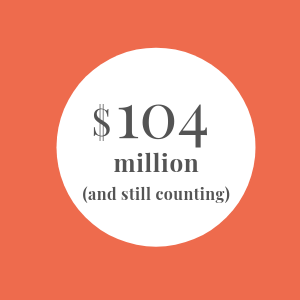
I’ll be updating this page over the coming week to reflect all investments for the past 7 weeks. Meanwhile, Series A raises for Figure8 and Herbivore Botanicals. Series B for Hipcamp. Seed round for Genneve.
Welcome to Underwire’s female founder funding update. We track this information to combat the negativity around women-led venture funding (yes, it still hovers around 3%). We know that it can feel self-defeating to read about companies getting funded when you’re not. Still, this is important to track. This page is proof that women are building and scaling incredible companies. Dream big, dammit!
We cover mostly venture capital updates and exits. We source our updates from Fortune’s Term Sheet newsletter (edited by Polina Marinova), Crunchbase, GeekWire and tips from local investors and founders.
Here is the Underwire Funding Update spreadsheet with a year to date (to the best of our knowledge) summary of fundings, including founder names and titles, industry, investors and diversity info. This is a labor of love from a person that dislikes spreadsheets, so be nice. Better yet, contact us if you have info to share or want to make improvements.
Funding
Genneve, $4 million, Seed, Jill Angelo, Founder & CEO
Seattle-based digital health platform for women in midlife. BlueRun Ventures led the round, joined by StartupHealth and Maven. (Website, Crunchbase)
Herbivore Botanicals, $15 million, Series A, Julia Willis, Co-Founder, Co-CEO and CCO
Seattle-based clean beauty brand. Silas Capital led the round, joined by Stage 1. (Website, Crunchbase)
Figure8, $40 million, Series A, Maryellis Bunn, Co-Founder
New York-based brand marketing firm and creator of the Museum of Ice Cream. Lead investors include Elizabeth Street Ventures and Maywic Select Investments, joined by OCV Partners. (Website, Crunchbase)
Hipcamp, $45 million, Series B, Alyssa Ravasio, Founder and CEO
San Francisco-based outdoor recreation content platform. Round led by Andreesen Horowitz, joined by Jay Z (Marcy Venture Partners) and Will Smith (Dreamers Fund). (Website, Crunchbase)
Weekly Female Founder Funding Update
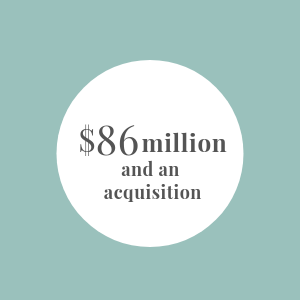
Seven fundings, one exit and a new fund. Series A raises for Remedy, DotLab, Chief and Anomalie. Series B for Genome Medical. Seed rounds for Homeroom and Miss Grass. SheWorx gets acquired. And Vice Ventures raises a fund for sinful companies.
Welcome to Underwire’s weekly female founder funding update. We track this information to combat the negativity around women-led venture funding (yes, it still hovers around 3%). We know that it can feel self-defeating to read about companies getting funded when you’re not. Still, this is important to track. This page is proof that women are building and scaling incredible companies. Dream big, dammit!
We cover mostly venture capital updates and exits. We source our updates from Fortune’s Term Sheet newsletter (edited by Polina Marinova), Crunchbase and GeekWire.
Here is the Underwire Funding Update spreadsheet with a year to date (to the best of our knowledge) summary of fundings, including founder names and titles, industry, investors and diversity info. This is a labor of love from a person that dislikes spreadsheets, so be nice. Better yet, contact us if you have info to share or want to make improvements.
Funding
Anomalie, $13.6 million, Series A, Leslie Voorhees, Co-Founder & CEO
San Francisco-based custom wedding gown company. Goodwater Capital led the round, joined by investors including Signia, SoGal Ventures, Lerer Hippeau’s BN Capital Fund, and Fin’s Sam Lessin. (Website, Crunchbase)
Chief, $22 million, Series A, Carolyn Childers and Lindsay Kaplan, Co-Founder and CEO and Co-Founder, respectively
New York-based private network of women. General Catalyst and Inspired Capital co-led the round. (Website, Crunchbase)
DotLab, $10 million, Series A, Heather Bowerman, Founder and CEO
San Francisco-based personalized medicine company for women’s health. CooperSurgical led the round, joined by investors including Tiger Global Management and Luxor Capital Group. (Website, Crunchbase)
Genome Medical, $23 million, Series B, Lisa Alderson, Co-Founder and CEO
Monterey-CA network of genomics services experts using telemedicine to integrate genomic insights into everyday health care. The latest financing was led by Echo Health Ventures, a collaboration between Cambia Health Solutions and Mosaic Health Solutions. Other backers included LRVHealth, Casdin Capital, Perceptive Advisors, Manatt Venture Fund and Dreamers Fund. Thanks for Kristine Ashcraft, CEO of YouScript for the tip.(Website, Crunchbase)
Homeroom, $3.5 million, Seed, Casandra Espinoza Stewart, Co-founder & CEO
San Francisco-based platform for after-school enrichment programs. Forerunner Ventures led the round, joined by Felicis, Precursor, and Kapor Capital. (Website, Crunchbase)
Miss Grass, $4 million, Seed, Kate Miller, Co-founder and CEO
Venice, Calif.-based cannabis brand with a content and e-commerce platform. Investors include Listen Ventures, Casa Verde Capital, Advancit Capital , firstminute capital, Third Kind Venture Capital, and Muse Capital’s Assia Grazioli-Venier and Rachel Springate. (Website, no Crunchbase listing)
Remedy, $10 million, Series A, Christina Gabrysch, Co-Founder
Austin, Texas-based provider of healthcare services. Sante Ventures led the round. (Website, Crunchbase)
Exit
SheWorx, Undisclosed, acquired by Republic, Lisa Wang, Founder
New York-based platform and event series for female entrepreneurs. Financial terms weren’t disclosed. (Website, Crunchbase, article on Republic’s blog)
New Fund
Vice Ventures, $25M fund to back sinful sectors, led by founding partner, Catharine Dockery. (Website, Crunchbase)
Weekly Female Founder Funding Update
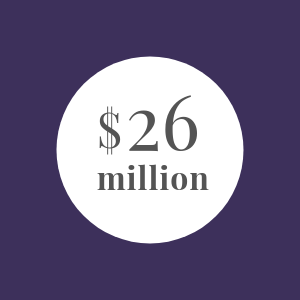
Five seed rounds and one Series A this week for Athena Security, Kango, Mixlab, Needslist, Novi, and Part & Parcel. Plus The RealReal files for IPO.
Welcome to Underwire’s weekly female founder funding update. We track this information to combat the negativity around women-led venture funding (yes, it still hovers around 3%). We know that it can feel self-defeating to read about the companies that are getting funded when you’re not. Still, this is important to track. This page is proof that women are building and scaling incredible companies. Dream big, dammit!
We cover mostly venture capital updates and exits. We source our updates from Fortune’s Term Sheet newsletter (edited by Polina Marinova), Crunchbase and GeekWire.
Here is the Underwire Funding Update spreadsheet with a year to date (to the best of our knowledge) summary of fundings, including founder names and titles, industry, investors and diversity info. This is a labor of love from a person that dislikes spreadsheets, so be nice. Better yet, contact us if you have info to share or want to make improvements.
Athena Security, $5.5 million, Seed, Lisa Falzone, CEO & Co-Founder
Austin-based AI security camera startup. Pathfinder led the round. (Website, Crunchbase)
Kango, $3.6 million, Series A, Sara Schaer, Co-Founder & CEO
San Francisco-based ridesharing for kids. National Express led the round. (Website, Crunchbase)
Mixlab, $8.5 million, Seed, Stella Kim, Founder and CXO
New York-based pet pharmacy. Global Founders Capital led the round, joined by Monogram Capital, Brand Foundry, Lakehouse Ventures, Mars Petcare, Joyance Partners, and TQ Ventures. (Website, Crunchbase)
Needslist, $1 million, Venture, Natasha Freidus, Founder
Philadelphia-based online platform that matches products and services to communities in need. Investors include Amplio Ventures, Marigold Capital, Omidyar Network, Next Wave Impact, Silicon Valley Social Ventures and the Kuo Sharper Fund. (Website, Crunchbase)
Novi, $3 million, Seed, Shannon Mosier, Co-Founder and COO
San Francisco-based company focused on improving financial literacy. Investors include Runa Capital, Lightspeed, Doberman Forward, Freedom Financial Network, M ventures, SGH Capital, Republic.co and Vectr. (Website, Crunchbase)
Part & Parcel, $4 million, Seed, Lauren Haber Jones, CEO and Founder
San Francisco-based community commerce platform for plus-size women, selling apparel and footwear. Lightspeed Venture Partners led the round, joined by Village Global and Peterson Ventures. (Website, Crunchbase)
Exit:
TheRealReal, IPO, Julie Wainwright, Founder and CEO
San Francisco-based luxury reseller, plans to raise $270 million in an IPO of 15 million shares priced between $17 to $19. The firm posted revenue of $207.4 million and loss of $75.8 million. The firm is is backed by Perella Weinberg Partners (11% pre-offering), Canaan Partners (13%) and Great Hill Partners (14.7%). It plans to list on the Nasdaq as “REAL.” (Website, Crunchbase)
Dani Cone: Bricks, clicks & kicks
Dani Cone, CEO and Founder of Cone & Steiner General and Fuel Cofffee on e-comm expansion, self-care fails and shit-tons of money.
The CEO and Founder of Cone & Steiner General and Fuel Coffee on e-comm expansion, self-care fails and shit-tons of money.
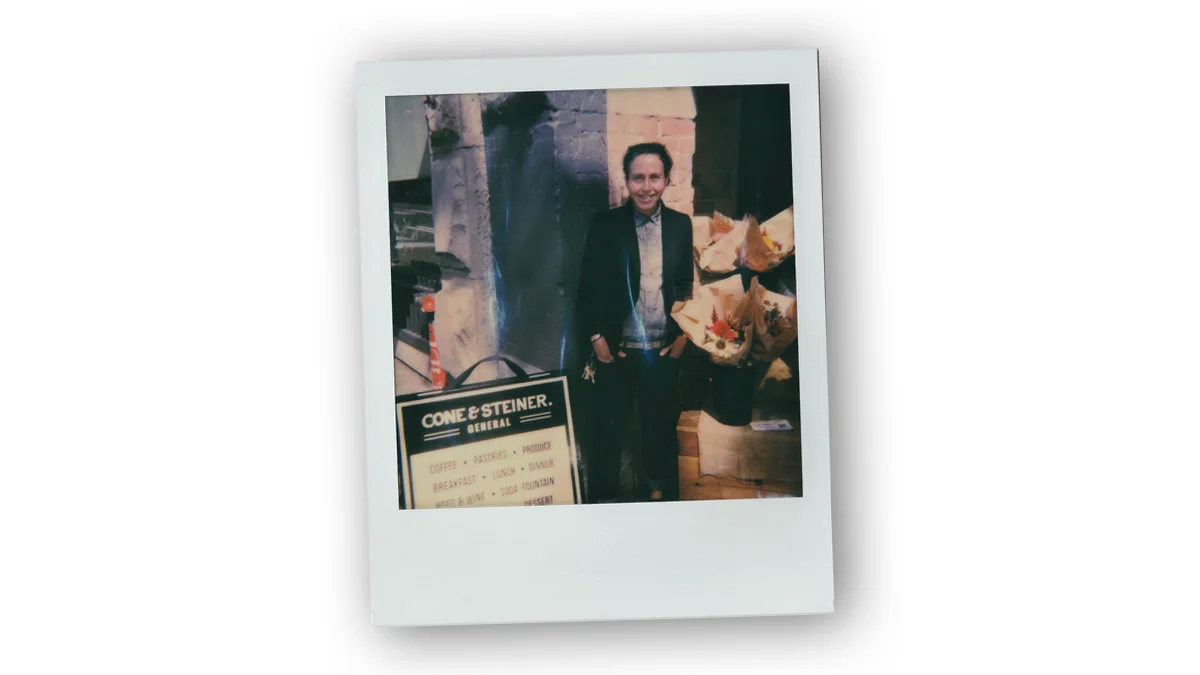
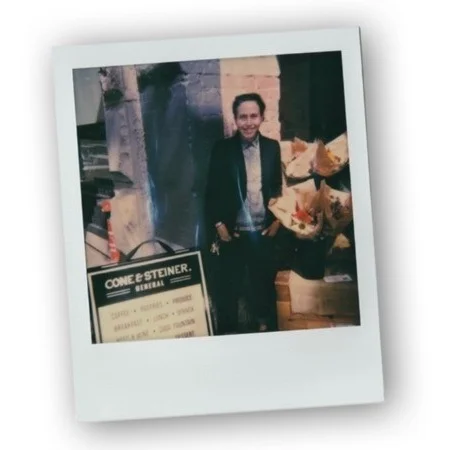
Dani Cone, outside the Cone & Steiner General downtown Seattle location.
Dani Cone oversees six brick-and-mortar operations — three Cone & Steiner General stores and three Fuel Coffee shops. The idea behind her empire is simple — take care of people with good food, drinks and staples.
To support the growth of Cone & Steiner General, Dani raised money to launch an e-commerce platform and delivery service. It’s in beta while the team works out product assortment and logistics.
Dani built her companies on a tried-and-true retail business models. She uses city data and trends analysis to inform where she sites locations. The e-commerce and delivery service grew out of customer feedback. The team stocks high-quality specialty and local brands, democratizing shelf space in a time when we want our SKUs to tell a story.
Some founders fit a classic archetypal character. Dani is an Everywoman. To the core of her being, she is the good neighbor. Grounded, unselfish and friendly, her brand embodies a place of deep comfort where all are welcome.
In our conversation, we talk about:
Near-term focus on adding revenue with e-comm and delivery, and how that widened the investor pool
What a $1.5 million Seed round funds in retail
Trends in retail, food and beverage
Justifying the cost of getting pro help, be it financial, coaching, etc.
Dreams of big exits and what money might buy
Underwire: What’s been going on since we talked in the summer of 2017?
Dani Cone: For starters, we opened the downtown Cone & Steiner (1012 1st Avenue) at the end of July in 2017. When we were talking, the plan was to open store three. I had done an initial capital raise to open that store and build out our internal infrastructure. That’s what that small $650,0000 raise was allocated to.
We built out the management team and buyers, opened store three, and then the plan was we’ll go from store three to then pursuing the Series A round for the larger expansion of multiple units to reach scale.
What I noticed in being the data nerd that I am and really digging into the business models, store performance and marketplace trends, was that instead of jumping to a much larger Series A round and reaching a significant economy of scale across five units, what we really needed to do was accelerate our plans to do delivery and e-commerce.
That’s what people are wanting, that’s what we’re getting inquiries for, and of course the worst thing in customer service that you can say is “No,” especially in this downtown location where there’s a dense urban daytime population, twice that of what we have at the Pioneer Square store.
People call all the time and they say, “I want to order lunch for the office, 30 sandwiches.” I say, “Outstanding, when would you like to pick that up?” I always hear the same response, “Oh, you don’t deliver? I don’t have anybody who can come pick it up, we can’t leave.”
There are only so many times I can pack the bag and run up the street. I thought, okay we’ve got to accelerate delivery and e-commerce.
All of that to say instead of jumping from a small capital round and store three to a big Series A round, I inserted this smaller round of $1.5 million to do two more stores, which gets us to that five-unit economy scale, again for our model, and launching the delivery and e-commerce platform. Right now, we’re at about $850–900,000 raised of that round.
Is that considered another seed round?
On the advice of my attorney it has been titled a Series Seed. Or second seed. But he mentioned that sometimes if you say “second seed” that sounds like maybe something didn’t go right with the first seed or we didn’t reach our goals and instead it’s just we’re trying to message it appropriately to say we’re adding this in intentionally before going to a Series A, otherwise it’d be a very small. It’s just not at Series A level.
With us being new and proving out the concept with this store, we’re still too early to attract the institutional investors that you would typically find in a Series A, or in a venture-capital raise. We’re a bit too early for venture.
How’s the e-commerce site build going?
I feel like a dinosaur trying to enter a whole new world. We’re starting out small and based out of the downtown store for the pilot.
We have a small radius and the offerings online aren’t the 3,500 items that we have in the store, but rather a very curated version of those. We have the top-performing categories that we think will translate digitally, similar to the experience that you would have when you come into the physical store.
Hopefully when you walk in the door it feels good, if it feels like neighborhood and community and anything you pick off the shelf is gonna be good.
You wouldn’t necessarily walk in and upon first glance of the store think, “Oh, I bet they have 25 kinds of ketchup.” We don’t and we’re not going to. Where do you draw that line between should I have three kinds of those, or just two? Why do I just keep the two?
There’s a lot of conversation and editing. Certainly many of those options are informed by sales data, what sells best, how often, etc. It also has to be that the feel is representative of the overall brand experience. Those are the conversations we had as we whittled down to about 200 items available online.
Will delivery be limited to certain times a day?
To start out with, yes. It will also have our house-made and prepared food items so you can order your office lunch of sandwiches or other people’s sandwiches. Or order ahead for catering, pastries, coffee, and things like that.
One unique thing I was able to do after many hours spent on the phone with the Washington State Liquor Control Board is get the licenses to deliver beer and wine.
Happy hour! That’s huge.
It is huge. Especially because beer and wine are one of our top three categories.
Across the street from the downtown store is a tower of residential units. If someone living there says, “You know what, I just want some great wine and cheese to celebrate,” we can do that. We do a couple of gift packs and a happy hour pack. Just add friends and there you go.
What was the spark for expansion into e-commerce and delivery?
A couple of very simple yet big things. One was the actual direct demand from customers, getting emails and phone calls of, “Can I order this online? Can you deliver this? How can I …? When can I …?”
And then parallel to that are the trends across e-commerce, and especially in food. Some of the statistics behind the trend are that online food sales are growing 35% year over year, and that’s just in gross rate.
When you add on top of that people ordering food to be delivered from Uber Eats or anybody really, Caviar, etc., it’s the way that people are shopping, eating and drinking. That’s also very aligned with our whole model in terms of being a modern-day convenience store.
It means something different than it did when convenience stores started. 7-Eleven, that started 70 years ago. It was convenient because as people were spreading out into the suburbs, they were driving cars and they needed something along the way. Now as people are moving back into the cities, we’re placing ourselves in these dense daytime population locations to be where the people are.
This is the new face and location of convenience, and also reflected not just in the location but answering the question, “What do modern consumers want? How do they want to eat and drink and shop? What are they looking for?”
There’s always a time and a place to have a Coke, nothing wrong with that, I love a Coke. But sometimes you want something else, or you want to show up to a party with something different or unique, or something just branded. Story is certainly a new form of currency.
Let’s go back to the money dance. It takes outside support to grow in the way you want to grow. Between that initial seed and this new round, what have you learned?
Oh my God. What have I learned without swearing?
You can swear. We swear on Underwire.
I’ve learned so much. During that first round, with it being my first foray into a world of raising capital, it was bananas, absolute bananas.
I felt more equipped going into this round because I knew more of what to expect. That said, fundraising is difficult on so many levels. There’s difficulty in our concept being brick and mortar, retail, food and beverage. I was very successful at stacking the odds as high as possible against me. Even by adding in the delivery and e-commerce piece, which is just this thinnest skim of tech that opens me up to a few other investors, but not as much as an app or something straight up tech, that’s a lot more appealing to folks in this city.
Then there’s the level of difficulty with the business model itself. A lot of folks in our investor community come from tech. When you see our numbers and our model, it does look very different from tech. Yes it scales, yes there’s a great return, yes there’s a market for it. All of those things, but yet it’s a different timeline. Like I said, the delivery and e-commerce does open us up to other folks who really get e-commerce and delivery.
Other things that I’ve learned about fundraising, as everybody always says, truly it is about reaching out to your network and then their network and their network.
You just have to keep talking about it to everybody you see at any time of day, even if you think there’s no way this person would be interested in even hearing about what I’m doing. You just keep blathering on about it because you never know. You just talk about it constantly, you tell everybody, you throw yourself out there shamelessly and say, “I’m raising money here, I’m raising money, guess what? I’m raising money.”
I think in any sort of business that you launch, you have to leave ego way far behind. That cannot be a part of it, especially in fundraising.
How does that feel to be in the state of constant talking about yourself and the business?
It’s mixed. I love what I do, and so I do love talking about the business and what we’re doing. Sometimes those conversations go great, and you get to meet amazing people and you start feeding off each other. I leave those meetings even more excited and energized about my own business than before, which is saying a lot because this is all I do and all I think about. That’s when I’m so grateful to this sort of process, because that’s how we make connections.
Then there are many other meetings that are like, oh just my gosh, you hear so many “No’s.” You get so much pushback. You hear that that will never work and all of these negative comments, and you just feel shredded, just shredded. It’s hard to keep up.
I know what we’re doing, I know its place, I know that personally, I know it in my gut. But I also know it is based on data and market and industry trends. I see what else is going on in the world and how this fits in.
I can really dig into that, but at the same time there are days when that gets really hard, it’s like, I’m so fucking tired of trying to tap in to my own depleted reserves to be the person trying to convince everybody that I know what I’m talking about.
I do know what I’m talking about, but of course I doubt that after many meetings where people are like, “That just doesn’t work right now” or, “If you really wanted to make a go of it, you’d be making ten times what you’re making now.”
How do you refill the well?
I very much fail at that. As my mom will tell you, I am just not good at that. I guess I just try and keep moving. This week has in so many ways just brought me to my knees. What do I do?
This morning I was talking to my dad, Gary Cone. He checks in every Friday on his way to work and has for 14 years since I started a business. It’s amazing. Just 15 minutes, he stops by on his way to work, whatever store I’m at. We have these little business and catch-up chats.
We’re sitting at the end of the bar this morning and I’m near tears and I was telling him all these things that happened this week. I don’t even know what steps to take. Usually I can think of something. You get scrappy, you get creative when backed into a corner, you just come out swinging. This is one of those times that even I feel just stumped, like holy shit.
Do you think that maybe it’s as much exhaustion as the business situation?
Absolutely. I’m tired, sure. I have the worst sleep schedule. I sleep and eat terribly…all of these things. I know it’s terrible. I keep going, as we all do, knowing how to own and run a business, there’s no option, you just keep going.
There’s got to be something in your day that recharges you.
There is. Absolutely, I couldn’t work this hard or do that if there weren’t those good days. I’m gonna put out a big alert here, super cheesy alert, watch it, it’s coming, but I mean it. As cheesy as it is, I totally mean it, it’s those moments when I walk in a store on a bad day. Like I said, this week’s been super shitty. When I walk in and see somebody sitting there and enjoying something to eat or drink and I think, “Okay. That’s pretty neat, they came in and they’re enjoying themselves for this moment here. This is a place for that.”
I look around at some of the products on the shelf and I think about the Seattle-made stuff. I think about how I know those vendors are just starting their company and they’re at the farmer’s market but they’re trying to get into a store. They’re way too small to get into Whole Foods, but Cone & Steiner can give them a yes and say, “You know what, I’ll try out a case of that.” I can look around and see I know those people, I know the story behind their product, how they started.
Then I get to sit here and talk to amazing business people like you, and for some reason that I honestly still cannot figure out, you want to hear what I have to say. That’s crazy, but that says somewhere along the way there’s something of interest or maybe something about a crazy, bad, or great experience that I’ve had would help somebody else out there who’s doing what all of us do feel a little bit less like it’s me against the world, amazing, let’s do it.
We all have terrible times and go through so much, and that’s what recharges me because I know what we’re doing here. By having this space, this is creating actual space to have conversations like this. It connects people. That is what this is all about. This is how we build community, and that is how things happen. That’s what keeps me going.
One of the things that I don’t think is well represented in business media coverage is the value that’s created by female business owners. You’re hiring employees and they are paid a living wage and given a supportive place to work. You’re also giving a kick-start to new vendors, and the network effect that will have on their businesses. And, of course, there’s the community for the workers and residents of the neighborhoods where you have stores. Not all of that has a metric, but it’s all valuable.
It’s crazy that it’s such a simple thing. Which again, my strength is in simplicity. I’m not a creative person. I’m not innovative. I don’t create new things, it’s just these basic things. This place being modeled after my great grandfather, Sam Cone, an immigrant.
There were stores like his 100 years ago. There will be stores like this forever, it’s just tweaking the offerings and the way we do it to reflect what people want now. Those basic things of food and drink and conversation and a nice place to have that. That’s it. Simple things.
What’s your involvement with Fuel Coffee these days?
We’re very close. Myself and the three store managers meet once a week. We text throughout the week. They are a very strong management team. A lot of that is due to the wonderful people, they work really hard. Together the four of us have great communication and a great working relationship.
That’s also come about after so many years of building Fuel into that, and it being a much more simple business model in a lot of ways. There aren’t as many moving parts as there are with Cone & Steiner, whether it’s categories, inventory, all the things we make, sandwiches, coffee, ice cream, etc.. We don’t roast coffee, Fuel is just a coffee shop and we sell pastries. It’s more straightforward.
You’ve talked about hiring in the past, I’ve read some articles about how you’re willing to give people a chance. You hire for the person. That’s hard for startup founders to take that leap. We often hire more for skill to offset the risk of a bad hire.
We do have experience that we require on some level. It’s something that I think a lot about these days, especially as we’re growing here. I do love being able to cultivate or help to support somebody’s potential. That’s another thing that really charges me up each day, it’s like, “Wow, this person is so smart, we’re totally under-utilizing them, what can they do? What are they interested in? How can we help be a means to their end?”
Creating opportunity is one of our core values, and I love the thought of being able to do that. That’s something that compelled me to start a business in the first place. Especially in service-industry jobs and entry-level jobs, even if the pay is what it is, I feel like you should always have some ability to grow, or some opportunity.
As a smaller company, we pay a lot less than all of the big guys and some of the smaller guys too, but one thing we can offer is opportunity. What is it that you’re interested in? Great, as we grow, I wonder how I can be a means to your end? That is really important to me.
At the same time as we’re growing, balancing out that desire with my responsibility to also bring on people who know more than I do and can help get us to that next level, too. It’s an interesting balance, for sure.
I know you’re a data nerd and obsessed with trends and dynamics in the marketplace. Where do you get your info?
I don’t have a go-to site, I just try and go down a wormhole into the vastness of the internet. All the time, like 3:00 AM at the gym I’m like, okay what’s going on? In food and beverage, and recently over the past few months, even in this new idea of the modern convenience store, there have been a lot of articles touting it as the new thing. I’m thinking, “Yes, I’ve been here for four and a half years. This is definitely a thing.”
There’s no one source, I just keep weeding through and finding articles, usual publications or sites or what have you. I’m such a dork, I love digging into the data reports from the city that you can get about traffic flows, demographics, growth trends and construction, what’s being built and where and on what timeline and what are the density projections for whatever given radius. That data is just amazing. Being in a business that’s all about location, location, location, those are all super key sources for us.
You mentioned the gym — at 3:00 AM. Yikes. You’re working out, that’s recharging, isn’t it?
It should be. I don’t enjoy that part. I don’t find it recharging. I also go at a horrible time of the morning or night and nobody’s there and the lights are too bright. It’s just really gross.
Why do you do it?
It’s supposed to be good for you, right? I’m thinking it offsets all of my horrible sleeping and diet.
It sounds like it’s all work and no play, Dani.
Which is true.
No play?
No, not really. I have a very boring life. I really love what I do, and I’m around people all day too. It’s different. I’ve never in my life had an office job so I don’t really know what that’s like, but I imagine that at times it could maybe be kind of isolating.
My job is isolating in that I don’t have business partners. That’s hard enough. Even though it can be isolating, I am around people all day, whether it’s my team or staff or customers or something, or certainly talking to investors.
You’ve worked with local business coaches, right?
Janis Machala, yes.
You were also working with Mike Cadigan, he’s not a traditional executive coach, rather a business adviser.
He was more financial.
How did working with them help you as an entrepreneur?
A lot. I met Mike through my attorney. He was helping to build a financial model, and that was pretty straightforward.
We built our model and started that initial capital raise a couple years ago. That’s pretty direct, but what it evolved into is that Mike is somebody I can call and just talk about whatever and he has seen it and done it and just has so much expertise and also a different perspective.
As a solo business owner, I don’t have partners to bounce ideas off of. I know what my own ideas are and I’m tired of them. I need somebody else’s ideas, I need somebody to say, “That’s horrible, don’t do that. No!” Otherwise I will just run with things, and that is not always the best thing.
Janis Machala has been helpful in so many ways. I first reconnected with her in 2016 and she was telling me about CEO Roundtable group that she leads for female CEOs. I had heard of an executive coach but I don’t really know what that meant and what to do.
We chatted a couple times and Janis said, “Have you thought about engaging with an executive coach?” It sounds good but I don’t get it. What am I supposed to do? I need things spelled out. I need an agenda, I need goals, I need a timeline. This is how we do things, and so the first time I met with her I’m like, “What is my homework and what am I supposed to do? What should I be asking you? What do we do here?”
She says, “This is your time, it’s whatever you want. What would be helpful to you?” I’m like, “What’s the goal? What am I getting to? How long will it take me to get there? How can I do this in the best possible way?”
Now it’s been a couple years of working with her and I’m still trying to figure out, Am I doing this right? I’ve actually asked her that. She’s amazingly patient as I ask her these ridiculous questions.
So many times I go into a meeting with her and I’m not quite sure of myself. I get back in my loop of, what am I supposed to ask? What should I be doing? What’s the best question I should be asking? How should I make this also worth her time and beneficial to her, too? What do I do here?
I don’t know, and I feel like I flounder my way through a meeting with her, but I always leave feeling better than when I walked in. Granted I also try and recap much of our meetings with notes and set an agenda for the next meeting and send notes in advance with a summary of what’s going on, but that’s because I’m totally type A.
Many of us struggle with getting help, whether in the form of a therapist or a coach. It comes with a cost of money and time that can be hard to justify in a startup.
That’s definitely something I have struggled with and still do. It’s a cost, so how do I justify that if there’s not a goal and a direct calculable return on investment that I can measure, how on earth can I justify X dollars a month? What the hell am I doing? Who do I think I am doing that? I struggle with that all the time.
What’s your experience been with coaching and stuff? Do you find that you struggle with it?
I regularly question my involvement in Janis’ CEO Roundtable group. It’s crazy, I don’t know why I even debate that with myself because Underwire might not exist without that group. I do have imposter syndrome — I’m not good enough to be here. I’m not doing enough. That comparison with others. Which is bullshit and I quickly get over it when I’m with the group. I’m learning to not listen to that particular voice in my head.
There’s also the time commitment. The group is two hours on a Friday once a month, and a small bit of prep work in advance, which doesn’t sound like a big deal but it’s massive when you’re running a startup.
But I will say that Janis’ CEO Roundtable got me through a really tough time in my former business. The women in that group helped me birth this new idea for Underwire. I’m immensely grateful for that.
I was so deeply raw and vulnerable, and that group supported me through that. That’s what made me realize there’s so much going on below the surface of female founders that needs to be talked about.
That’s another conversation in itself, this has been a true journey into the heart of the emotional life of female founders. I’m finding that, like myself, women are reticent to talk about themselves unless they’re perceived as successful.
“I’ll tell you more when I get funded….I’ll go on the record when I sell.” I hear that a lot. We’ve got to crack that open. We’ve got to talk about the dark parts of the journey.
The dirty underbelly of it all.
You have talked about “be good, do well,” and how everything you’re doing at Cone & Steiner is bringing that idea to life. I would say that’s your vision, you’re doing it through community and through the fundamentals of food and drink. How do you use your vision to support the growth of Cone & Steiner?
That’s a question to chew on, but here’s my off-the-cuff answer. I feel like it is a closely related combination, and here’s why. I do have a goal in mind. I have a business plan and we want to hit this amount and this day and perceive this way, and this is how I want this to be big. I know that it can be, and I want to get it there. That is the direction that I’m pointed in.
At the same time that can’t happen without the boots on the ground, living that Cone & Steiner vision each day, living the values that inform that vision each day. This is the goal: I want to have 15 stores in five years and a robust delivery and e-commerce platform. It will be worth $30 million.
All of those numbers and hard data and projections are built on this right here (the physical store), and every inch of this is created with the value piece of that vision in mind. That’s why we’re here. Be good, do well.
That’s also a big part of why I think we can get to that goal is because at the end of the day, this is a very basic idea that does pull a lot of style. Because people need a place to connect with each other, and people come together with good food and drink. They’re very integral for me. Because that is an idea that is tried-and-true and it’s very basic and it feels good. That’s how we can grow, too.
You have one wish, one magic wand, what would you wish for?
Of course, I would wish for health and happiness for my family and loved ones, but really…I’m gonna have to have two wishes. This might not sound good, but I will say money, and just a fucking shit ton of it. I grew up and my mom always told me there’s nothing wrong with wanting money, there’s no shame in that. I absolutely want it. It gives you choices.
Money gives you freedom, it gives you choices, and it doesn’t mean you have to be an asshole, you’re gonna lord it over people and all of a sudden become whatever. It means that you can make the choices that you want to make.
I know how I want to spend my money. I know what I want to do when I grow this company and have a great exit. I want to start an incubator or accelerator for other entrepreneurs at my level to help them, especially in the food industry. There is no accelerator for businesses like this or for people who don’t have as much access to resources to start businesses.
There are so many people that feel like they can’t start a business because of fill in the blank. I got very lucky and grew up in a family of business owners, so I saw that regular Joe Shmo people can do this. I want other people to know that, too.
So yes, I would wish for a bunch of money because I could do things like that and not maybe have to worry about, “How is that going to happen?” It still would have to pay for itself, but how would that not have to be the driving force of that model? How could we just do it for the sake of it should be done? There should be more accessibility and resources in so many aspects. That’s just one of many ways to use the money, of course.
This article is based on Underwire Issue #19. Sign up here to support the cause and get each week’s issue in your in-box. More about why Underwire.